- Sector catalyst: healthcare AI is moving into real clinical workflows, from ECG processing and genomics to drug discovery and portable imaging.
- Investor angle: AIML is the micro-cap ECG-AI name in this basket, while SOPH, RXRX, SDGR, and BFLY show how larger AI healthcare platforms are already building commercial scale.
AI healthcare is becoming one of the more investable areas of the artificial intelligence market because the use cases are moving closer to real clinical workflows. Hospitals, research institutes, diagnostic labs, pharma companies, and device makers are all looking for ways to process medical data faster and more accurately.
For investors, the opportunity is not just “AI in medicine.” The real question is which companies have useful data, credible clinical partners, commercial adoption, enough cash to execute, and a product that solves a measurable healthcare bottleneck. That is why this watchlist combines one speculative micro-cap, AI/ML Innovations (AIMLF), with four larger AI healthcare names: SOPHiA GENETICS, Recursion Pharmaceuticals, Schrödinger, and Butterfly Network.
Market Catalyst: AI Is Moving Into Healthcare Workflows
Healthcare AI is already appearing in ECG interpretation, Holter analysis, precision oncology, genomics, ultrasound imaging, drug discovery, clinical trial design, and hospital decision support. The sector is attractive because healthcare creates enormous volumes of data, but much of that data remains fragmented, difficult to structure, and time-consuming for clinicians to review.
The numbers explain why investors are watching the space. Grand View Research estimated the global AI healthcare market at roughly US$26.6B in 2024, with a high-growth outlook through the end of the decade. Cardiovascular disease remains one of the world’s largest healthcare burdens, responsible for roughly 17.9M deaths per year, while Holter monitoring can generate 24 hours to 14 days of continuous rhythm data per patient.
Two data points show why this matters:
- Clinical data volumes are expanding quickly: ECG, Holter, genomic, imaging, and monitoring workflows generate large datasets where automation, labeling, pattern recognition, and signal processing can reduce bottlenecks.
- Commercial adoption is already visible: SOPHiA GENETICS processed 108,000 genomic analyses in Q1 2026, while Butterfly Network generated US$26.5M of Q1 2026 revenue, up 25% year over year.
The opportunity is real, but healthcare AI is not an easy market. Companies still need clinical validation, regulatory discipline, reimbursement pathways, hospital procurement access, commercial traction, cash runway, and proof that their platforms can scale beyond pilots.
1. AI/ML Innovations: The Micro-Cap ECG-AI Angle
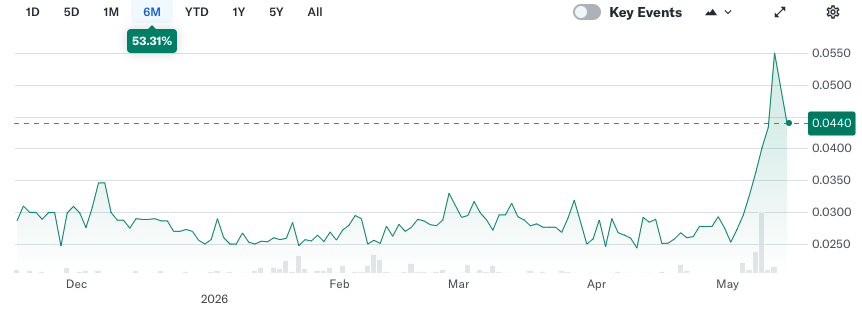
AI/ML Innovations Inc. (CSE: AIML / OTCQB: AIMLF) is the smallest and most speculative name in this AI healthcare basket. The company is focused on digital health and artificial intelligence, with its NeuralCloud subsidiary targeting ECG signal processing, Holter analysis, and cardiovascular-data workflows.
The core platform is MaxYield™, NeuralCloud’s ECG signal-processing technology. AIML says MaxYield™ is designed to convert raw or legacy ECG data into structured, machine-readable formats, isolate and label ECG waveform components, and generate beat-level data and interval measurements.
- Investor data point: AIMLF trades around US$0.037–US$0.040, with market cap around US$7M–US$10M and roughly 271.1M shares outstanding.
The latest credibility catalyst is AIML’s appointment of Dr. Martin Stephen Green to its Medical Advisory Board. Dr. Green brings about 45 years of ECG and Holter interpretation experience and has authored or co-authored more than 230 peer-reviewed publications. For AIMLF, this matters because ECG-AI adoption requires physician trust, not just software capability.
2. SOPHiA GENETICS: AI Precision Medicine at Commercial Scale
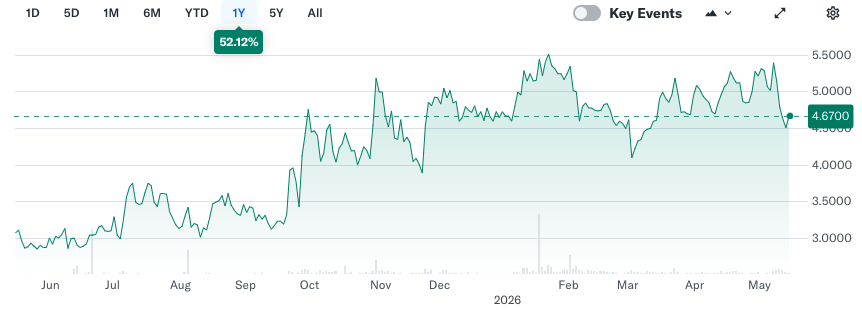
SOPHiA GENETICS (NASDAQ: SOPH) is a more mature AI healthcare company focused on data-driven medicine, especially genomics and precision oncology. Its SOPHiA DDM™ platform helps healthcare providers analyze multimodal medical data and apply AI-supported insights to clinical and research workflows.
SOPH’s Q1 2026 results showed US$21.7M in revenue, up 22% year over year. The company also reported a record 108,000 genomic analyses on the platform and 537 core genomics customers, up from 490 a year earlier.
- Investor data point: SOPH guided for full-year 2026 revenue of US$92M–US$94M, implying roughly 20%–22% growth.
SOPH is useful as a comparison for AIMLF because it shows what healthcare AI can look like when a platform gains measurable adoption across labs and hospitals. The risk is that SOPH still needs to show a clearer path toward profitability and cash-flow discipline.
3. Recursion Pharmaceuticals: AI Drug Discovery With Cash Runway
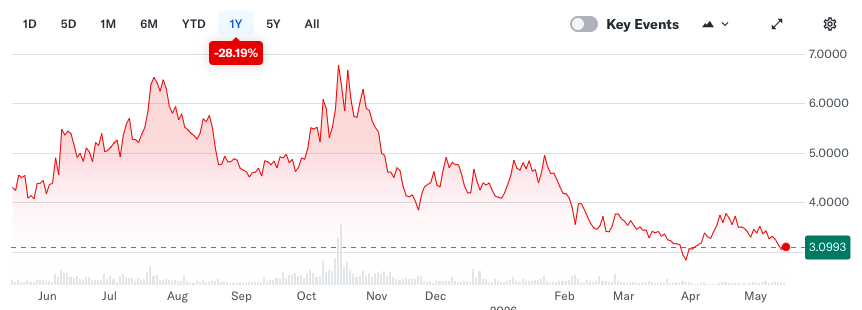
Recursion Pharmaceuticals (NASDAQ: RXRX) is one of the most recognized AI drug-discovery companies. Its platform uses automation, machine learning, biological datasets, and computational tools to identify and advance drug candidates.
Recursion’s Q1 2026 update showed US$6.5M in revenue, mostly from collaboration agreements, and US$665.2M in cash, cash equivalents, and restricted cash as of March 31, 2026. The company also said its cash runway extends into early 2028 under current operating plans.
- Investor data point: RXRX’s Q1 cash operating expense was US$85.1M, showing both the scale of its platform ambitions and the capital intensity of AI drug discovery.
For investors, RXRX offers exposure to the idea that AI can improve the speed and efficiency of drug discovery. The risk is that drug development remains expensive, uncertain, and milestone-driven, even when powered by AI.
4. Schrödinger: Computational Drug Discovery and Software
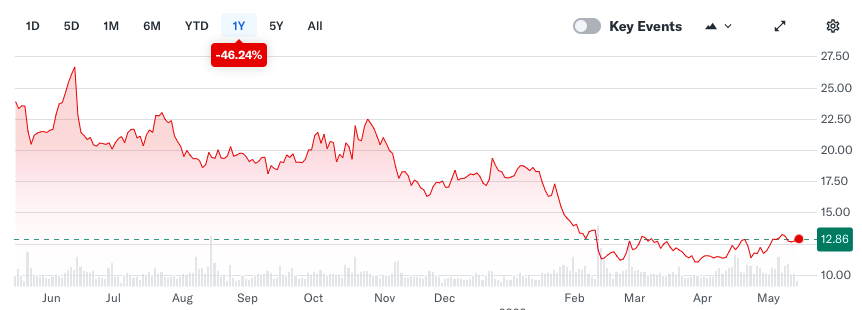
Schrödinger (NASDAQ: SDGR) gives investors exposure to computational drug discovery, molecular modeling, and scientific software. The company combines a software platform used by life-sciences customers with a drug-discovery pipeline.
Its Q1 2026 update highlighted US$28M in first-quarter annual contract value, representing 12% growth. Schrödinger also said it plans to launch Bunsen, an agentic AI co-scientist, this summer, showing how AI is becoming more embedded in computational research workflows.
- Investor data point: SDGR’s model gives investors two revenue angles: software adoption today and longer-term upside from internally developed or partnered drug candidates.
SDGR is a reminder that AI healthcare does not always mean direct patient-facing tools. Some of the opportunity sits inside the research and discovery stack. The risk is that drug-discovery upside can take years to convert into meaningful earnings.
5. Butterfly Network: AI-Enabled Medical Imaging
Butterfly Network (NYSE: BFLY) gives investors exposure to AI-enabled imaging and portable ultrasound. The company’s handheld ultrasound platform is designed to make imaging more accessible, portable, and software-driven.
Butterfly reported Q1 2026 revenue of US$26.5M, up 25% year over year. Gross profit was US$18.3M, and gross margin improved to 68.9%, compared with 63.0% in the prior-year period.
- Investor data point: BFLY reaffirmed full-year 2026 revenue guidance of US$117M–US$121M, giving it one of the clearer revenue bases in this AI healthcare basket.
Butterfly is useful as a comparison because it shows how AI can move into devices and diagnostics, not just software dashboards or drug-discovery platforms. The risk is that device adoption, hospital budgets, and profitability still need to improve over time.
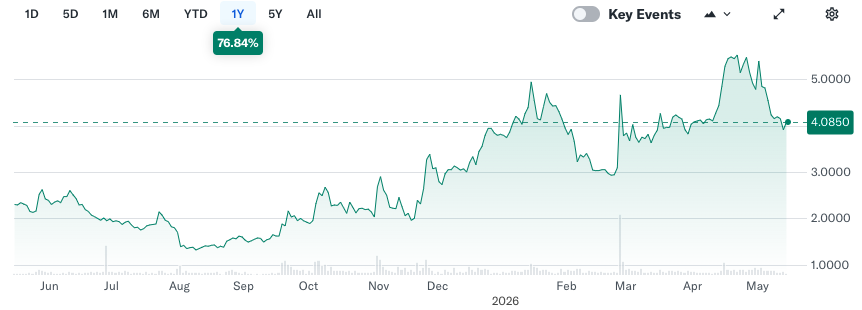
Stock Snapshot
| Company | Ticker | Recent Price / Valuation | Latest Key Number | Main AI Healthcare Angle |
|---|---|---|---|---|
| AI/ML Innovations | CSE: AIML / OTCQB: AIMLF | ~US$0.037–US$0.040 / ~US$7M–US$10M market cap | 271.1M shares outstanding | ECG AI, Holter analytics, NeuralCloud MaxYield™ |
| SOPHiA GENETICS | NASDAQ: SOPH | Small-cap AI precision medicine | Q1 revenue +22% YoY to US$21.7M | Genomics and precision oncology |
| Recursion Pharmaceuticals | NASDAQ: RXRX | AI drug discovery platform | US$665.2M cash position | AI-enabled drug discovery |
| Schrödinger | NASDAQ: SDGR | Computational discovery platform | Q1 ACV of US$28M, +12% | Molecular modeling and scientific software |
| Butterfly Network | NYSE: BFLY | AI-enabled imaging platform | Q1 revenue +25% YoY to US$26.5M | Portable ultrasound and AI imaging |
Bottom Line
AI/ML Innovations is the speculative micro-cap in this AI healthcare basket. AIMLF has a focused ECG-AI angle, fresh clinical credibility through Dr. Martin Green, and exposure to cardiovascular-data workflows where automation could matter.
The larger names show how broad the AI healthcare theme has become: SOPH in genomics, RXRX and SDGR in drug discovery, and BFLY in medical imaging. For AIMLF, the next proof points are validation, partnerships, pilots, recurring revenue, and whether NeuralCloud’s MaxYield™ platform can move from research credibility toward commercial adoption.
This is sponsored content. Investors should conduct their own due diligence and consult a qualified financial advisor before making any investment decisions.

Marc has been involved in the Stock Market Media Industry for the last +5 years. After obtaining a college degree in engineering in France, he moved to Canada, where he created Money,eh?, a personal finance website.