3 Key Points Investors Should Watch
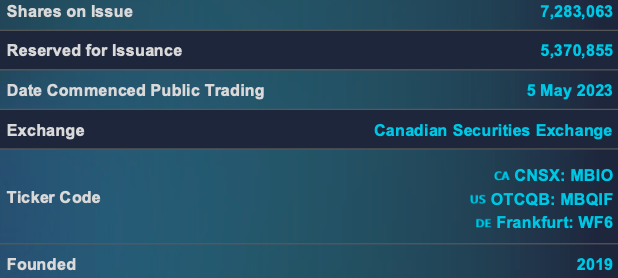
- MindBio Therapeutics Corp. (CSE: MBIO) (OTCQB: MBQIF) is positioning itself as an AI-driven intoxication detection company, using voice analytics to identify drug and alcohol impairment from short speech samples.
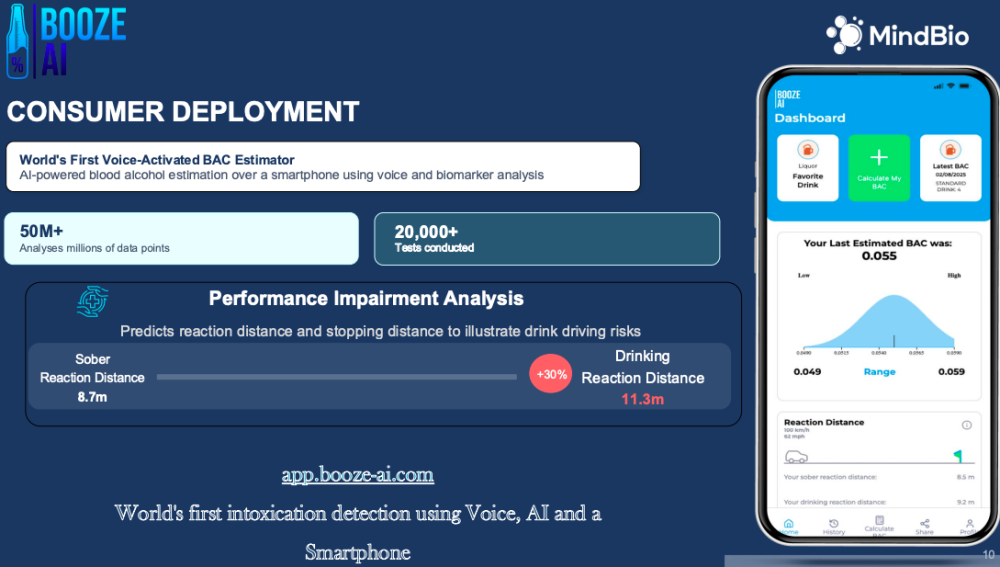
- MindBio (CSE: MBIO) says its AI model has been trained on more than 50 million data points and evaluates more than 140 acoustic markers, giving MBIO a numbers-driven technology story in a highly specific workplace-safety niche.
- Recent news flow has included the launch of Intox Collect™, cross-language AI speech analytics, patent applications tied to 15 “world firsts,” and commercial targeting of mining, aviation, construction, law enforcement, and other safety-critical industries.
Investor Snapshot
| Metric | MindBio Therapeutics |
|---|---|
| Tickers | CSE: MBIO / OTCQB: MBQIF / FSE: WF6 |
| Share price references | ~C$1.05–1.22 / ~US$0.76–0.80 |
| 52-week ranges | ~C$0.50–6.00 / ~US$0.28–2.44 |
| Company-reported AI dataset | 50M+ data points |
| Acoustic markers analyzed | 140+ parameters |
| Patent applications referenced | 15 “world firsts” |
| Core commercial target | Workplace intoxication screening |
Voice AI Meets Workplace Safety
While many AI companies are chasing crowded markets like chatbots, enterprise copilots, and generic automation tools, MindBio Therapeutics (CSE: MBIO) (OTCQB: MBQIF) is taking a much narrower approach: AI-powered intoxication detection using the human voice.
The company is developing voice analytics technology designed to detect signs of alcohol or drug impairment from short speech samples. Instead of relying only on breathalyzers, saliva testing, urine samples, or lab-based testing, MindBio’s platform analyzes changes in speech patterns that may correlate with impairment.
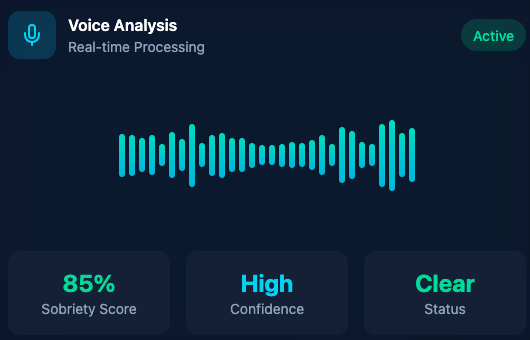
For investors, the important point is that MindBio (CSE: MBIO) is not pitching a broad AI concept with no clear use case. MBIO is targeting a specific operational problem: how employers in high-risk industries can screen workers faster, more frequently, and with less disruption than traditional testing methods.
According to company-referenced data, the MindBio system evaluates more than 140 acoustic parameters and has already been trained on more than 50 million data points. That gives MBIO a more measurable AI story than many early-stage public companies, because investors can track dataset growth, model development, pilot activity, and commercial deployments over time.
Why Intox Collect™ Matters
MindBio recently launched Intox Collect™, a software platform designed to expand the company’s data collection capabilities across both voice and facial-recognition inputs.
For MindBio Therapeutics (CSE: MBIO) (OTCQB: MBQIF), this matters because AI models generally improve with larger and more diverse datasets. Management has indicated that the 50M+ datapoint base could increase significantly as Intox Collect™ is deployed across more substances, more users, and more languages.
The system is designed to support intoxication detection across central nervous system depressants and stimulants, expanding MBIO’s potential use case beyond alcohol alone. That could be important because many safety-sensitive employers need to manage multiple impairment risks, including alcohol, cannabis, prescription drugs, and other substances.
If Intox Collect™ helps MindBio (CSE: MBIO) scale its training dataset from 50M+ datapoints toward a much larger model, the company could potentially improve accuracy, broaden substance coverage, and strengthen the defensibility of its AI platform.

Why Mining Could Be a Major Commercial Wedge
One of the most interesting parts of the MindBio story is its commercial focus on mining, particularly in South America.
That may sound niche, but it is exactly the kind of niche that can matter for a small-cap AI company. Large mining operations often involve thousands of workers, remote sites, heavy machinery, strict safety requirements, and high costs when incidents occur. In that environment, intoxication screening is not just a compliance issue — it is a productivity, liability, and safety issue.
MindBio (CSE: MBIO) (OTCQB: MBQIF) is trying to position voice-based screening as a faster and less invasive alternative to traditional methods. If a worker can provide a short voice sample through a kiosk or device, the company’s technology could theoretically help operators increase testing frequency without creating the same bottlenecks as physical sample collection.
The company has also discussed Edge AI touchscreen kiosk systems for enterprise deployment. For investors, that hardware-software angle is worth watching because it could create a clearer path to recurring commercial revenue if MBIO can move from technology validation into pilot contracts and site deployments.
Key Comparisons: Public Market Positioning
| Company | Sector Focus | Market Cap | Share Price | 52-Week Range | Investor Angle |
| MindBio (CSE: MBIO) | AI intoxication detection | ~C$20–30M | ~C$1.05–1.22 | ~C$0.50–6.00 | AI workplace safety |
| Breathalyser Australia (ASX: BRH) | Alcohol and drug detection | ~A$5–10M | ~A$0.01–0.03 | ~A$0.005–0.05 | Speculative detection tech |
| Drägerwerk (ETR: DRW3) | Workplace alcohol testing | ~€1B+ | ~€50–70 | ~€40–75 | Industrial safety leader |
| Cannabix Technologies (CSE: BLO) | Cannabis breath detection | ~C$40–60M | ~C$0.30–0.60 | ~C$0.20–1.10 | Alternative intoxication testing |
The comparison is important because MindBio Therapeutics (CSE: MBIO) (OTCQB: MBQIF) is operating within the broader intoxication detection and workplace safety ecosystem rather than competing directly against mega-cap AI infrastructure companies.
For investors, the valuation gap is notable. MBIO remains an early-stage micro-cap company while targeting a workplace safety and compliance market already populated by established alcohol-testing and drug-detection providers.
The bullish argument is that MindBio’s AI voice analytics approach could potentially become faster, more scalable, and less invasive than some traditional testing workflows if the technology proves reliable in real-world commercial environments.
Patent Filings Could Matter Long-Term
MindBio Therapeutics (CSE: MBIO) (OTCQB: MBQIF) has also announced patent applications tied to 15 “world firsts” using voice and AI to detect drug and alcohol intoxication.
For a small-cap AI company, this matters because intellectual property can become a key part of the investment case. The AI sector is becoming crowded, and many companies struggle to show a durable moat. If MindBio can secure meaningful protection around voice-based impairment detection, MBIO may be better positioned if larger workplace-safety, insurance, or compliance technology players eventually move into the space.
The company has also announced cross-language AI speech analytics capability. That could be commercially relevant because industries such as mining, aviation, construction, and logistics often operate across countries and workforces where multiple languages are spoken.
In other words, MBIO is not only trying to detect intoxication in one narrow language or market. MindBio is attempting to build a broader AI model that can work across cultures, accents, and operating environments — a potentially important feature if the company wants to sell into multinational industrial customers.
Market Potential and Revenue Scenarios
The broader alcohol and drug testing device market has been estimated in recent coverage at roughly $2.5 billion in 2025, with projections toward approximately $4.2 billion by 2033. MindBio (CSE: MBIO) does not need to capture a large percentage of that market to become interesting from a micro-cap or small-cap perspective.
The key question is whether MBIO can convert the technology into paid commercial deployments. A useful way to think about the opportunity is through site-level economics rather than broad TAM alone.
| Scenario | Example Deployment Assumption | Potential Annual Revenue Logic |
| Small pilot | 5 industrial sites paying $2,000/month | ~$120,000/year |
| Early commercial rollout | 25 sites paying $3,000/month | ~$900,000/year |
| Larger regional rollout | 100 sites paying $5,000/month | ~$6.0M/year |
| Enterprise-scale model | 250 sites paying $7,500/month | ~$22.5M/year |
These are not company forecasts. They are illustrative scenarios showing why even a small number of enterprise customers could matter for MindBio (CSE: MBIO) (OTCQB: MBQIF), especially if the company can price the product as a compliance, safety, and operational-risk tool.
For investors, the next major proof points are likely to be pilot announcements, paid commercial contracts, revenue recognition, customer retention, and evidence that MBIO’s AI screening can perform reliably in real-world, noisy, multilingual work environments.
What Could Re-Rate MBIO?
MindBio Therapeutics (CSE: MBIO) remains early-stage and speculative, but the re-rating setup is straightforward.
First, MBIO needs to prove that its 50M+ datapoint AI model and 140+ acoustic marker system can work outside controlled development environments. Second, MindBio needs to show that mining or another safety-sensitive industry is willing to pay for the technology at scale. Third, the company needs to turn recent technology milestones into measurable business milestones.
Potential investor catalysts include the first paid enterprise pilot, expansion of the Intox Collect™ dataset, confirmation of Edge AI kiosk testing, patent progress, commercial partnerships in mining or aviation, and any early revenue guidance from management.
The risk is also clear: MindBio (CSE: MBIO) is still at the stage where technology validation, regulatory acceptance, privacy concerns, accuracy, false positives, and customer adoption all matter. AI intoxication detection is a high-potential idea, but it must be proven commercially.
Bottom Line
MindBio Therapeutics (CSE: MBIO) (OTCQB: MBQIF) is positioning itself as a speculative AI workplace-safety company focused on voice-based intoxication detection.
With 50M+ datapoints, 140+ acoustic markers, and growing commercialization efforts in mining and other safety-critical sectors, MBIO offers a niche AI story with potentially significant upside if enterprise adoption begins to materialize.
The key investor watchpoints now are simple: paid pilots, recurring revenue, commercial partnerships, and proof that the technology can scale reliably in real-world environments.
This is sponsored content. Investors should conduct their own due diligence and consult a qualified financial advisor before making any investment decisions.

Marc has been involved in the Stock Market Media Industry for the last +5 years. After obtaining a college degree in engineering in France, he moved to Canada, where he created Money,eh?, a personal finance website.