- Cybersecurity basket: PANW, CRWD, FTNT, ZS, and SWISF offer five different levels of cyber exposure, from mega-cap platforms to a micro-cap secure-communications play.
- Sector catalyst: worldwide information-security spending is projected around US$200B–US$240B in 2026, while AI, cloud, ransomware, and data-sovereignty risks keep cyber budgets elevated.
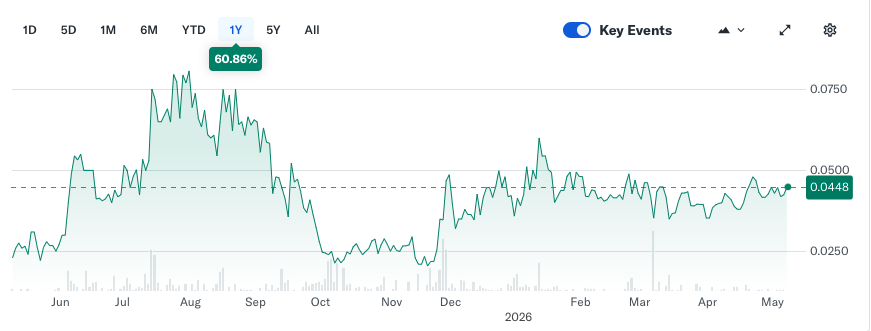
- Micro-cap angle: Sekur Private Data (OTCQB: SWISF) trades around US$0.043, with market cap near US$10M–US$11M, giving it higher risk but more torque if adoption improves.
Cybersecurity remains one of the strongest long-term technology themes in the market. Companies are moving more workloads to the cloud, employees are spread across more devices and locations, AI is making attacks more sophisticated, and governments are treating digital infrastructure as a national-security priority.
For investors, the cyber trade is not just about buying the biggest names. The better question is: which companies are growing revenue, expanding recurring contracts, defending margins, and still have room for valuation upside? That is why this basket combines four scaled cybersecurity leaders with one speculative micro-cap, Sekur Private Data (SWISF), focused on secure communications and privacy tools.
Market Catalyst: Cybersecurity Is Becoming Core Infrastructure
Cybersecurity is no longer just an IT expense. Industry estimates point to worldwide information-security spending of roughly US$200B–US$240B in 2026, while AI-driven attacks, ransomware, identity theft, cloud vulnerabilities, and nation-state threats keep security budgets high even when other software categories slow down.
The investment setup is clear: cyber companies with strong recurring revenue, high gross margins, sticky customers, and platform expansion can keep compounding. The risk is valuation. Many large-cap cyber names already trade at premium multiples, which means investors need to watch revenue growth, billings, ARR, free cash flow, and guidance closely.
1. Palo Alto Networks: The Platform Leader
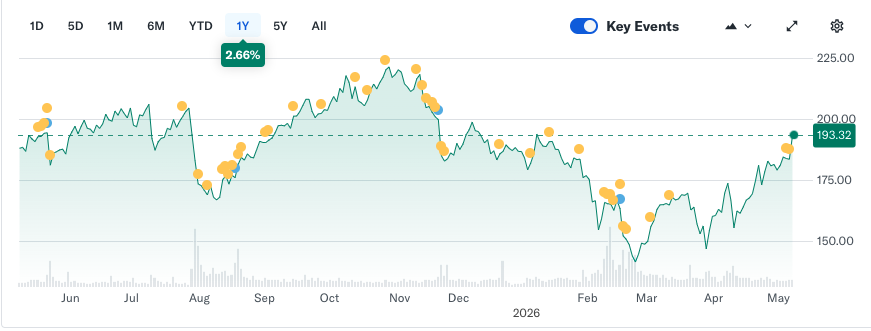
Palo Alto Networks (NASDAQ: PANW) remains one of the largest and most important cybersecurity companies in the public market. Recent market data showed PANW trading around US$193 per share, with a market cap near US$137B.
The company’s latest fiscal Q2 2026 results showed US$2.6B in revenue, up 15% year over year. More importantly for investors, Next-Generation Security ARR grew 33% to US$6.3B, and remaining performance obligations reached US$16.0B, up 23%. Management also guided for fiscal 2026 revenue of US$11.28B–US$11.31B, up 22%–23%, with adjusted free cash flow margin around 37%.
The upside case is platform consolidation. Large companies want fewer vendors and broader security coverage, which favors PANW. The risk is that at a large-cap valuation, the stock needs continued execution to keep moving higher.
2. CrowdStrike: Endpoint Security and AI Threat Detection
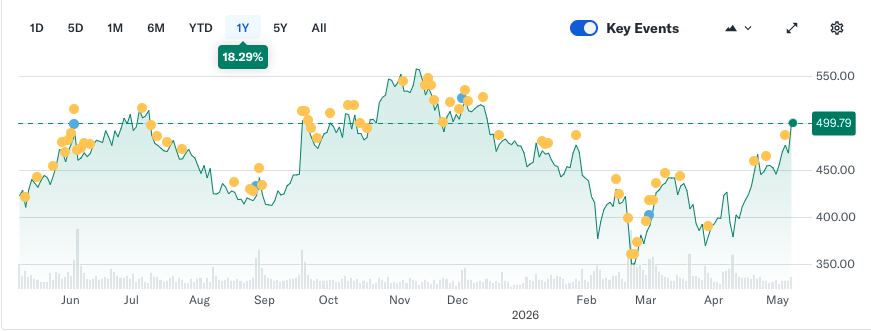
CrowdStrike (NASDAQ: CRWD) is one of the best-known names in endpoint security and cloud-native cyber protection. Recent market data showed CRWD trading around US$497 per share, with a market cap near US$125B.
CrowdStrike’s fiscal Q1 2026 results showed US$1.10B in revenue, up 20% year over year. Subscription revenue was US$1.05B, also up 20%, while ending ARR reached US$4.44B, up 22%. The company also generated US$384M in operating cash flow and US$279M in free cash flow during the quarter.
For investors, the key number is ARR. If CrowdStrike can keep expanding beyond endpoint into identity, cloud, SIEM, and AI security, the platform story stays strong. The risk is valuation: CRWD trades like a premium growth company, so any slowdown can hit the multiple quickly.
3. Fortinet: Firewalls, SASE, and Profitable Growth
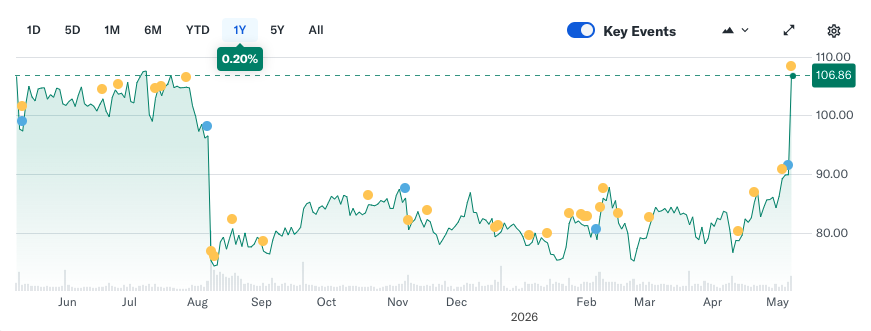
Fortinet (NASDAQ: FTNT) is one of the more established cybersecurity names, with exposure to firewalls, network security, secure access, and SASE. Recent market data showed FTNT trading around US$107, with a market cap near US$81B.
The latest Q1 2026 numbers were strong. Revenue grew 20% year over year to US$1.85B, product revenue jumped 41% to US$645M, and billings rose 31% to US$2.09B. Fortinet also reported 31% GAAP operating margin, 36% non-GAAP operating margin, US$1.08B in operating cash flow, and US$1.01B in free cash flow.
That makes FTNT one of the more profitability-focused names in the basket. The investor case is that Fortinet can benefit as companies modernize network security and secure distributed workforces. The risk is that firewall cycles can be uneven, so investors need to see billings strength continue.
4. Zscaler: Zero Trust and Cloud Security
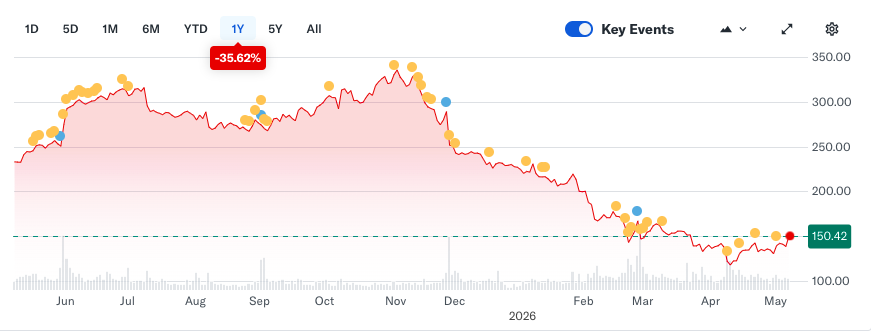
Zscaler (NASDAQ: ZS) is one of the purest public-market plays on zero trust and cloud-based secure access. Recent market data showed ZS trading around US$149 per share, with a market cap near US$24B.
Zscaler’s fiscal Q2 2026 update raised the company’s full-year outlook. Management guided for fiscal 2026 revenue of US$3.309B–US$3.322B, up about 24%, and ARR of US$3.730B–US$3.745B, also up about 24%. Non-GAAP operating income guidance was lifted to US$742M–US$748M, implying stronger operating leverage alongside growth.
The investor case is zero trust. As companies move away from old network perimeters, Zscaler’s cloud security architecture becomes more relevant. The risk is that ZS still needs to keep balancing growth, profitability, and valuation discipline.
5. Sekur Private Data: The Micro-Cap Secure Communications Play
Sekur Private Data (OTCQB: SWISF) is the small-cap outlier in this cyber tech basket. Unlike Palo Alto, CrowdStrike, Fortinet, or Zscaler, Sekur is not trying to dominate enterprise security platforms at scale. Its angle is narrower: Swiss-hosted secure communications, encrypted email, private messaging, VPN services, and privacy-first enterprise tools.
Recent market data showed SWISF around US$0.043, with a market cap near US$10M–US$11M and roughly 253M shares outstanding. That is tiny compared with PANW, CRWD, FTNT, and ZS. It also means Sekur needs far less revenue to potentially change investor perception.
The company has discussed premium products such as Sekur Platinum, reportedly priced around US$7,000 per year per user without phones and US$8,500 per year per user with the SekurPhone Platinum package. In simple terms, 500 premium users at US$7,000/year would equal US$3.5M in annual revenue, while 1,500 users would equal US$10.5M before any consumer or enterprise-plan revenue.
Recent additions, including retired U.S. Army Lt. Gen. Raymond Palumbo and former CIA technology leader John T. Lewis, give SWISF a stronger credibility story as Sekur tries to move deeper into government, defense, and enterprise secure communications. The risk is execution: Sekur still needs paid adoption, revenue growth, and contract traction.
Stock Snapshot
| Company | Ticker | Recent Price | Market Cap | Latest Key Number | Main Cyber Angle |
|---|---|---|---|---|---|
| Palo Alto Networks | NASDAQ: PANW | ~US$193 | ~US$137B | FY26 revenue guide: US$11.28B–US$11.31B | Platform security, cloud, SOC |
| CrowdStrike | NASDAQ: CRWD | ~US$497 | ~US$125B | Ending ARR: US$4.44B | Endpoint, AI threat detection, Falcon platform |
| Fortinet | NASDAQ: FTNT | ~US$107 | ~US$81B | Q1 billings: US$2.09B, +31% YoY | Firewalls, SASE, network security |
| Zscaler | NASDAQ: ZS | ~US$149 | ~US$24B | FY26 ARR guide: US$3.73B–US$3.75B | Zero trust, cloud security |
| Sekur Private Data | OTCQB: SWISF | ~US$0.043 | ~US$10M–US$11M | Premium pricing: ~US$7,000/year/user | Secure communications and privacy tools |
Bottom Line
Cybersecurity remains one of the strongest long-term technology themes because digital risk keeps rising. AI can make attackers faster, cloud adoption expands the attack surface, and companies cannot afford to underinvest in core security.
For investors, PANW, CRWD, FTNT, ZS, and SWISF each offer a different type of cyber exposure. Palo Alto is the platform consolidator. CrowdStrike is the endpoint and AI security leader. Fortinet is the profitable network-security compounder. Zscaler is the zero-trust cloud security play. Sekur is the speculative secure-communications micro-cap.
The large-cap names already have scale, but they also need to justify premium valuations. SWISF has the opposite setup: far smaller, much riskier, but potentially more sensitive to even modest enterprise or government traction. That makes the basket useful for investors who want both established cybersecurity leaders and one higher-risk watchlist name tied to secure communications.
This is sponsored content. Investors should conduct their own due diligence and consult a qualified financial advisor before making any investment decisions.

Marc has been involved in the Stock Market Media Industry for the last +5 years. After obtaining a college degree in engineering in France, he moved to Canada, where he created Money,eh?, a personal finance website.