Copper Quest Exploration Inc. (CSE: CQX | OTCQB: IMIMF | FRA: 3MX), recently announced the successful completion of an Artificial Intelligence (“AI”)-driven geological modeling of the Company’s 100%-owned Kitimat Copper-Gold Project located in northwestern British Columbia. The results of the modeling have confirmed the existence of a large conductive anomaly that appears to be consistent with a buried porphyry centre. The identification of this anomaly supports the Company’s exploration hypothesis that the Kitimat Property contains a large copper-gold hydrothermal system.
According to Brian Thurston, Chief Executive Officer of Copper Quest “the identification of this anomaly using our AI-driven exploration approach represents a significant advance in our exploration efforts.” The Company states that the conductive anomaly is situated along a structural magnetic boundary in fertile arc volcanics and is believed to represent a concealed intrusive porphyry center associated with copper-gold mineralization.

AI-Driven Exploration Partnership
The AI-driven modeling was conducted through Copper Quest’s partnership with U.S.-based Exploration Technologies Inc. (ExploreTech). The two companies entered into a strategic agreement on December 1, 2025, which allowed Copper Quest to utilize ExploreTech’s generative artificial intelligence to explore the Company’s exploration portfolio starting with the Kitimat Project. The ExploreTech platform utilizes a combination of geological datasets, including diamond drilling, government airborne magnetic surveys, VTEM conductivity data, structural and lithological interpretations, 2025 field observations and alteration mapping, soil and rock geochemical data, to generate thousands of potential subsurface geological models and ranks the highest-probability targets for concealed intrusive centers and sulfide-rich alteration zones.
Large Conductive Anomaly Identified
The results of the AI modeling indicated the presence of a large buried conductive anomaly measuring approximately 1.5 km x 1.5 km in lateral dimension. The modeling indicates that the anomaly is present in the subsurface at depths ranging from approximately 50 m below surface to at least 1 km below surface, which was the maximum modeled depth in the study.
Key features of the anomaly include:
- Presence in a pronounced magnetic gradient corridor
- Association with intrusive contacts or alteration boundaries
- Proximity to known volcanic-hosted sulfide mineralization
Collectively, the features of the anomaly are considered by Copper Quest to indicate the presence of a potential concealed sulfide-rich hydrothermal center, similar to those found in porphyry copper-gold systems.

Geological Context Supports Porphyry Model
The Kitimat Project is located in a geological environment consisting of Lower Jurassic Hazelton Group volcanic rocks intruded by Coast Plutonic intrusions, a geological environment that is recognized as highly conducive to the formation of porphyry copper-gold systems.
Additionally, the AI results support Copper Quest’s previously-held view that the historical mineralization encountered at the Jeannette Zone may represent the peripheral expression of a larger intrusive system.
Historical Drill Intercepts (Jeannette Zone)
- 117.07 m grading 0.54% Cu and 1.03 g/t Au (Hole J-7)
- 103.65 m grading 0.55% Cu and 1.00 g/t Au (Hole J-1)
- 107.01 m grading 0.45% Cu and 0.80 g/t Au (Hole J-2)
- 112.20 m grading 0.33% Cu and 0.41 g/t Au (Hole J-8)
These near-surface intercepts remain open and are interpreted by Copper Quest to represent the outer halo of a much larger porphyry system that may relate to the newly identified conductive anomaly.
Infrastructure Advantages
One of the key advantages of the Kitimat Project is its ideal location relative to infrastructure in northwestern British Columbia.
Infrastructure Highlights
- Approximately 10 km from the City of Kitimat
- Deep-water port facilities accessible nearby
- Rail infrastructure accessible nearby
- Access to high-voltage hydroelectric power
- Existing road access through historic logging and exploration routes
If a major copper-gold discovery were made at the Kitimat Project, the infrastructure would likely greatly enhance project economics.
Future Exploration Work
Based upon the results of the AI modeling, Copper Quest will initiate permitting for additional geophysics and drilling at the Kitimat Project.
Planned exploration activities include:
- Induced Polarization (IP) survey in 2026 to further define the target
- Diamond drilling in 2026 to evaluate the kilometer-scale conductive anomaly
Copper Quest believes these future exploration activities will provide definitive evidence of a concealed porphyry center at the Kitimat Project.
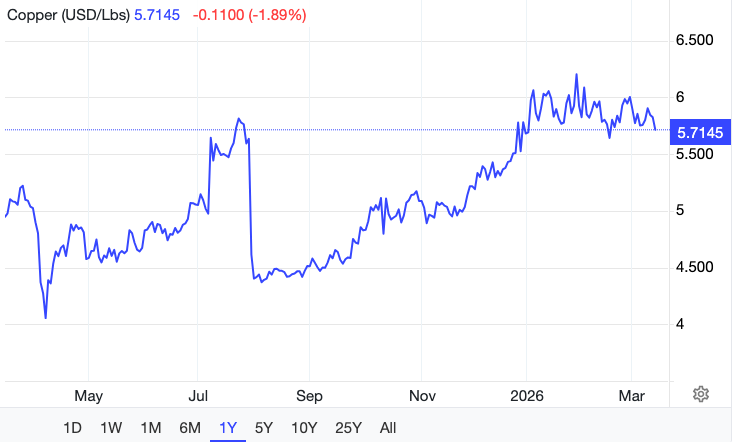
Global Copper Demand and Supply Deficits
Demand for copper is increasing dramatically due to the rapid adoption of electric vehicles, renewable energy sources, AI infrastructure and large-scale grid modernization initiatives. However, the copper industry is experiencing a decline in ore grades at existing mines, increasing permitting timelines, and a lack of major new discoveries. This dynamic is expected to result in significant global supply deficits in the copper market during the next decade. Thus, the strategic importance of identifying new copper deposits in stable mining jurisdictions such as Canada and the United States is expected to increase significantly.
Copper Quest (CSE: CQX | OTCQB: IMIMF | FRA: 3MX) believes its North American exploration portfolio is well-positioned to contribute to the next generation of copper discoveries.
About Copper Quest Exploration
Copper Quest controls eight exploration properties covering more than 46,000 ha of land across Canada and the United States. The Company is focused on discovery-driven exploration and creating value through the development of copper and gold assets in favorable mining jurisdictions.
The Company owns 100% interest in several properties, including the Kitimat Copper-Gold Project, the Stars Porphyry Copper-Molybdenum Project, the Nekash Copper-Gold Project in Idaho, and the Alpine Gold Mine near Nelson, B.C. Additionally, Copper Quest has exploration exposure to additional porphyry systems in B.C.’s Bulkley Porphyry Belt and other prospective areas.
Conclusion
The identification of a kilometer-scale conductive anomaly through the use of AI-based modeling is an important step forward for Copper Quest. By integrating historical data sets with modern AI-based geological analysis, Copper Quest has significantly enhanced its exploration model at Kitimat and created a high-priority drill target. Once permitting and additional geophysical work are completed, the Company can begin drilling on what it believes may be a large concealed copper-gold porphyry system.
Posted on behalf of Guerilla Capital for the issuer.

Marc has been involved in the Stock Market Media Industry for the last +5 years. After obtaining a college degree in engineering in France, he moved to Canada, where he created Money,eh?, a personal finance website.