The use of artificial intelligence (AI) and machine learning (ML) is dramatically changing the way data is processed, and how we diagnose and treat patients. With an ever-growing number of healthcare organizations relying heavily on data, AI is becoming increasingly essential to assist in improving efficiency, precision, and overall patient care.
- Value of the Global Market for AI in Healthcare: ~$36- $39 Billion in 2025; Projected to Surpass $500 billion by 2033
- Estimated Growth Rate of the Global Market for AI in Healthcare: ~38 – 44% CAGR Over the Next Ten Years
- Approximately 2/3 of Physicians Are Currently Using AI-Based Tools In Some Capacity
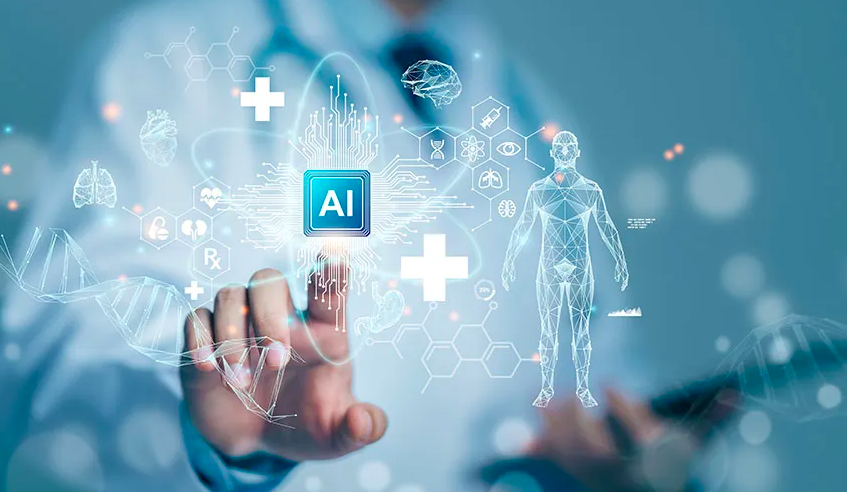
Transformation of Data Driven Healthcare
There is an enormous amount of data generated in the healthcare industry, from medical images to electronic health records, and wearable devices. AI and ML technology is well-positioned to unlock the value within this vast amount of data.
- Amount of Healthcare Data Accounts For Approximately 30 Percent Of All Global Data Generation
- Percentage of Healthcare Systems That Have Adopted AI Technology Has Increased From Approximately 3 Percent To More Than 25 Percent in Recent Years
- Approximate Percentage of North America’s Share of Global AI in Healthcare Market
Utilization of AI enables transformation of unprocessed data into useful information which will allow healthcare to move from reactive treatment to proactive care.
Improved Diagnoses and Patient Care Outcomes
One of the most influential ways AI is currently impacting the healthcare industry is in diagnosis. ML algorithms are able to identify patterns in medical data that may go undetected by a clinician.
- Accuracy of AI Diagnostics Can Reach Up to 87 Percent While Traditional Reporting Accuracy Is Approximately 73 Percent
- AI Significantly Reduces Diagnostic Error Rates in Imaging and Cardiology
- Detection of Disease Via Early Detection By AI Enables Treatment Costs to Be Reduced by Up to 30 Percent
The potential benefits of early detection via AI are especially important in diseases such as cardiovascular disease. In cases such as these, small changes in medical data can make substantial differences.
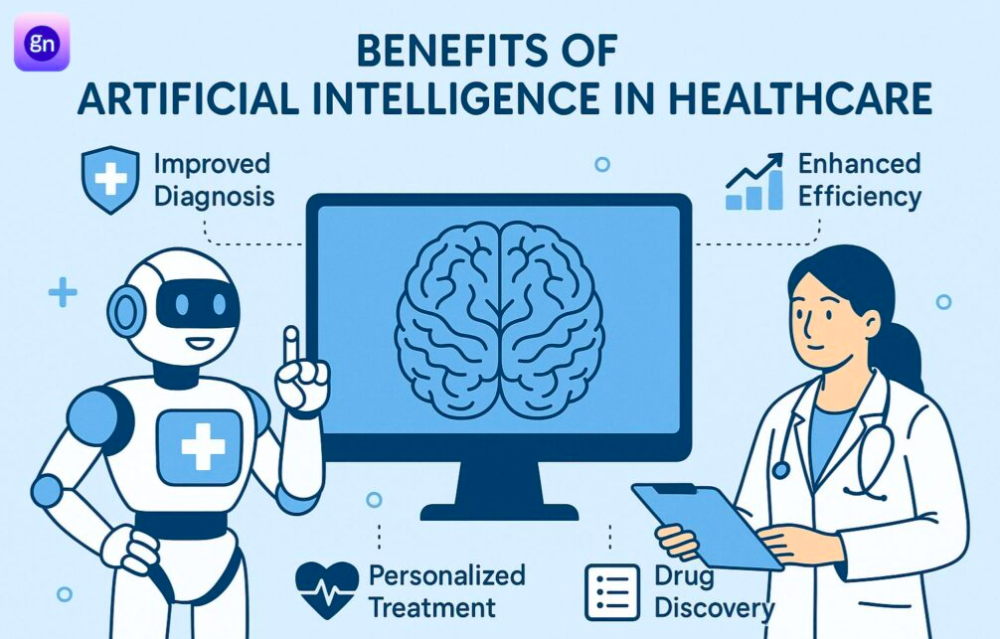
Personalized Medicine and Predictive Care
Another area where AI is making a positive impact is in the creation of personalized medicine, where treatments are developed for each patient individually based upon their specific data profile.
- Potential Value of AI-Influenced Pharmaceutical Development Estimated At Approximately $868 Billion by 2030
- Increased Utilization of Predictive Analytics Used In Treatment Planning And Drug Discovery
- Rapid Expansion Of Remote Monitoring Technologies And AI-Driven Platforms Globally
While AI creates more effective and efficient care for patients it also provides increased operating efficiency and cost reductions for healthcare providers.
Increased Operational Efficiency And Reduced Healthcare Costs
Worldwide healthcare systems continue to face increasing pressure to reduce expenses while simultaneously enhancing quality of care. Opportunities exist for the enhancement of operational efficiency through the utilization of AI and ML-based technologies.
- Reducing Time Spent On Manual Analysis And Data Cleaning Through Automation of Repetitive Administrative Tasks
- Providing Opportunity for Healthcare Professionals to Focus Upon Providing Patient Care
Both of these elements are critical as global demand for healthcare continues to grow.
AI/ML Innovations Update
AI/ML Innovations Inc. (CSE:AIML|OTCQB:AIMLF) is a Canadian Digital Health Company Focused on Applying Artificial Intelligence & Machine Learning to Biometric Data & Cardiovascular Monitoring.
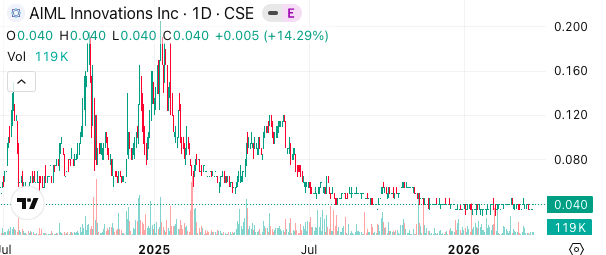
- Market Capitalization Approximately C$8-$11 Million with ~250 Million Shares Outstanding
- Share Price Currently at C$0.04 with 52-Week Range Between C$0.03-C$0.12
- Revenue Reported at Approximately C$0.17 Million with Continued Investment Into R&D and Platform Development
AIML Operates Through Proprietary Technologies Including ECG Signal Processing (MaxYield(tm)), AI-Derived Neural Networks (PrecisionPulse(tm)) and Health Monitoring Platforms Designed to Process Real-Time Biometric Data.

Recent Developments Include a Research Services Agreement with The Baker Heart & Diabetes Institute Where AIML’s AI Platform Will Be Utilized to Support Cardiovascular Research.
- Application of AI in Clinical Settings to Analyze Heart Rate Variability and ECG Data
- Conversion of Raw Biometric Signals into Structured, Machine Readable Datasets
- Supports Research into Physiological Differences and Disease Detection
This Collaboration Represents a Practical Application of AI in Healthcare Where Machine Learning Models Are Used to Extract Insights from Complex Biological Signals.
AIML Aims to Position Itself Within a Growing Segment of the Digital Health Industry Where Demand Continues to Grow for Predictive Analytics, Remote Monitoring and Data-Driven Diagnostics.
Conclusion
Artificial Intelligence & Machine Learning Are Becoming Cornerstone Technologies in the Healthcare Industry. Their Ability to Process Large Amounts of Medical Data, Improve Diagnostic Accuracy and Enable Personalized Care Positions Them as Key Drivers for the Next Wave of Healthcare Innovation.
- AI Is Revolutionizing How We Anlayze and Utilize Healthcare Data.
- Demand for Solutions Based on AI in Healthcare Continues to Increase.
- The Integration of AI into Both Clinical and Research Workflows is Accelerating Rapidly.
As Adoption Increases Companies Developing Scalable, AI-Driven Platforms for Healthcare Are Positioned Well to Benefit from Long-Term Structural Growth Across the Sector.

Marc has been involved in the Stock Market Media Industry for the last +5 years. After obtaining a college degree in engineering in France, he moved to Canada, where he created Money,eh?, a personal finance website.