- Policy rate: 2.25% (Bank of Canada on hold)
- Last BoC move: Hold after prior easing cycle
- Headline CPI (latest): ~2.9% YoY
- Core inflation: ~3.0% YoY (still above target)
- CAD: ~1.34–1.35 vs USD, stabilizing
- 10Y Canada bond: ~3.1% yield
- Equities: TSX sensitive to rate expectations and domestic growth signals
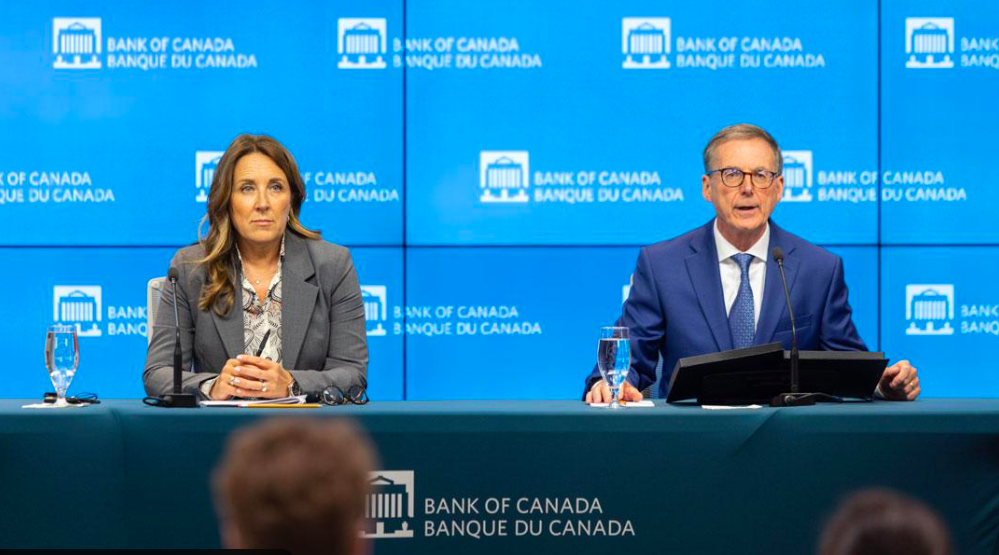
Canada’s recent macroeconomic trends have been more influenced by affirmation of previous trends and less by new surprises. The Bank of Canada has elected to leave interest rates unchanged, which can be seen as a sign that they require further clarification on inflation sustainability and labor market performance prior to taking action again.
Canada’s recent macroeconomic trends have been more influenced by affirmation of previous trends and less by new surprises. The Bank of Canada has elected to leave interest rates unchanged, which can be seen as a sign that they require further clarification on inflation sustainability and labor market performance prior to taking action again.
What Actually Influenced Economic Activity
There were two factors that had a more direct impact on the Canadian economy during this period of relative stability in terms of monetary policy.
First, some of the business activity indicators offered a preliminary indication that things may be improving. The Ivey Purchasing Managers Index (PMI) increased to 51.9 and moved back into expansion territory above the 50 level, suggesting that business activity may be increasing later in the year. Although the PMI does not necessarily indicate a significant increase in growth, the fact that business activity was stagnant during prior months and now appears to be increasing has provided support for stable expectations for economic growth.
Second, there have been indications that the Canadian economy still remains vulnerable. Data indicated that monthly gross domestic product (GDP) contracted by approximately −0.3% in October, representing the largest decline since late 2018. The contraction in GDP was primarily driven by weakness in the production of goods and in industries that are sensitive to international trade. Therefore, although the Canadian economy is experiencing a slowdown, the decline in the GDP is not indicative of a complete collapse.
In addition, housing has been another factor through which the impact of monetary policy has been transmitted. The number of home sales has decreased for three consecutive months and has been most pronounced in large markets such as the Greater Toronto Area, where year-over-year sales have fallen by approximately 10-12%. As a result of rising financing costs and economic uncertainty, consumers continue to be hesitant to purchase homes. Additionally, the decline in price pressures has resulted in slower household spending.
Internationally, trade and currency developments have also impacted the Canadian economy. The Canadian dollar has stabilized due to improvements in sentiment related to potential U.S. rate cuts and reduced uncertainty regarding trade policies. In addition, renewed diplomatic efforts aimed at promoting trade relationship diversification have added trade policy back to the macroeconomic discussion.

Labor Market Context
Data released on Canadian employment has been mixed, providing additional support for the central bank’s wait-and-see stance. On average, net job growth has slowed significantly to approximately 20-30k per month versus the peak of the cycle. Compared to previous cycles, the amount of jobs being created is significantly lower, and the pace of hiring has slowed across multiple sectors. Wage growth is moderating, reducing the upward pressure on prices while indicating declining demand for labor, with average wage growth decreasing to approximately 4.5% Year Over Year (YoY), down from its peak.
Overall, the current state of the labor market is characterized by low-momentum rather than a sharp decline in employment. Layoffs remain relatively rare; however, businesses are becoming increasingly cautious when considering adding payroll positions. This caution has enabled the Bank of Canada to pause without appearing overly restrictive while maintaining the labor market as a key consideration for future policy actions.
Why This Matters for Interest Rates
Collectively, these events have caused shifts in rate expectations. Canada is no longer in an environment of rapid easing and the bar for further rate reductions has risen. Policymakers seek evidence that inflation is continuing to moderate in a sustainable manner, and that the recent weakness in the economy is widespread rather than localized.
Markets are increasingly expecting a longer period of monetary policy stability and view the probability of the Bank of Canada lowering interest rates to be minimal until incoming data indicates a significant decline in economic growth or a failure of inflation to meet expectations.
Conclusion
The Canadian economy experienced slow growth rather than collapse. With interest rates remaining at 2.25%, the Bank of Canada has signaled caution rather than urgency. The short-term theme for investors will likely include stability with downward risk — a scenario in which incoming inflation and labor data will greatly affect the timing and nature of the next policy decision.

Marc has been involved in the Stock Market Media Industry for the last +5 years. After obtaining a college degree in engineering in France, he moved to Canada, where he created Money,eh?, a personal finance website.