Doseology Sciences Inc. (CSE: MOOD | OTC: DOSEF | FSE: VU70), a Canadian biotech firm developing innovative cannabis-based health products and brands, is working towards a more comprehensive product line-up with the introduction of a pilot run of caffeine-based, nicotine-free oral energy pouches under its Feed That Brain brand. This is a calculated first step in entering the oral stimulant market, and will allow the company to gauge the effectiveness of its product formula, the response of consumers to the product, and the efficiency of its operations before it decides to proceed with the full commercial roll-out of the product.
There are very few publicly traded small cap opportunities for investors looking to get involved in emerging consumer wellness and performance categories. In addition to being one of the few publically traded companies offering modern oral stimulant formats (in addition to traditional beverages and supplements) in this space, MOOD’s Feed That Brain brand is well-positioned to take advantage of growing interest in non-traditional oral stimulant formats.

This article describes the reasons behind the pilot; the market environment supporting the use of alternative formats for stimulation; and why this action is important for Doseology’s overall position in the marketplace.
Strategic Environment — Beyond Traditional Beverages
While the global energy/stimulant market is still large and competitive, there is a growing trend towards changing consumer preferences. Traditional energy drinks are facing increased criticism due to their high levels of sugar, volatile dosing, and consumption habits. As a result, consumers are beginning to show a preference for controlled, unitized, convenient and predictable delivery of stimulants.
Estimates of the global energy drink market are approximately $80B today, with industry projections calling for it to exceed $120B by 2030. Other categories of functional delivery systems (such as oral nicotine pouches) have shown how rapidly non-liquid formats can grow when they gain acceptance by consumers.
Oral delivery systems (such as pouches, tablets and gum) are a growing sub-category of the overall stimulant market, designed to address these changing consumer preferences. Doseology (MOOD) is establishing itself to participate in this shift away from the traditional beverage format without competing with the many other beverage producers in the crowded beverage aisle.
Pilot Production — What Doseology Is Evaluating
On January 2026, Doseology announced the initiation of a pilot production of caffeine-based energy pouches that are specifically free from nicotine. The goal of this pilot is to evaluate data to determine if the company should move forward with the next steps in the product development process, versus immediately scaling up production. The focus areas of the pilot include:
- Ensuring consistent and reliable caffeine delivery
- Identifying manufacturing and operational efficiencies
- Evaluating initial consumer comments and usage behavior
Management has described the pilot as an exploratory effort to confirm assumptions regarding demand and product-market fit prior to expanding into the larger market.
Feed That Brain — A Platform Brand
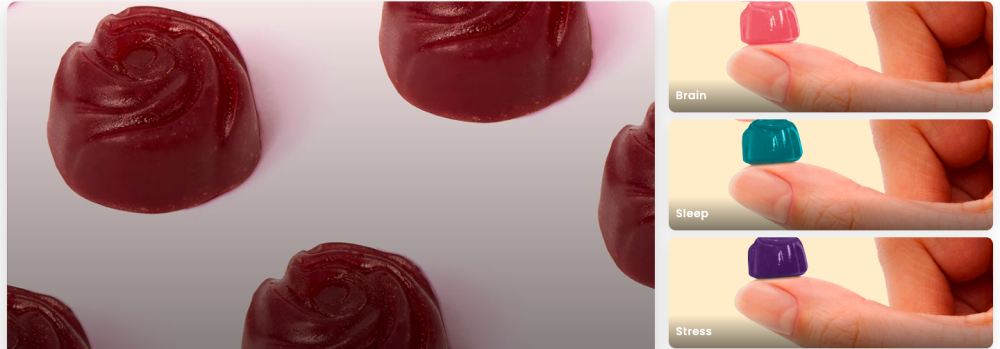
The Feed That Brain brand was originally developed around functional and nootropic products (including gummies). With the extension of the Feed That Brain brand into oral stimulant pouches, Doseology is evaluating whether the existing brand equity it has built can be leveraged into new delivery formats within the same functional performance theme.
The platform approach allows Doseology to iteratively develop new products within a familiar brand identity, which reduces the risk associated with the launch of new, stand-alone products.
Trends Supporting New Delivery Formats
Caffeine is currently the most widely consumed psychoactive stimulant across the globe, however, the manner in which consumers consume caffeine is increasingly fragmented. Increasingly, consumers are seeking out discreet, portable formats with predictable dosing and lower levels of added sugars and additives.
This trend parallels what has occurred in nicotine-free and reduced-risk categories. Established consumer goods companies (such as Philip Morris International through its ZYN brand) have shown that oral pouch formats can scale quickly. Specifically, ZYN controls the largest portion of the U.S. nicotine pouch market. Although Doseology is operating in a non-nicotine segment, the rate at which consumers are adopting oral pouch formats in adjacent categories (nicotine-free and reduced-risk) provides a benchmark for possible growth.
Considering this environment, MOOD’s pilot program seeks to determine whether similar consumer behaviors exist for caffeine-based oral stimulants within its target demographics.
Business & Operational Expectations
The pilot program will be launched via a limited, direct-to-consumer model, which will enable the company to gather actual world data related to the consumer experience (usage, repeat usage, etc.) and operational performance. These data points will be used to inform future decision-making relative to the refinement of formulations, pricing, and the eventual scaling of the product.
Management emphasized that this multi-phased rollout model allows Doseology (CSE: MOOD) to create opportunities while managing capital risk — an approach gaining favor among early stage consumer product companies seeking to establish credibility prior to expansion.

Risks Associated with the Pilot Program
Like all early-stage pilots, there are inherent risks associated with the program. For example, there may be a lack of adoption among consumers, higher-than-expected operational expenses relative to initial revenues generated, and the potential for competitive responses from major players in the industry.
Investors should view the pilot program as an opportunity creating exercise and not as an assurance of the ultimate commercial success of the product.
Summary
The pilot production of caffeine-based energy pouches by Doseology represents an exploratory effort by the company to assess the viability of the oral stimulant category. By focusing on controlled delivery, brand continuity and collecting data, the company is employing a deliberate approach to product innovation.
A successful pilot could create an opportunity for Doseology to expand its current product offerings and capitalize on emerging trends in stimulant consumption. On the other hand, the limited nature of the pilot program limits potential downsides while maintaining the strategic options available to the company.
Posted on behalf of Guerilla Capital for the issuer.

Marc has been involved in the Stock Market Media Industry for the last +5 years. After obtaining a college degree in engineering in France, he moved to Canada, where he created Money,eh?, a personal finance website.