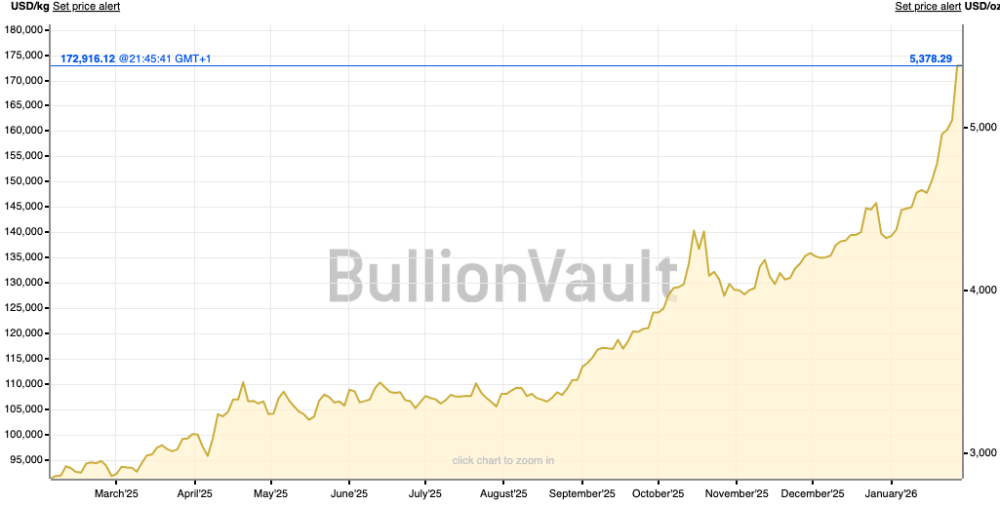
Gold is trading at an all-time-high of about $5,250-$5,350 an ounce based on data available from the world’s top bullion desks at the end of January 2026. The price has risen roughly 35-40 percent in the last 12 months; it is one of the best-performing major assets.
Gold has increased due to rising geo-political tension and increased fiscal pressures in many countries. The US federal government is operating at a budget deficit exceeding 6% of GDP, while total federal debt has exceeded $35 trillion. These factors raise concerns regarding long-term currency devaluation and the erosion of real purchasing power.
Unlike previous gold cycles, which were caused by acute crisis events, the present gold cycle has occurred due to a broader strategic review by governments, central banks, and institutional investors of gold’s role as a monetary reserve asset, while global equity markets continue to be near historic highs.
Drivers of Recent Price Movement
Government & Central Bank Purchases
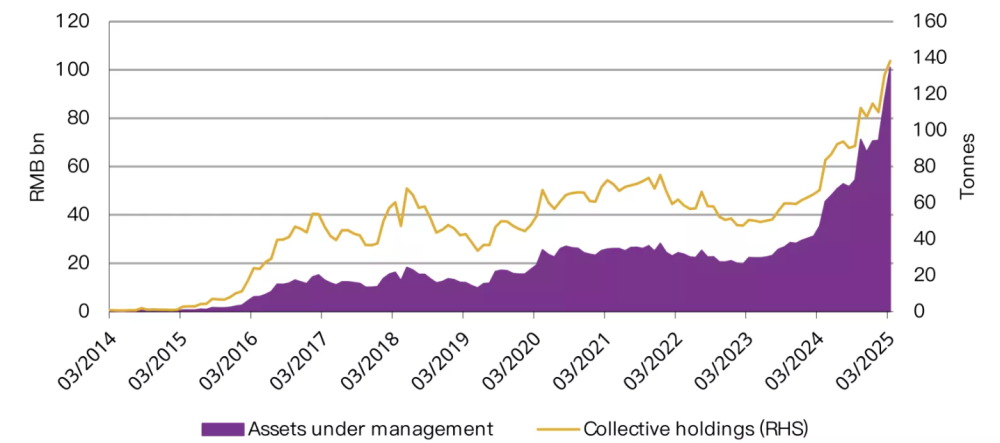
Official sector demand for gold is a core structural support for the gold market. Central banks were net purchasers of approximately 850 tonnes of gold in 2025, making it the fourth year in a row that they purchased large amounts of gold.
Central bank purchases in 2025 were largely driven by emerging-market central banks, including China, Turkey and India, as governments continued to add gold to their foreign exchange reserves in order to reduce their dependence upon the U.S. dollar given rising geo-political and sanctions risks. Demand for gold from official sectors has been relatively price-insensitive and has supported gold even when priced above $5,000 per ounce.
Monetary Policy, Real Interest Rates, and Currency Risk
Gold has benefited from downward pressure on fiat currencies and declining confidence in real returns from sovereign bonds. In the U.S., real rates have fluctuated wildly because inflation expectations continue to exceed the credibility of the Federal Reserve.
At the same time, the U.S. Dollar Index (DXY) has fallen significantly from its cycle highs by over 10%, a historical correlation with rising gold prices. Geopolitical tensions and fiscal pressures in Europe and Japan have produced similar trends worldwide and have increased demand for non-sovereign stores of value.
Geopolitical and Policy Uncertainty
Geopolitical risk remains a primary factor driving investor behavior. Conflict in Eastern Europe and the Middle East and renewed trade tensions between the U.S. and China have created greater demand for assets that are seen as politically neutral.
Recent policy uncertainties surrounding the U.S. political environment have contributed to increased volatility in currency and bond markets. Investment strategists at several major banks have indicated that the trend of gold moving through the USD 5,200/oz barrier will be attributed to these dynamics and they further indicated that gold often performs well during times of political transitions and policy uncertainty.

Investor Allocations & ETFs
Investment demand has complemented official-sector demand. Physically-backed gold ETFs recorded their largest annual inflow on record in 2025, with global gold ETF holdings increasing to over 4,000 tonnes, or over USD 700 billion in bullion at current prices.
The majority of the inflow was in North America and was driven by institutional investors and asset managers who were reallocation capital into defensive assets. There was also significant ETF demand in Europe and Asia, indicating a widespread geographical shift towards gold as a strategic portfolio allocation.
Market Structure & Outlook
Gold’s rise has been associated with strong liquidity and broad participation as opposed to narrow speculative positioning. Data on futures markets indicate rising open interest and sustained physical demand, which suggests that there is institutional-led momentum behind the move and not speculative retail excess.
- Futures positioning: Rising open interest accompanying higher prices indicates that there is new money entering the market
- Demand profile: Physical buying and ETF flows are supporting the price movement, and not derivatives
- Price level: Gold has traded above USD 5,200/oz despite volatile conditions
Global financial institutions have raised their forecasts of the medium term price of gold as these dynamics continue. Goldman Sachs and peer institutions currently forecast a medium term price of approximately USD 5,400 per ounce for 2026, and cite continued central-bank demand, reduced fiat confidence, and growing geo-political fragmentation as the fundamental drivers.

- 2026 Forecast: ~USD 5,400/oz (Goldman Sachs and Peers)
- Assumptions: Continued central-bank demand, less confidence in fiat currencies, growing geo-political fragmentation
Short-term pullbacks may occur after such a rapid price increase but analysts generally believe that gold’s price movement reflects structural rather than speculative forces.
- Trend outlook: Any pullbacks would be viewed as a correction rather than a reversal of the trend
- Portfolio role: A hedge against currency risk and late-cycle volatility
- Use-case: A defensive allocation with potential upside participation in stressed macro environments
Company Profile: Golden Rapture Mining (CSE: GLDR)
In light of this supportive gold environment, Golden Rapture Mining is positioning itself as a high-beta junior explorer with improved balance sheet flexibility.
- Current Share Price (Late Jan 2026): ~C$0.06
- 52-week Trading Range: ~C$0.03-C$0.10
- Common Shares Outstanding: ~51,989,390
Golden Rapture Mining announced the completion of the final tranche of its non-brokered private placement, completing the original structure of the financing and providing near-term visibility on funding requirements.
- Gross Proceeds from Financing: ~$500,000
- Final Tranche Size: $339,800
- Units Issued: 8,495,000 Non-flow-through Units
- Issue Price: C$0.04 per Unit
- Warrants: 1 Warrant per Unit, Exercisable at C$0.05 for 24 Months

The funds raised from the financing are intended for general corporate purposes and to continue exploration activities and provide the Company with the ability to advance its project portfolio in a time when gold prices are elevated.
- Asset Base: Gold Projects in Northwest Ontario
- Flagship Property: Northern Queen Mine
- Macro Leverage: Direct Exposure to Gold Trading Above $5,000/Oz During a Constructive Precious Metals Cycle
Summary
Gold’s recent price movement reflects more than short-term volatility — it signifies a broader re-evaluation of risk, currency exposure, and long-term portfolio protection. As long as the macro fundamentals continue to be favorable, gold continues to attract attention from both institutional and retail investors.
For individual companies, such as Golden Rapture Mining, financings such as the Company’s recent private placement illustrate how junior explorers are positioning themselves to operate and advance projects during a gold cycle that supports gold prices.

Marc has been involved in the Stock Market Media Industry for the last +5 years. After obtaining a college degree in engineering in France, he moved to Canada, where he created Money,eh?, a personal finance website.