Analysis of Electrocardiograms (ECGs) is central to the diagnosis of heart disease, however the economics of this area are restricted by the availability of workers, not the amount of ECGs being produced.
As there are hundreds of millions of ECGs and Holter monitors analyzed each year, with the number continuing to grow, clinical productivity has been constrained by the supply of skilled technicians and cardiologists. This disparity in production and processing capability has converted ECG evaluation into a classic bottleneck business.
Market/Context
Holter and ECG monitoring represent a large and consistent healthcare market due to population aging, chronic cardiovascular diseases and the widespread use of wearables and patch based monitoring products.
- There is an estimated $6 – 11 Billion annual global clinical ECG and Holter monitoring market, with hundreds of millions of ECGs produced annually.
- Reports for Holter and extended patch ECG studies produce much greater reimbursement than standard ECG studies, typically $200 – 300 per report for 24 – 48 hours monitoring, and $300 + for extended or patch studies.
- Smartwatches, patches and remote monitoring technologies have greatly increased the number of ECG capable devices; therefore, the rate of volume growth of ECGs exceeds the rate of clinical review capacity.
Although there is continued growth of ECGs being produced, the economics have not changed; reimbursement is still per report and the primary means of increasing production is by adding additional employees.
Major Developments
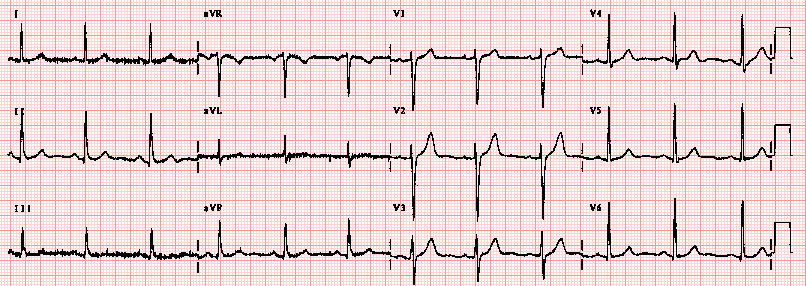
The major limitation to ECG evaluation is not generating the signal, but evaluating the signal.
- Conventional Holter studies require 5 – 10 hours of technician time to generate one study, and thus 3 – 5 studies per technician per day.
- Even automated or rule-based systems can provide only marginal improvements in throughput to 6 – 10 studies per day, and the systems will require manual cleaning and evaluation.
Due to a global shortage of cardiac technicians and cardiologists, the turn-around time for Holter studies has increased from hours to days; and therefore, clinicians are experiencing delayed results, and burn-out.
Therefore, instead of incremental automation, there is a need for a complete redesign of the Holter workflow using AI signal intelligence.
Analysis
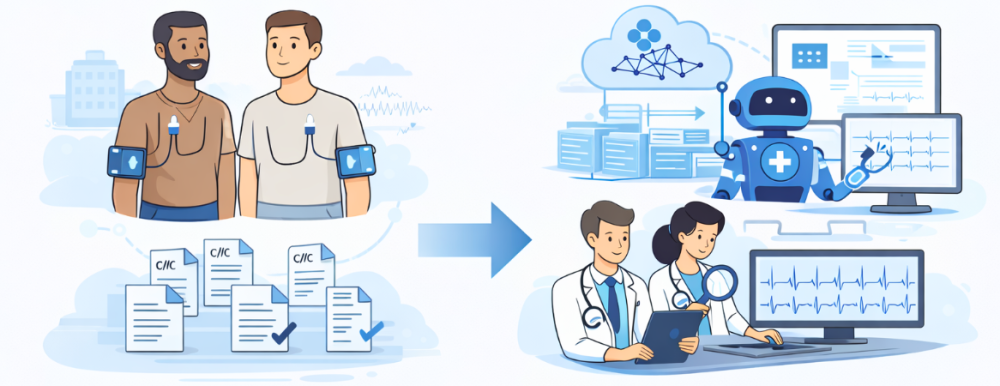
AI enabled signal intelligence fundamentally alters the cost structure of ECG evaluation by eliminating noise in the signal prior to downstream analysis, rather than relying upon post-analysis classification of the raw data.
One example of this type of technology is AIML Innovations Inc. (CSE: AIML), which uses AI enabled signal first intelligence to clean ECG signals prior to performing downstream analysis, rather than solely using post-analysis classification.
- AI enabled workflows, including those developed by AIML Innovations (CSE: AIML), can increase technician throughput by 5x, thus enabling 15 – 30+ reports per technician per day without the addition of personnel.
- Turn-around time can be decreased from days to minutes or hours, while maintaining or improving diagnostic accuracy.
- Because reimbursement is per report, an increase in throughput will result in an increase in revenue per technician, and improved operating leverage.
At scale, even small increases in revenue — $1 – 10 per ECG — when applied to 300+ million ECGs annually create a significant revenue opportunity for software companies. Therefore, over a decade, this would imply 1+ billion ECGs evaluated through AI enabled systems.

Implications
The conversion of manual evaluation to AI enabled signal intelligence converts ECG evaluation from a labor bound service to a scalable software business. Examples of companies like AIML Innovations (CSE: AIML) demonstrate that AI enabled signal intelligence can be integrated into existing clinical workflows, while maintaining reimbursement structures.
- Clinical facilities can evaluate significantly larger numbers of ECGs, without having to hire additional personnel.
- Cardiologists will only spend their time evaluating clinically relevant, flagged events and will no longer have to evaluate raw signal data.
- The software margins will replace linear labor economics, and enable ECG evaluation to operate under modern health-tech business models.
This conversion does not alter the value of an ECG report — it enables a system to economically evaluate a significantly larger number of reports.
Bottom Line
ECG evaluation is a volume business, which is limited by human throughput. As the number of ECGs produced continues to increase, through the use of wearables and patches, the economic winners will be the companies that eliminate signal noise, reduce evaluation time, and enable the evaluation of a larger number of reports, without increasing labor costs. In this market, value is not added by producing more data — it is added by converting overwhelming volume to actionable clinical information.
Why Invest in AIML?
- AIML Innovations Inc. is publically traded and available through multiple exchanges:
- CSE: AIML
- OTCQB: AIMLF
- FWB: 42FB
- The company operates at the intersection of AI software economics and high volume cardiac diagnostics, and addresses a fundamental bottleneck in healthcare.
- AIML’s signal-first approach allows the benefits of throughput to translate directly to operational leverage, while maintaining fixed reimbursement structures.
Posted on behalf of Guerilla Capital for the issuer.

Marc has been involved in the Stock Market Media Industry for the last +5 years. After obtaining a college degree in engineering in France, he moved to Canada, where he created Money,eh?, a personal finance website.