Market Snapshot
- Fed policy rate (target range): 5.25–5.50% (on hold)
- Inflation (CPI, Nov 2025): Headline +2.7% YoY; Core (ex‑food & energy) +2.6% YoY
- Labor (BLS, Nov 2025): Unemployment 4.6%; Participation 62.5%; Nonfarm payrolls +64,000
- Jobs pulse (ADP, Dec 2025): Private payrolls +41,000; Pay +4.4% YoY
- Rates (10Y): ~4.13% (Jan 7)
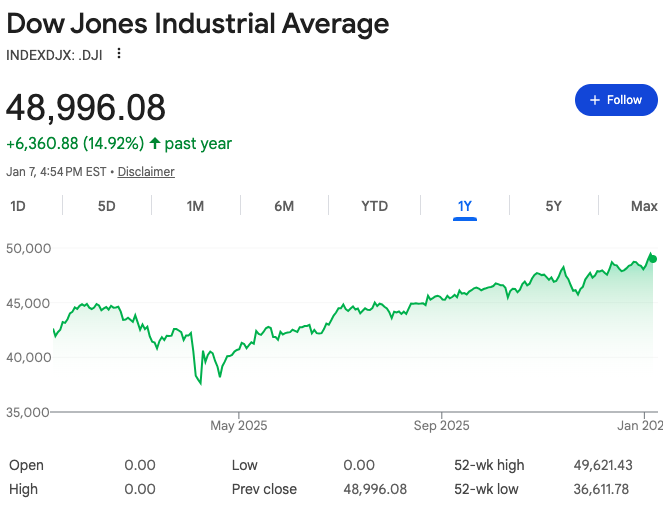
- Equities (Jan 7 close): S&P 500 6,920.93; Nasdaq 23,584.27; Dow 48,996.08; Russell 2000 2,575.42
What Actually Moved the Economy
Recent U.S. macro momentum has been driven less by fresh upside surprises and more by a slow‑moving re‑pricing of “how sticky” inflation and labor conditions remain. The key macro story into early January is that growth hasn’t collapsed, but the labor market is no longer running hot—while policy and markets are still anchored to whether inflation is truly converging toward target.
The late‑2025 federal shutdown created real data gaps (no October CPI or Employment Situation), which is now bleeding into how investors interpret the trend. Markets have been forced to lean more heavily on partial reads (November official releases + December high‑frequency signals), making every jobs and inflation update matter more than usual.

Labor Market — Cooling, Not Cracking
The latest official BLS read (November 2025) shows a labor market that is weakening at the margins, but not breaking. Unemployment is 4.6% and participation is 62.5%, with payrolls up only 64,000—a “low‑but‑positive” pace consistent with a slowing expansion rather than an outright contraction.
High‑frequency signals point the same way. ADP reported +41,000 private jobs in December and pay up 4.4% YoY, which reinforces the idea that hiring is still happening but at a materially slower rate.
The JOLTS picture also leans toward cooling demand: November job openings fell to 7.146 million, with hiring at 5.115 million. That’s a tangible step down from prior cycle highs and supports a narrative of easing labor tightness—without a surge in layoffs.

Inflation — Lower, But the Fed Will Want “More Proof”
Inflation progress has improved on the latest official CPI print, but it comes with caveats. For November 2025, headline CPI rose 2.7% YoY and core CPI rose 2.6% YoY. Beneath the surface, shelter inflation is still positive (+3.0% YoY), and the overall picture is complicated by the shutdown disruption (missing October CPI and altered seasonality comparisons).
Net: inflation is trending in the right direction, but policymakers are likely to treat the improvement as “encouraging, not conclusive,” especially given the measurement noise created by the data interruption.
Rates & Policy — Why the Fed Stays Patient
With inflation improved but not “fully proven,” and labor cooling but not collapsing, the Fed’s incentive is to remain patient. A 5.25–5.50% policy rate keeps real rates positive, while the market continues to move on whether disinflation is durable.
Rates are reflecting that push‑pull. The 10‑year Treasury is around ~4.13% into Jan 7—high enough to matter for housing and corporate discount rates, but not high enough to force a fast reset in risk assets.
Market Interpretation
Equities are still pricing a soft‑landing bias, but participation and sensitivity are telling. On Jan 7, the S&P 500 closed at 6,920.93, the Nasdaq at 23,584.27, the Dow at 48,996.08, and the Russell 2000 at 2,575.42. The takeaway is not just “levels are high”—it’s that markets remain extremely reactive to labor and inflation data because that’s what determines the path of policy.
Bottom Line
The U.S. macro setup into early January is defined by: (1) official inflation prints that look better, (2) labor that is cooling but still holding together, and (3) a policy stance that stays restrictive until the disinflation trend is confirmed.
The near‑term driver is straightforward: if incoming jobs and inflation data validate the November improvement, the market will increasingly price a gentle policy pivot later in the year. If the next CPI/jobs prints re‑accelerate, the “soft landing” narrative gets tested fast.

Marc has been involved in the Stock Market Media Industry for the last +5 years. After obtaining a college degree in engineering in France, he moved to Canada, where he created Money,eh?, a personal finance website.