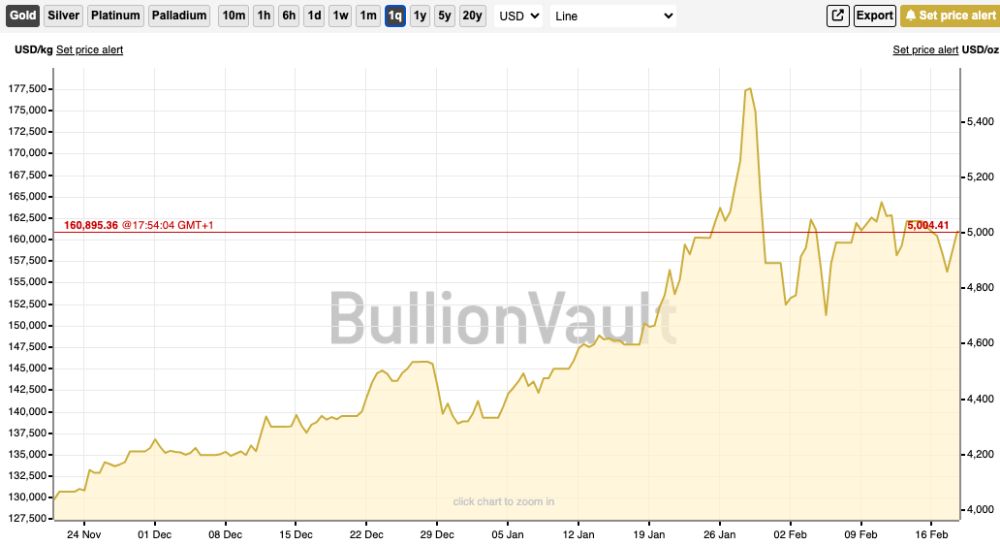
We have been witnessing the resurgence of gold within investment circles due to continued geopolitical uncertainty, historically high levels of government debt and anticipation of an eventual easing in global monetary policy. While gold surged to unprecedented price levels early in 2026; it has since stabilized near all-time historic highs, and has been supported by very strong demand from central banks and a renewed interest from institutional investors in gold.
The current market environment appears to favor larger gold producers that have sizeable scale, cash flows and reserve depth, in addition to providing increased strategic merit to quality gold exploration companies located in Tier-1 jurisdictions.
Why to Focus on Major Gold Producers Today
Major gold producers typically gain significantly greater advantage than other gold producers during prolonged periods of high gold prices, especially when bullion prices trade at or near multi-year highs, as they did in the early part of 2026 with spot gold trading at approximately $4,900-$5000/oz. At this point in time, many of the major producers are producing margins far in excess of their historical average margins, which is creating very significant amounts of free cash flow, debt reduction, and providing them with the ability to pay dividends and reinvest funds back into the business.
The support for major producers in this respect is provided by the ongoing purchase of gold by central banks globally, where global central banks collectively purchased over 1,000 tonnes of gold annually in 2023 – 2024, which is one of the strongest purchasing years on record. Central bank demand for gold has continued into 2025 and the first half of 2026 as countries seek to diversify their reserves out of fiat currencies. Simultaneously, global mine supply has only slightly increased (typically < 1 – 2% per annum) and, consequently, the development timeline for new gold mines is frequently > 10 years, thereby providing additional strategic significance to reserve replacement, and supporting both disciplined M&A activity and high-quality exploration projects.
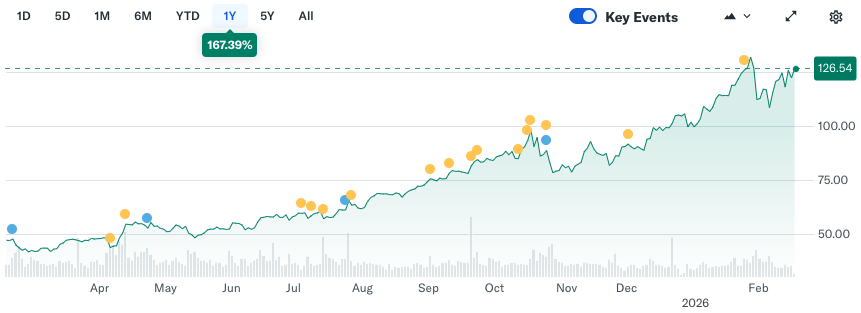
Stock #1: Newmont Corporation
- NYSE: NEM
- Share Price (Feb 18, 2026): ~US$126 – 127
- Market Capitalization: ~US$130 Billion
Newmont is the world’s largest gold producer, with a diverse portfolio of Tier-1 assets in North America, South America, Australia and Africa. The size of Newmont’s portfolio provides resilience across commodity cycles, as well as exposure to multiple high-quality mining districts.
Recent updates have included continued ramp-up at Ahafo North (Ghana) and progressing the integration of large-scale assets acquired through the acquisition of Newcrest, reinforcing Newmont’s long reserve life and production visibility. In the current gold price environment, the company benefits from very strong operating margins, disciplined capital allocation, and a focus on returning capital to shareholders via dividends and balance-sheet management.
Stock #2: Barrick Gold
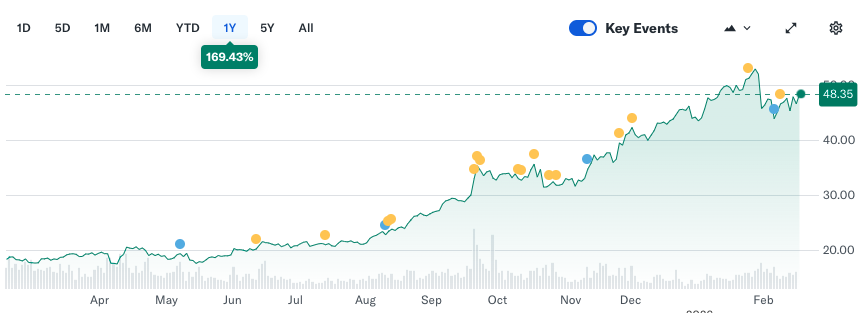
- NYSE: B
- TSX: ABX
- Share Price (Feb 18, 2026): ~US$47 – 48
- Market Capitalization: ~US$80 Billion
Barrick is a global gold major with a focus on Tier-1 assets and partnerships in some of the world’s most prolific gold-producing regions. The company is known for operational discipline and a focus on long-life, low-cost mines.
Recent developments have included the company’s strategic rebranding to Barrick Mining, which reflects the company’s expanding copper exposure in addition to gold, and the continued advancement of high-quality assets such as Fourmile (Nevada). Barrick’s exposure to large, high-quality deposits provides leverage to gold prices, while its conservative financial approach provides a buffer against price volatility during down markets.
Stock #3: Fairchild Gold
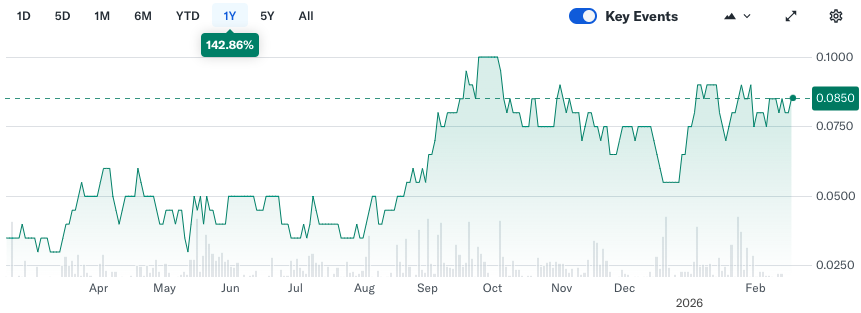
- TSXV: FAIR
- Share Price (Feb 18, 2026): ~C$0.09
- Market Capitalization: ~C$13 – C$14 Million
Fairchild Gold provides leverage to exploration upside by focusing on high-quality gold projects in Nevada, one of the world’s most developed and mining-friendly jurisdictions. Unlike large producers, Fairchild offers discovery-driven optionality that becomes increasingly valuable during periods of strong gold prices.
Recent updates have included advancing Fairchild’s fully-paid up Nevada property portfolio, enabling capital to be directed towards geophysics and drilling as opposed to paying for options. As major producers begin to replace depleting reserves, exploration-focused companies such as Fairchild may see increased interest in exploration and potentially attract strategic attention.
In Summary
Gold’s recent strength has solidified its position as a strategic asset in times of uncertainty and instability in macroeconomic conditions. Established gold producers, such as Newmont and Barrick, provide size, stability, and the ability to generate strong cash-flow leverage, whereas Fairchild Gold provides exploration-driven upside.
Together, these three stocks provide a balanced manner in which to participate in the current gold cycle, including a mix of defensive characteristics, as well as long-term growth prospects.

Marc has been involved in the Stock Market Media Industry for the last +5 years. After obtaining a college degree in engineering in France, he moved to Canada, where he created Money,eh?, a personal finance website.