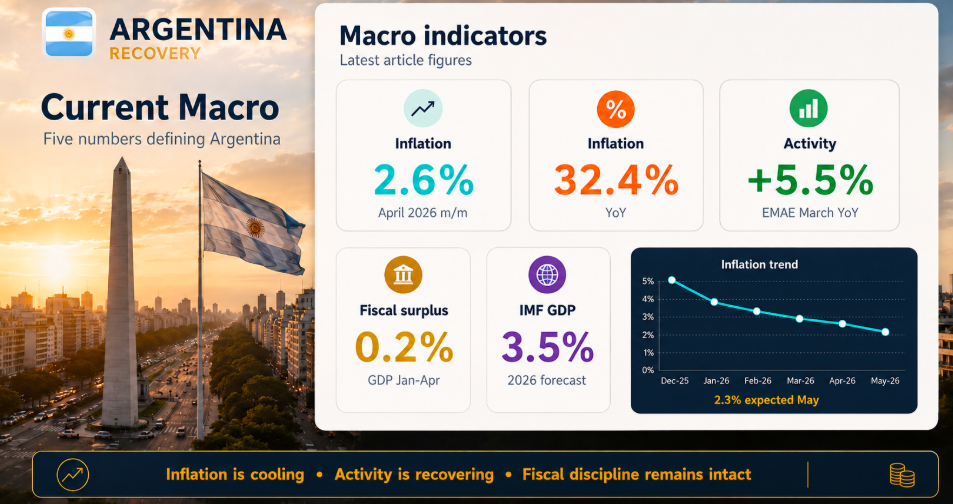
- Inflation continues to improve: CPI rose 2.6% in April 2026, bringing inflation to 12.3% YTD and 32.4% YoY, while economic activity expanded 5.5% YoY in March.
- Fiscal discipline remains intact: Argentina posted an ARS 268 billion financial surplus in April and maintained a 0.2% of GDP fiscal surplus through the first four months of 2026.
- Growth is returning: The IMF expects 3.5% GDP growth in 2026, supported by reforms, investment, and improving confidence, although reserve accumulation and political risks remain important.
Argentina is moving from emergency stabilization toward a more sustainable recovery phase. After a severe inflation shock and recession, recent data shows meaningful progress: inflation is slowing, economic activity is expanding, and fiscal accounts remain in surplus.
The recovery story is still incomplete. Argentina is not yet a low-risk macro environment, and investors will continue to monitor the durability of reforms and policy discipline. However, the direction of travel is significantly better than it was a year ago. Fiscal consolidation, monetary stabilization, and structural reforms are gradually rebuilding confidence and creating opportunities across key sectors of the economy.
Why the Recovery Is Starting to Look More Credible
The strongest argument for Argentina’s recovery is that multiple indicators are improving simultaneously:
- Inflation is falling
- Growth has returned
- Fiscal accounts remain positive
- Reserves are rebuilding
- Investor confidence is improving
This combination creates a stronger foundation than previous recovery attempts that relied on only one area of improvement.
Inflation: Still High, but Moving in the Right Direction
Inflation remains elevated by international standards, but the trend is encouraging. CPI increased 2.6% in April 2026, bringing annual inflation down to 32.4%.
Analysts surveyed by the central bank expect inflation to remain near 2.3% monthly, suggesting further progress if fiscal and monetary discipline continue.
Why This Matters
- Supports consumer purchasing power
- Improves business planning
- Reduces macro volatility
- Makes asset valuation more predictable
For investors, declining inflation is one of the most important signals that Argentina is transitioning from crisis management toward normalization.
Growth: Activity Is Rebounding
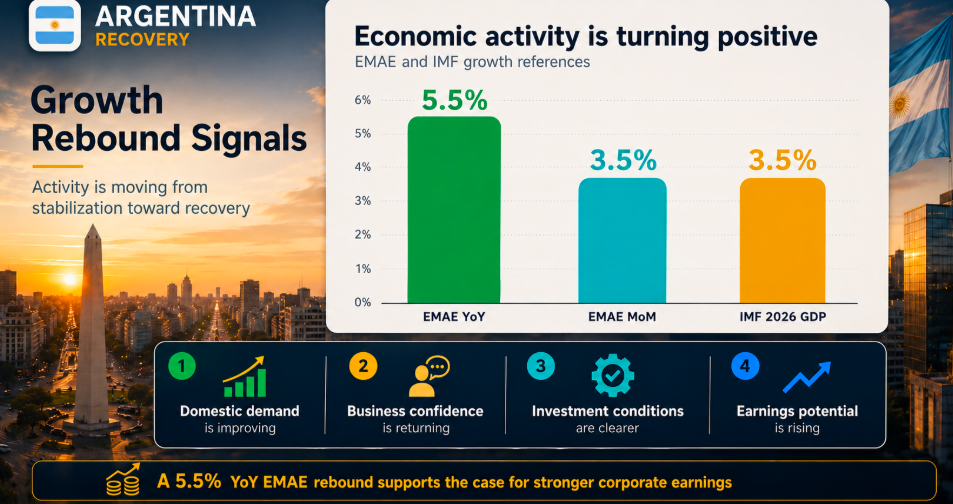
Economic activity is showing clear signs of recovery. The EMAE indicator increased 5.5% YoY in March 2026 and 3.5% month-over-month on a seasonally adjusted basis.
What the Growth Rebound Signals
- Improving domestic demand
- Rising business confidence
- Better investment conditions
- Stronger earnings potential
The IMF expects Argentina’s economy to grow 3.5% in 2026, supporting the view that the recovery is becoming more durable.
Fiscal Surplus: The Main Anchor of the Story
Fiscal discipline remains the cornerstone of Argentina’s stabilization effort.
Key figures include
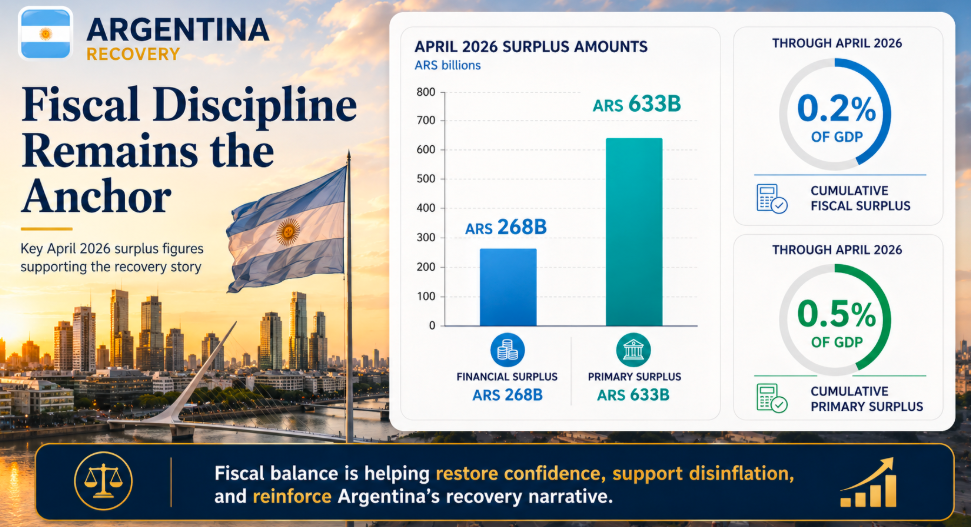
For investors, sustained fiscal discipline reduces the risk of future monetary financing and inflation shocks.
Why Investors Care
- Supports lower inflation
- Improves sovereign credibility
- Strengthens IMF relationships
- Reduces macroeconomic risk
Reserves, FX, and Confidence
External stability remains one of Argentina’s biggest challenges.
The central bank has reportedly purchased approximately US$7.5 billion in reserves since the beginning of 2026, helping strengthen the country’s external position.
Analysts expect the exchange rate to reach approximately:
- ARS 1,422/USD by June 2026
- ARS 1,658/USD by December 2026
Why This Matters
- Stronger reserves improve resilience
- FX stability supports investment
- Lower external risk improves valuations
- Better access to international capital markets
Sector Opportunities: Where Investors Should Focus
Argentina’s recovery is creating opportunities across several sectors that stand to benefit from stabilization and reform.
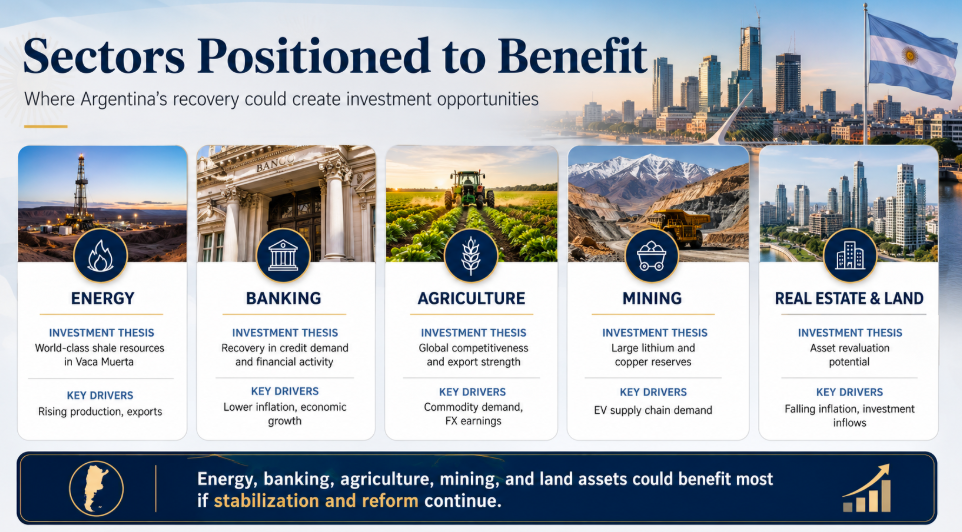
Structural Drivers Investors Should Watch
- Energy exports
- Lithium production
- Agricultural output
- Credit growth
- Infrastructure investment
Top Argentina Stocks for Recovery Exposure
Market data approximate and subject to change.
| Company | Ticker | Approx. Price / Market Cap | Investor Angle |
|---|---|---|---|
| YPF | YPF | ~$53–$55 / ~$21B–$22B | Leading energy producer with exposure to Vaca Muerta and rising energy exports. |
| Pampa Energía | PAM | ~$81–$85 / ~$4.4B–$4.8B | Diversified energy company positioned for infrastructure and power-sector normalization. |
| Lithium Argentina | LAR | ~$8.5–$10 / ~$1.4B–$1.6B | Lithium exposure tied to Argentina’s battery-metal and mining export potential. |
| Cresud | CRESY | ~$11 / market cap data varies by ADR/local conversion | Agriculture and land exposure linked to exports, rural assets, and recovery in real assets. |
| Grupo Financiero Galicia | GGAL | ~$48–$50 / ~$7.7B–$8.2B | Major banking franchise leveraged to credit growth and financial normalization. |
Risks That Could Still Derail the Recovery
Despite the progress, risks remain elevated.
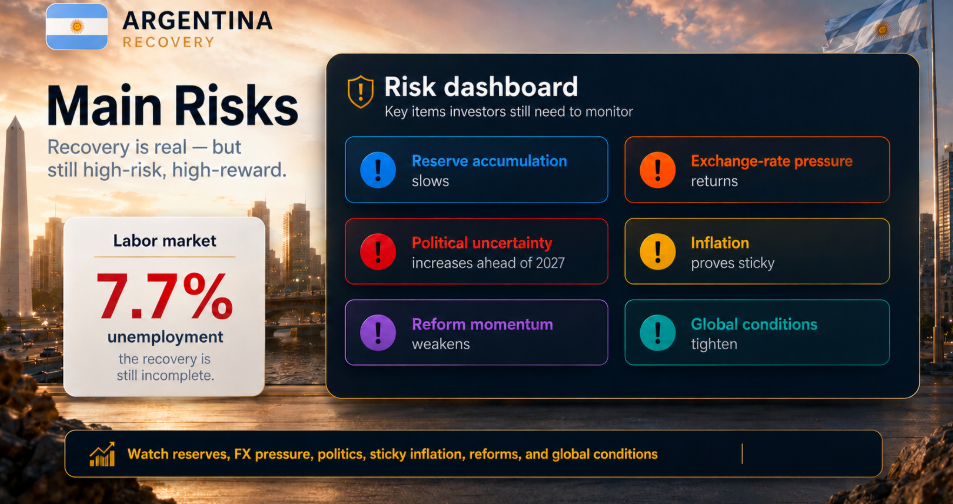
Main Risks
- Reserve accumulation slows
- Exchange-rate pressure returns
- Political uncertainty increases ahead of 2027
- Inflation proves sticky
- Reform momentum weakens
- Global financial conditions tighten
Unemployment remains around 7.7%, highlighting that the recovery is still incomplete.
Investor Recovery Dashboard
What Investors Should Watch Next
| Watch Item | Why It Matters |
| Monthly inflation data | Measures disinflation progress |
| GDP and EMAE releases | Confirms growth momentum |
| Fiscal results | Tests policy discipline |
| Reserve accumulation | Critical for external stability |
| Exchange-rate trends | Signals macro stress |
| IMF reviews | Influences confidence and financing |
| Political developments | Key ahead of 2027 elections |
| Energy and mining investment | Indicates long-term growth potential |
Bottom Line
Argentina’s recovery is no longer just a theoretical story. Inflation is slowing, growth has returned, fiscal discipline remains intact, and reserves are rebuilding. These developments represent meaningful progress compared with the crisis conditions of recent years.
For investors, the most attractive opportunities are concentrated in energy, banking, mining, agriculture, and real assets, where improving macroeconomic conditions can translate into earnings growth and valuation expansion.
The opportunity is significant: a country emerging from crisis with improving fundamentals and globally competitive sectors. The risk is that policy mistakes, political uncertainty, or external shocks interrupt the recovery before it becomes fully entrenched. Argentina is becoming increasingly investable—but it remains a high-risk, high-reward market.

Marc has been involved in the Stock Market Media Industry for the last +5 years. After obtaining a college degree in engineering in France, he moved to Canada, where he created Money,eh?, a personal finance website.