- A recent report claims Canadian officials reviewed a framework for monitoring online posts across at least 3 major platforms: LinkedIn, Facebook, and X.
- The broader issue is not one memo — it is the growth of digital monitoring across public posts, metadata, routing data, device activity, and platform-controlled infrastructure.
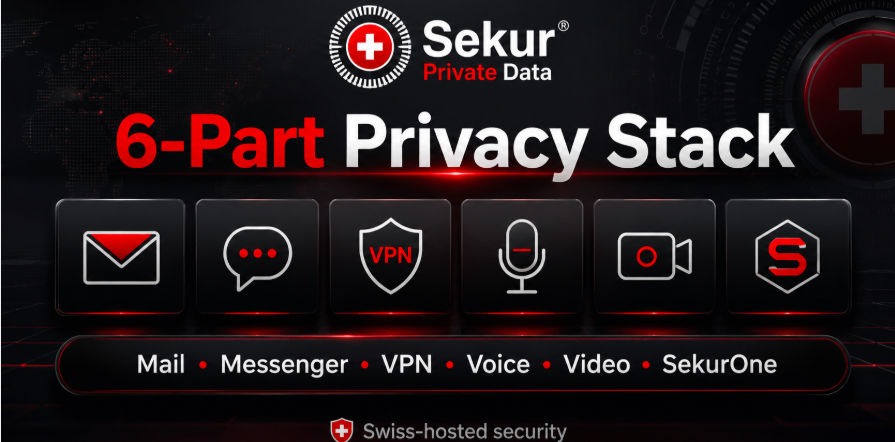
- Sekur Private Data offers a 6-part privacy communications stack: secure email, encrypted messaging, VPN, voice, video, and SekurOne integration — built around Swiss hosting, no Big Tech dependency, and no data mining.
The Bigger Privacy Question
A recent report from iPhone in Canada says an Access to Information request revealed that Canada’s federal government had developed an internal framework to monitor online narratives and review individual posts across platforms such as LinkedIn, Facebook, and X.
The important part is not only that those platforms were named. It is their scale.
Facebook has more than 3 billion monthly active users globally. LinkedIn has more than 1 billion members. X remains one of the most watched real-time political and media platforms in the world. Together, these platforms represent a communication layer used by billions of people, businesses, journalists, executives, public officials, and institutions.
According to the report, the framework included potential escalation options related to posts considered misinformation.
Regardless of where someone stands politically, the story points to a larger issue: digital communication is becoming more monitored, more centralized, and more dependent on infrastructure that users do not control.
For years, the privacy debate was mostly framed around Big Tech. Users worried about advertising trackers, algorithms, cloud storage, contact syncing, and data brokers. Today, the concern is broader. Governments, platforms, agencies, advertisers, analytics firms, telecom providers, app stores, and third-party data ecosystems all operate across the same digital environment.
That creates a world where at least 6 layers of data can become visible or analyzable:
- what someone says
- who they contact
- when they communicate
- where they connect from
- which device they use
- how often patterns repeat
This is not about avoiding the law. Fraud, threats, harassment, and incitement already have legal consequences.
The real question is infrastructure.
If most digital communication runs through centralized platforms, users and organizations have limited control over where their data goes, how it is stored, what metadata is created, and who can access the surrounding communication trail.
That is where Sekur Private Data becomes relevant.
Sekur’s Role in a Changing Digital Environment
Sekur Private Data is positioning itself as a privacy-first communications company built for users and organizations that want to reduce dependence on Big Tech infrastructure.
The company’s product ecosystem covers 6 major communication functions:
- secure email
- encrypted messaging
- VPN
- encrypted voice
- video communication
- SekurOne integration
The objective is not to replace public social media platforms. It is to protect the private communication layer that sits behind businesses, professionals, institutions, and individuals.
That distinction matters.
A public post on X, Facebook, or LinkedIn is public by design. Sekur does not change that. What Sekur addresses is the private layer: internal business discussions, legal correspondence, executive communication, journalist-source exchanges, political coordination, government communication, and privacy-sensitive personal messaging.
The company’s own materials describe SekurOne as bringing voice, email, messenger, and VPN capabilities into Android and Web, with video conferencing planned next. Sekur announced the first international encrypted call on SekurOne in June 2026, and said the full voice version was planned for late July 2026, with video conferencing planned for August 2026.
That gives Sekur a clear rollout timeline:
- Android and Web release: 2026
- first international encrypted call: June 2026
- full voice version planned: late July 2026
- video conferencing planned: August 2026
- final integrated SekurOne app target: September 30, 2026
In a world where public platforms are increasingly monitored, private infrastructure becomes more valuable.
Sekur’s value proposition is simple: sensitive communication should not automatically depend on Big Tech clouds, advertising-based models, phone-number identity, metadata tracking, or third-party data infrastructure.
Privacy Is More Than Encryption
The privacy conversation often focuses only on encryption, but encryption is only one part of the equation.
A messaging app can encrypt message content while still exposing metadata. A platform can protect the text of a message while still collecting information about who contacted whom, when they communicated, how often they interacted, where the communication came from, what device was used, and what behavioral pattern emerged over time.
That metadata can be extremely revealing.
A single message may not say much. But 30 days, 90 days, or 12 months of communication metadata can create a detailed profile.
It can reveal:
- daily routines
- professional networks
- political or legal relationships
- travel patterns
- timing of sensitive conversations
- frequency of contact
- device and network behavior
In some cases, the communication trail can matter almost as much as the content itself.
This is where Sekur’s architecture becomes important. The company emphasizes Swiss-hosted secure servers, no Big Tech hosting, no data mining, no tracking, no phone-number registration for SekurMessenger, and a proprietary communications structure. Sekur’s own site describes business communications transmitted within Swiss-hosted secure servers and highlights tools such as anti-phishing SekurSend and SekurReply, self-destruct timers, file transfer, and encrypted voice-recording transfer.
That gives Sekur a different position from mainstream messaging tools.
It is not trying to be another social app. It is trying to operate as secure communications infrastructure.
Why Sekur’s Model Stands Out
Most mainstream communication platforms rely on several layers of external dependency.
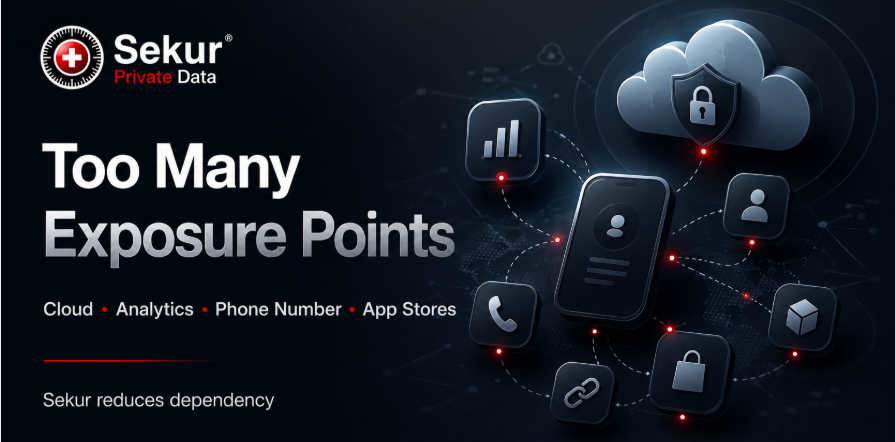
These can include:
- cloud hosting
- analytics tools
- contact syncing
- phone-number registration
- ad-based business models
- third-party integrations
- app-store ecosystems
- open-source components
That can mean 5 to 8 different exposure points before a user even sends a message.
Sekur’s pitch is that it removes several of those exposure points.
The company’s ecosystem is designed around a more controlled environment, where users can communicate through secure email, messaging, VPN, voice, and video without relying on the same data-mining infrastructure that powers much of the consumer internet.
That makes the product relevant for privacy-sensitive groups, including:
- executives
- lawyers
- journalists
- public figures
- business owners
- government users
- defense-adjacent organizations
- privacy-focused individuals
That is at least 8 market categories where secure communications are not a luxury feature. They are an operational requirement.
The central idea is not secrecy.
It is control.
Users should have more control over the infrastructure carrying their private conversations.
The Government and Enterprise Angle
Sekur’s positioning is also important because privacy is not only a consumer issue.
Governments, agencies, contractors, and enterprises also face communication risks. These include interception, metadata exposure, phishing, platform dependency, unauthorized data access, and operational security failures.
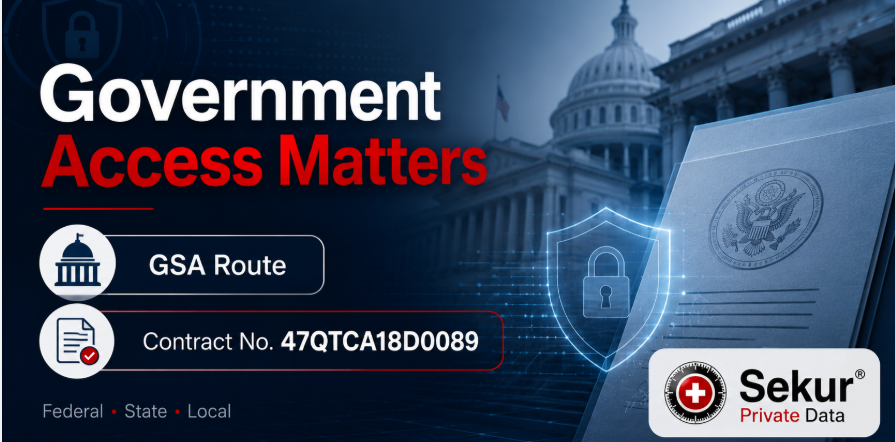
Sekur has a U.S. government procurement angle through the GSA Multiple Award Schedule via i3ICS under Contract No. 47QTCA18D0089. That gives eligible federal, state, and local government customers a procurement path for Sekur solutions.
That number matters: 47QTCA18D0089 is not just a marketing line. It is a procurement route that can help agencies buy through an existing government purchasing framework.
The February 2026 announcement said Sekur’s solutions became available for federal, state, and local agencies through a trusted SDVOSB contract holder. SDVOSB status refers to a service-disabled veteran-owned small business, a category used in U.S. government procurement.
This matters from an investor perspective because secure communications is not only a consumer privacy market.
It is also an enterprise, government, defense, legal, and professional market.
If concern around surveillance, monitoring, metadata exposure, and platform dependency continues to grow, demand for alternative communications infrastructure could expand across multiple buying groups.
The Investor Angle
The Canada monitoring story strengthens Sekur’s broader market narrative.
It shows that the digital privacy debate is moving beyond advertising and Big Tech data mining. The next phase is about control over communication infrastructure itself.
The market is moving toward a world where:
- public posts can be monitored
- metadata is increasingly valuable
- platform trust is weakening
- government involvement in digital spaces is expanding
- enterprises want secure alternatives
- professionals need compliant communication tools
- individuals want more private messaging options
That creates a stronger backdrop for privacy-first communication companies.
For Sekur, the opportunity is clear, but execution remains the key test.
The company still needs to convert its positioning into measurable commercial progress. The key numbers investors should watch are:
- subscriber growth
- monthly recurring revenue
- enterprise accounts
- government procurement activity
- average revenue per user
- churn rate
- SekurOne adoption
- distributor contribution
- conversion from trials to paid users
The thematic setup is strong. The challenge is proving commercial scale.
If Sekur can execute, it may benefit from a broader shift in how people think about private communication. Privacy may no longer be viewed as a niche feature. It may become a required layer of digital infrastructure.
Why the Timing Matters
The timing is important because online monitoring is becoming more normalized.
Public platforms are watched by design. That is not new.
What is changing is the level of institutional interest in online narratives, platform behavior, and digital identity. As this trend expands, users may become more aware of the difference between public communication and private communication.
That distinction could become central to Sekur’s growth story.
Sekur does not need everyone to leave public platforms.
It only needs more users and organizations to recognize that sensitive communication should not happen through the same infrastructure used for advertising, tracking, profiling, and public engagement.
That is the real market opportunity.
A company does not need to capture 10% of a market with billions of users to become relevant. Even a small niche of executives, lawyers, journalists, government users, business owners, and privacy-focused consumers could represent meaningful recurring revenue if Sekur converts them into paid accounts.
The Strategic Case for Sekur
Sekur’s strategic case comes down to 5 points.
First, the digital environment is becoming more monitored.
Second, metadata is becoming more valuable.
Third, Big Tech trust is not improving.
Fourth, governments and enterprises need secure communications just as much as consumers do.
Fifth, Sekur is building a privacy stack that covers more than one product category.
That last point is important.
A single privacy app can be useful, but Sekur is trying to build a broader communications environment. Email, messaging, VPN, voice, video, and SekurOne create a more complete package than a one-feature privacy tool.
That gives Sekur a clearer enterprise story.
Organizations do not want to manage 6 disconnected privacy tools. They want one controlled environment that reduces communication risk across multiple channels.
That is where Sekur’s 6-in-1 positioning becomes important.
Bottom Line
The Canada online-monitoring story is not just a political headline. It is part of a broader privacy infrastructure trend.
As digital activity becomes more monitored and more centralized, private communication becomes more valuable.
Sekur Private Data offers a clear alternative: Swiss-hosted secure communications, no Big Tech dependency, no data mining, no tracking, encrypted messaging, secure email, VPN, voice, video, and integrated SekurOne functionality.
The investment angle is not that Sekur replaces public platforms.
It is that Sekur protects the private layer of communication in a world where public platforms are increasingly exposed.
That is why Sekur’s positioning matters.
As monitoring expands, privacy-first communications infrastructure could move from niche to necessary.
For investors, the key question is whether Sekur can turn that narrative into numbers: users, contracts, subscriptions, recurring revenue, and government or enterprise adoption.
The privacy thesis is getting stronger.
Now Sekur has to prove it commercially.
Disclaimer
This article is for informational and educational purposes only and does not constitute financial advice, investment advice, or a recommendation to buy or sell any security. Small-cap technology and cybersecurity companies are speculative and may involve substantial volatility, execution risk, liquidity risk, and potential loss of capital. Always conduct your own research and consult a licensed financial advisor before making investment decisions.

Marc has been involved in the Stock Market Media Industry for the last +5 years. After obtaining a college degree in engineering in France, he moved to Canada, where he created Money,eh?, a personal finance website.