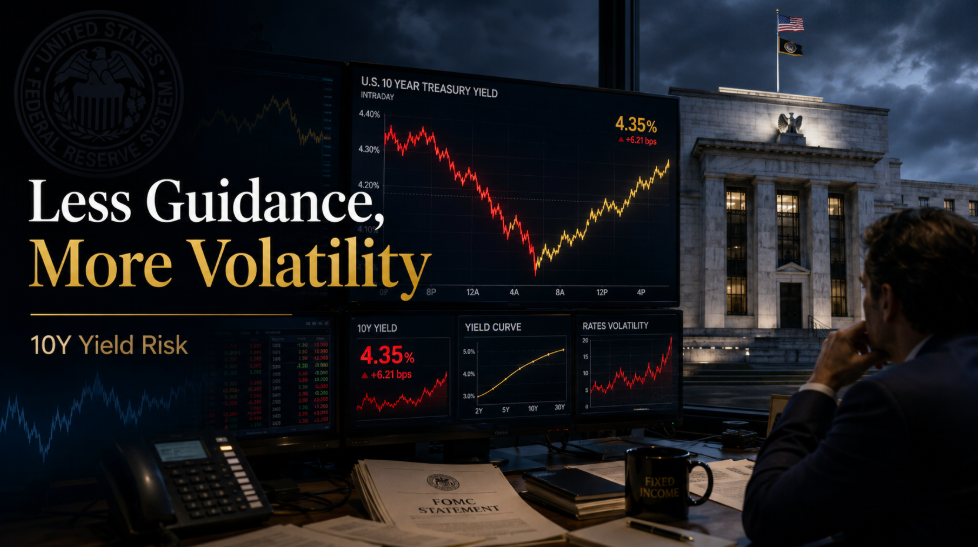
- Kevin Warsh’s first Fed meeting could become a major volatility event for stocks and bonds.
- The biggest market risk is not only the rate decision — it is how much guidance the Fed gives investors.
- If Warsh reduces dot plots, speeches, or forward guidance, markets may price more uncertainty into yields, growth stocks, mortgages, and small caps.
Why This Matters
Markets are not only driven by interest rates.
They are also driven by expectations.
For more than a decade, investors have relied on Federal Reserve communication tools such as press conferences, speeches, forward guidance, and the “dot plot” to understand where policy may be heading.
Under Kevin Warsh, that communication regime may change.
Warsh has previously criticized parts of the Fed’s communication framework, including frequent public speeches, regular post-meeting press conferences, and the dot plot. MarketWatch reported that investors are watching whether his Fed will communicate less, while former Fed Vice Chair Richard Clarida argued that a full communication blackout is unlikely.
• The market is not just asking where rates go next. It is asking whether the Fed will become harder to read.
The Dot Plot Problem
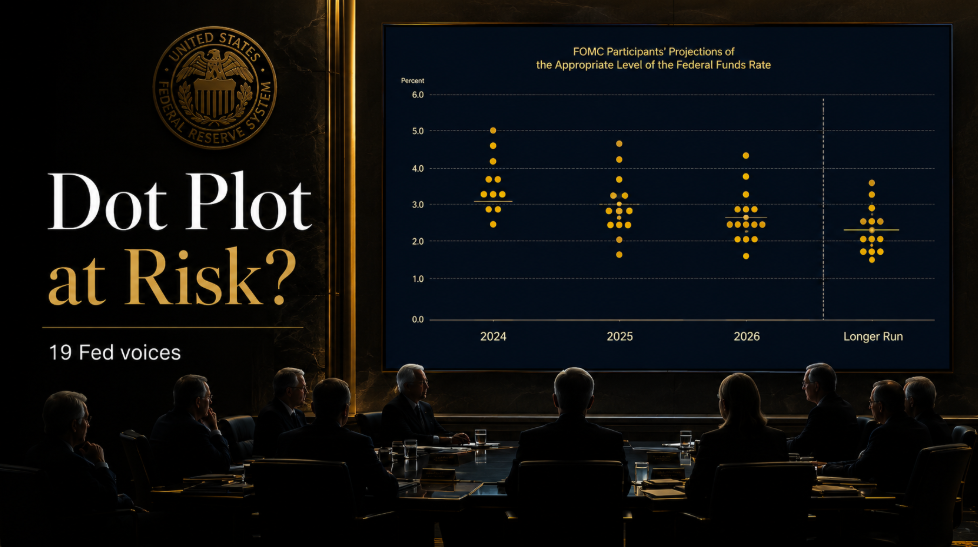
The dot plot matters because it gives investors a quarterly snapshot of where Fed officials expect interest rates to move.
It is not a promise.
But markets often treat it like a roadmap.
That is exactly why Warsh has been skeptical of it. Fortune reported that Warsh argued the Fed’s forecasts can cause policymakers to hold on to projections longer than they should. Investopedia also noted that the dot plot represents where 19 Fed policymakers think the benchmark rate should be at year-end.
The debate is simple.
If the dot plot stays, markets keep getting a visible policy signal.
If the dot plot is weakened or removed, investors may have to price rates with less guidance.
• Less guidance can mean more freedom for the Fed — but more volatility for markets.
Why Stocks Care
Stocks care because rate uncertainty affects valuations.
When investors have a clearer sense of future policy, they can price risk more confidently. When the Fed becomes harder to read, the market may demand a higher risk premium.
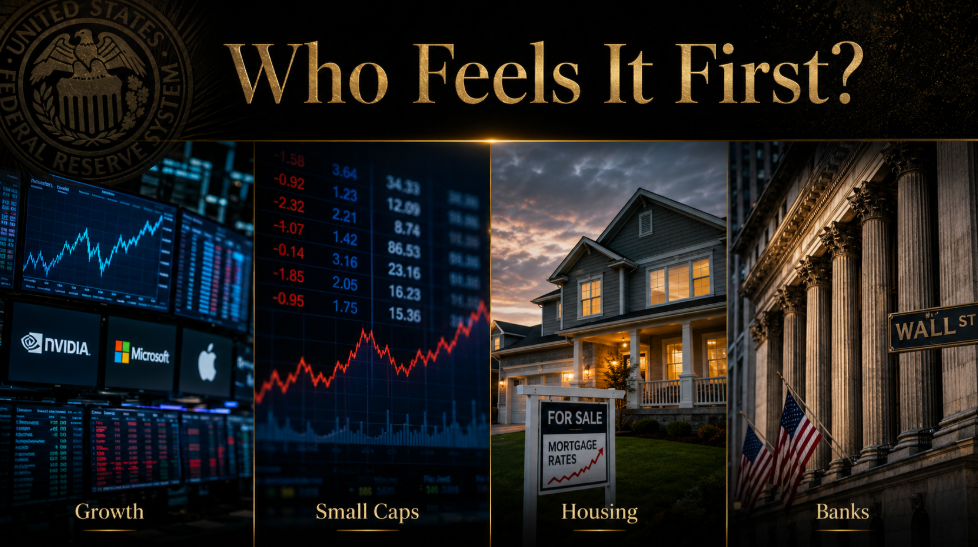
That can pressure the most rate-sensitive parts of the market:
- growth stocks
- AI and software names
- small caps
- banks
- homebuilders
- consumer discretionary stocks
- long-duration bonds
Reuters reported that investors are watching Warsh’s first meeting closely as a potential wildcard for U.S. indexes, especially with inflation pressure, AI-stock volatility, and rate-hike concerns already in the background.
• The risk is not just higher rates. The risk is a less predictable Fed reaction function.
Why Bonds May React First
The bond market may be the first place to show stress.
If investors receive less forward guidance, Treasury yields may become more sensitive to each economic data release. CPI, PCE, payrolls, retail sales, and Fed speeches could all trigger larger moves because markets would have fewer official guideposts.
MarketWatch reported that concerns around reduced transparency could lead to higher rate volatility and borrowing costs, while Goldman Sachs research cited in that report found that clear communication can reduce borrowing costs, especially during economic shocks.
That matters because the 10-year Treasury yield is already one of the most important numbers for equity investors.
If communication uncertainty pushes yields higher, growth stocks may feel pressure.
• A quieter Fed does not necessarily mean calmer markets. It may mean markets have to guess more.
Why This Meeting Is a Bigger Test Than Usual
Warsh’s first policy-setting meeting comes at a difficult time.
Inflation has re-accelerated, yields remain elevated, AI stocks are volatile, and investors are debating whether the Fed should hold rates steady or prepare for a more hawkish stance.
Barron’s reported that no rate change is expected at Warsh’s first meeting, with the current target range at 3.50% to 3.75%. But investors will be focused on the policy statement, potential dissents, the Summary of Economic Projections, and whether Warsh submits or reshapes projections.
MarketWatch also said investors are watching three signals: whether the Fed removes its easing bias, whether the dot plot shifts toward future hikes, and whether inflation risks become more prominent in the Fed’s language.
• The rate decision may be boring. The communication shift may not be.
The Controversial Angle
The controversial part is that markets may have become addicted to Fed guidance.
Since the post-2008 era, investors have increasingly expected the Fed to explain its thinking, prepare markets before major shifts, and reduce surprise.
Warsh may believe that too much guidance boxes the Fed in.
Markets may believe that less guidance increases volatility.
Both views can be true.
A less predictable Fed may give policymakers more flexibility, but it may also force investors to price a wider range of outcomes.
That could lead to bigger swings in Treasury yields, mortgage rates, tech multiples, small-cap valuations, and the dollar.
• The Fed may want more flexibility. Wall Street may experience that as uncertainty.
What Investors Should Watch
Investors should watch five things from Warsh’s first major communication test.
First, whether the dot plot remains intact. Second, whether Warsh reduces the importance of forward guidance. Third, whether post-meeting press conferences become less detailed. Fourth, whether individual Fed speakers become less frequent or more coordinated. Fifth, whether Treasury yields move more violently after Fed meetings and inflation prints.
The real market signal will not only be what Warsh says.
It will be how markets react when he says less.
• If yields become more volatile after Fed events, the market will quickly price a Warsh communication premium.
Stock-Market Implications
A less transparent Fed could affect different parts of the market differently.
Growth stocks may face pressure if rate volatility rises. Small caps could struggle if borrowing costs become more unpredictable. Banks may benefit from higher rates, but they could also face credit concerns if uncertainty tightens financial conditions. Homebuilders and consumer discretionary stocks could react negatively if mortgage and consumer-loan rates swing higher.
On the other hand, companies with strong cash flow, pricing power, low debt, and near-term earnings visibility may be better positioned.
That means the market could become more selective.
• In a less-guided Fed regime, quality may matter more than narrative.
Bottom Line
Kevin Warsh’s Fed may not create a full communication blackout.
But even a partial shift away from dot plots, forward guidance, and frequent Fedspeak could matter for markets.
The rate decision itself may not be the main event.
The bigger issue is whether investors still feel they understand the Fed’s reaction function.
If the answer becomes less clear, Treasury yields could become more volatile, and that volatility could spill into growth stocks, small caps, mortgages, banks, and the broader equity market.
The key takeaway: under Warsh, Fed communication itself may become a market-moving asset class.

Marc has been involved in the Stock Market Media Industry for the last +5 years. After obtaining a college degree in engineering in France, he moved to Canada, where he created Money,eh?, a personal finance website.