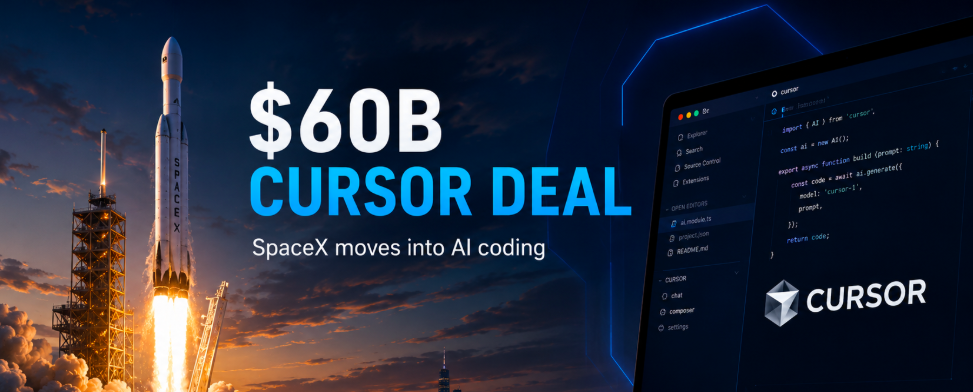
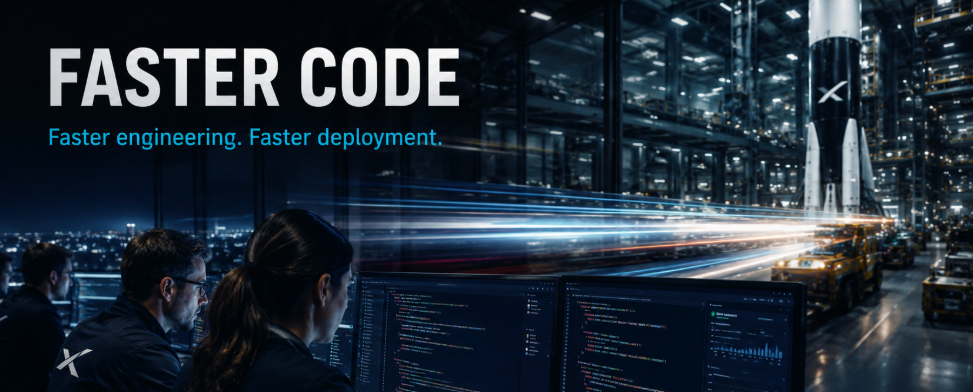
- SpaceX is buying Cursor for speed — faster code, faster engineering, faster AI deployment.
- The $60B deal turns AI coding into strategic infrastructure, not just software.
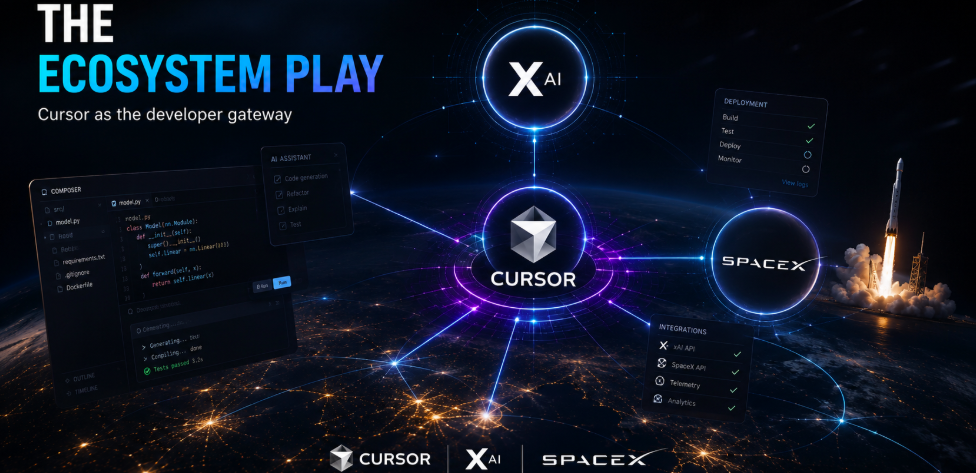
- For Musk, Cursor could become the developer gateway into SpaceX, xAI, and the wider AI stack.
SpaceX is reportedly moving to acquire Anysphere, the company behind Cursor, in a $60 billion stock-based deal.
At first glance, the move looks surprising. SpaceX is known for rockets, Starlink, satellites, launch systems, and defense-related infrastructure — not developer software.
But the logic becomes clearer when looking at what Cursor actually represents.
Cursor is not just a coding app. It is one of the fastest-growing AI productivity platforms in the market, reportedly reaching around $2.6 billion in annualized B2B revenue. That means SpaceX is paying roughly 23x annualized revenue — a rich valuation, but one that reflects the strategic importance of AI coding.
Why Musk Would Do This
Musk’s companies are built on engineering speed.
SpaceX, Tesla, xAI, Starlink, robotics, autonomy, satellites, defense systems, and manufacturing all depend on software. If AI can help engineers write, test, debug, and ship code faster, the productivity impact could be massive.
That is the core reason this deal matters.
SpaceX is not simply buying a software tool. It is buying a productivity layer that could accelerate development across Musk’s entire ecosystem.
In a world where AI models are becoming more powerful, the interface between developers and code may become one of the most valuable places to control.
Why Cursor Matters
Cursor sits directly inside the developer workflow.
That is important because developers do not want AI as a separate dashboard. They want AI inside the tools they already use to build products.
That makes Cursor strategically valuable for three reasons.
First, it has strong developer adoption. Second, it gives Musk a direct entry point into enterprise software teams. Third, it creates a potential distribution channel for xAI models.
In simple terms, Cursor could become the front door for Musk’s AI ambitions.
The xAI Angle
The deal also looks like a major xAI acceleration move.
Musk is trying to compete with OpenAI, Anthropic, Google, Microsoft, and Meta in artificial intelligence. But strong models alone may not be enough. To win in enterprise AI, companies need distribution, trust, workflow integration, and daily usage.
Cursor brings that.
By connecting Cursor with xAI, SpaceX could help build a more vertically integrated AI stack:
- xAI models;
- SpaceX-scale infrastructure;
- Cursor’s developer interface;
- enterprise customers;
- internal deployment across Musk-owned companies.
That would give Musk more than a chatbot. It would give him a direct productivity platform inside software development.
Why SpaceX Specifically?
The obvious question is: why would SpaceX, not xAI, be the buyer?
The answer may be strategic scale.
SpaceX is no longer just a launch company. It is a massive technology infrastructure business with exposure to rockets, satellites, Starlink, defense communications, manufacturing software, orbital systems, and autonomous operations.
All of those areas require high-quality software.
If Cursor improves internal engineering output across SpaceX, the operational payoff could be significant. If Cursor also continues growing as an external AI coding platform, the deal gives SpaceX a high-growth software asset inside a company already valued like a global technology leader.
The Bigger Market Signal
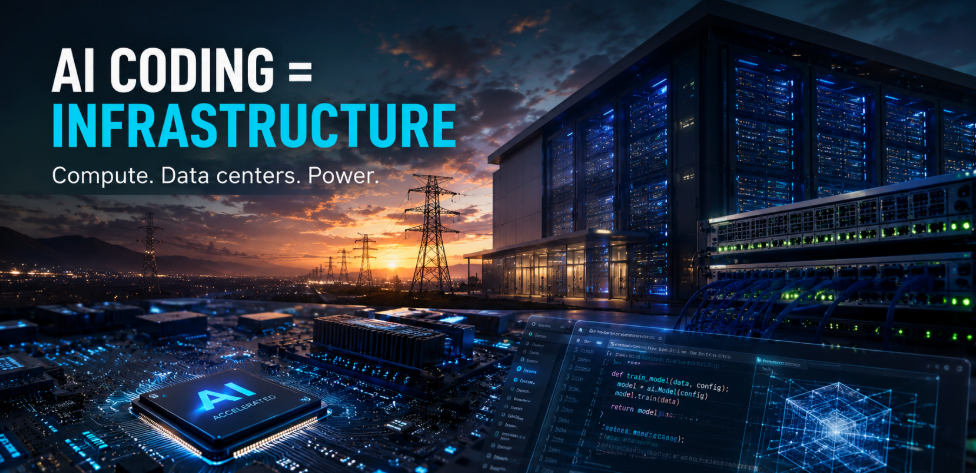
This deal sends a clear message to investors: AI coding is becoming infrastructure.
For years, software developers were treated as users of productivity tools. Now, they may become the center of one of the most important AI markets.
The reason is simple: AI coding has measurable ROI.
If a company can ship features faster, reduce debugging time, cut repetitive work, and improve engineering output, the value is easier to justify than many other AI use cases.
That is why the AI coding market is becoming a battleground for Cursor, GitHub Copilot, OpenAI Codex, Claude Code, Gemini Code Assist, and other tools.
Investor Read-Through
The public-market read-through is not only about SpaceX.
It is about the companies enabling the AI coding and infrastructure cycle.
If AI coding adoption keeps growing, investors should watch companies tied to:
- AI compute;
- cloud infrastructure;
- data centers;
- networking;
- cybersecurity;
- enterprise software;
- developer tools;
- edge computing;
- power infrastructure.
The bigger theme is that AI is moving from experimentation into daily workflow.
That is where budgets can grow. That is where enterprise adoption can become sticky. And that is where strategic valuations can expand.
The Risk
The main risk is valuation.
A $60 billion price tag for a company founded in 2022 is aggressive, even with strong reported revenue growth. SpaceX is paying for future dominance, not just current revenue.
There is also integration risk.
Cursor has grown because developers like the product and because it is seen as flexible. If users believe Cursor becomes too tied to xAI or Musk’s ecosystem, some enterprises may hesitate.
Competition is another major risk. OpenAI, Anthropic, Microsoft, and Google all want to own AI coding. This market could become crowded quickly, and pricing power may be tested over time.
Bottom Line
SpaceX’s $60 billion Cursor deal is not just about buying an AI coding assistant.
It is about controlling a key layer of the AI economy.
Musk appears to be betting that AI coding will become one of the most valuable enterprise AI markets because it directly improves engineering productivity, accelerates software development, and creates measurable business value.
If the bet works, Cursor could become the developer gateway into the SpaceX and xAI ecosystem.
If it fails, SpaceX may have paid a massive premium in one of the most competitive AI markets.
Either way, the message is clear: AI coding is no longer a side category. It is becoming a strategic battleground.

Marc has been involved in the Stock Market Media Industry for the last +5 years. After obtaining a college degree in engineering in France, he moved to Canada, where he created Money,eh?, a personal finance website.