- Sekur Private trades as SWISF on the OTC market.
- The Rafael Beltran appointment strengthens Sekur’s defense communications pivot.
- If advisory momentum converts into contracts, even modest revenue could matter for the stock.
The Big Picture
Sekur Private Data, trading as SWISF on the OTC market, has added another defense and intelligence figure to its advisory network.
The company appointed retired Chief Master Sergeant Rafael Beltran to its OpsTech Special Advisory Board, reinforcing a broader push into secure defense, government, intelligence, and enterprise communications.
On its own, this is a personnel announcement.
But in context, it looks more strategic.
Over the past several months, Sekur has been building a national-security-focused advisory bench, adding former senior figures from the U.S. military, CIA, State Department, intelligence community, and special operations ecosystem. The latest appointment strengthens that pattern and reinforces Sekur’s attempt to reposition itself from a privacy-focused communications company into a defense-grade secure communications platform.
That matters because Sekur is no longer simply trying to sell encrypted email, VPN, and messaging to consumers.
It is now trying to sell secure, sovereign communications to:
- defense users
- government agencies
- intelligence-linked customers
- diplomats
- enterprise clients
- field operators
- high-trust teams
The question for investors is whether this is just advisory-board headline momentum — or the early formation of a real government and defense sales pipeline.
What Happened
Sekur appointed Rafael Beltran to its Special Advisory Board for OpsTech.
Beltran brings more than a decade of U.S. Special Operations communications leadership. His background includes senior technical advisory roles at U.S. Special Operations Command headquarters, where he supported secure communications, command-and-control systems, cybersecurity posture, and operational technology requirements.
In Sekur’s announcement, CEO Alain Ghiai said Beltran brings the type of operational insight needed to shape technology “built for the field, not just the boardroom.”
That phrase is important.
Sekur is trying to show that its product roadmap is being influenced by people who understand real operational environments — not only cybersecurity theory or corporate IT needs.
Beltran is expected to advise on product direction for secure voice, video, messaging, network solutions, SekurOne, and the upcoming Sekur Tactical Mobile Router, or STMR.
Why Rafael Beltran Matters
The key point is not simply that Beltran has a defense background.
It is that his background is directly tied to the problem Sekur is trying to solve.
Sekur wants to provide secure communications for environments where exposure, interception, metadata leakage, and infrastructure dependence are serious risks. Beltran’s career was centered on secure communications in exactly those types of environments.
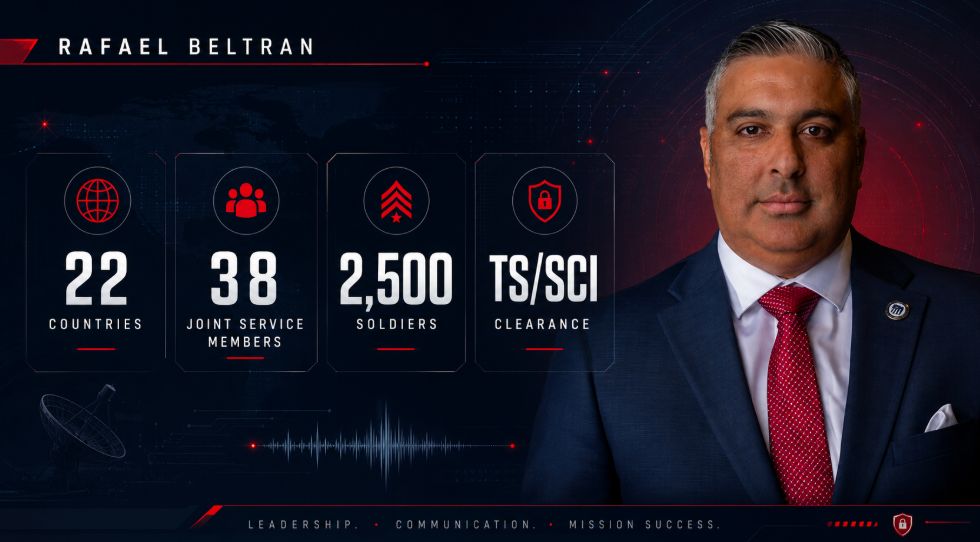
According to Sekur, Beltran previously supported 24/7 command-and-control communications across 22 countries, helped establish a dedicated executive communications section, and trained or certified 38 Joint Service members through a specialized program. He also trained more than 2,500 soldiers earlier in his career and holds an active TS/SCI security clearance.
Those details matter because they give Sekur more than a marketing angle.
They give the company operational feedback from someone who understands what secure communications need to look like in contested or high-risk environments.
The CEO’s Message
CEO Alain Ghiai’s message was clear: Beltran is expected to help translate defense-user requirements into product capabilities.
Ghiai said Beltran’s experience in secure command-and-control communications gives Sekur a direct line to the requirements that matter most to defense and government users.
He also said Beltran will play a key role in deploying the upcoming Sekur Tactical Mobile Router, helping bring secure, sovereign communications to the tactical edge.
That last phrase — “tactical edge” — is central to the investment story.
Sekur is trying to move beyond office communications and into field communications.
That is a much more valuable market if the company can prove product fit.
Why This Fits the Recent Additions
Beltran is not joining in isolation.
Sekur has been stacking its advisory and leadership team with people who have deep defense, intelligence, diplomacy, and government backgrounds.
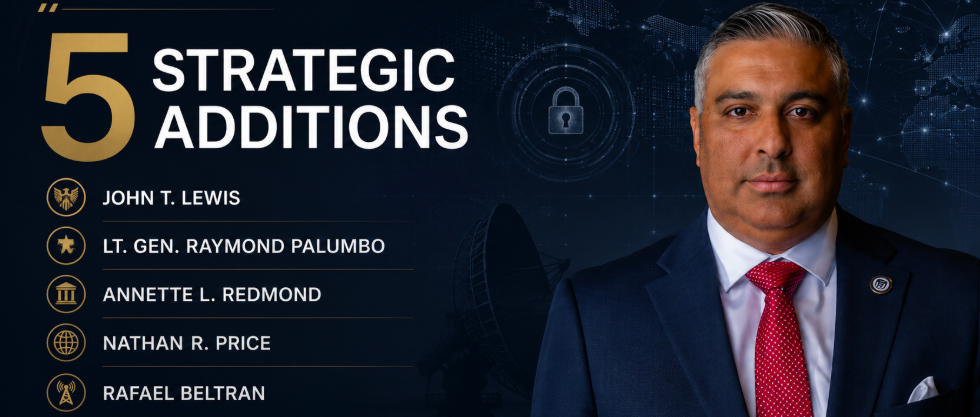
Recent additions include:
- John T. Lewis, a retired CIA Senior Intelligence Service expert, appointed as CTO and Strategic Advisory Board member
- Lt. Gen. Raymond Palumbo, U.S. Army retired, appointed Chairman of the Strategic Advisory Board
- Annette L. Redmond, former U.S. State Department Deputy Assistant Secretary, appointed to the Strategic Advisory Board
- Nathan R. Price, appointed Special Advisor for Diplomacy and Intelligence
- Rafael Beltran, now advising on OpsTech and tactical communications
The pattern is clear.
Sekur is building a credibility bridge into government, defense, intelligence, and diplomatic markets.
That does not guarantee contracts.
But it does make the company’s repositioning more credible than if it were only issuing product updates with no sector-specific leadership.
From Privacy App to Defense Communications Platform
Sekur’s biggest strategic shift is that it is moving from a privacy-product story to a defense-communications story.
The older Sekur narrative focused heavily on:
- encrypted email
- secure messaging
- VPN
- Swiss hosting
- privacy protection
- avoiding Big Tech infrastructure
The newer narrative focuses on:
- CUI protection
- sovereign communications
- on-premises infrastructure
- secure voice and video
- tactical deployment
- government procurement
- defense distribution
- field-ready communications
That is a much larger and more serious market.
It is also harder to win.
Government and defense customers do not move quickly. Procurement cycles can be long. Security requirements can be demanding. And the gap between “interesting product” and “approved deployment” can be wide.
Still, if Sekur can break through, the revenue quality could improve significantly.
The Elyon Agreement Was a Key Step
One of the most important recent developments was Sekur’s defense distribution agreement with Elyon International.
Elyon is a woman-owned and veteran-owned SBA-certified small business with nearly 30 years of experience delivering integrated mission-support outcomes. Sekur described the agreement as a strategic shift toward defense, intelligence, government, and enterprise communications.
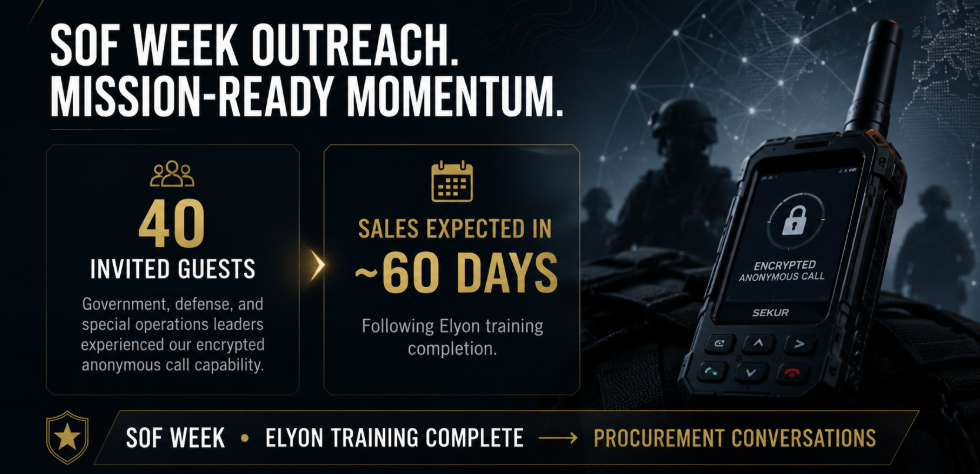
The company also said it hosted around 40 invited guests from government, defense, and special operations command at a SOF Week presentation, where it demonstrated its encrypted anonymous call capability.
That is important because it suggests Sekur is trying to move from product development to procurement conversations.
The company said it expected sales to begin after Elyon training was completed within roughly 60 days.
That creates a near-term timeline investors can watch.
If Sekur starts announcing actual deployments, pilot programs, or government-related orders, the story becomes much stronger.
SekurOne and STMR Are the Products to Watch
The two most important products in the story now appear to be SekurOne and the upcoming Sekur Tactical Mobile Router.
SekurOne is designed as an integrated communications suite combining:
- encrypted voice
- video
- video conferencing
- secure email
- hardened messaging
- VPN
The company has discussed annual pricing in the $3,000–$3,500 range depending on plan structure, with some versions including a privacy eSIM data card.
That pricing matters.
If Sekur can sell into defense or government accounts, even a relatively small number of users could produce meaningful revenue for a microcap company.
For example, 1,000 annual users at $3,500 would represent $3.5 million in annualized revenue before churn, discounts, or channel economics.
That is not a forecast.
But it shows why even modest adoption could matter.
The STMR could add another angle by bringing secure communications into tactical and field environments rather than only desktop or mobile apps.
The Marketing Push Adds Another Layer
Sekur has also signed an agreement with AdRevv, a U.S. AI-powered marketing and ad-revenue company.
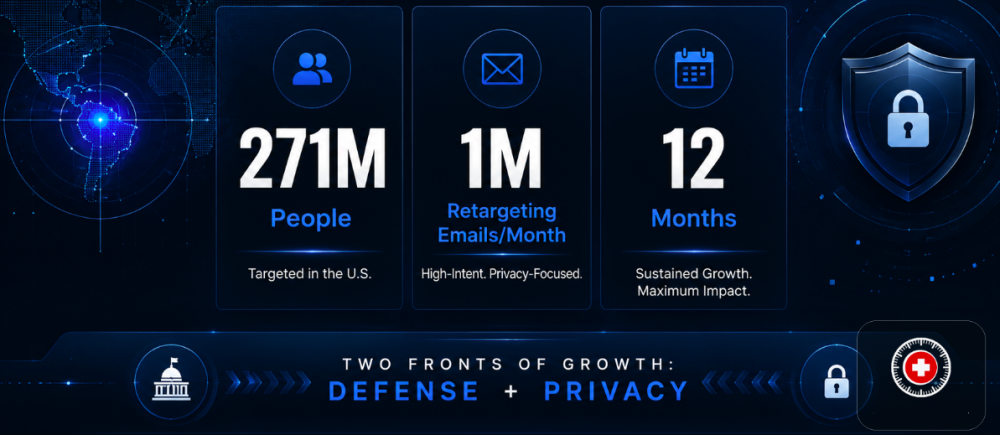
That agreement is designed to target people searching for privacy solutions such as VPN, secure email, secure messaging, and secure voice calls. AdRevv is expected to target a database of 271 million people in the U.S. and deploy up to 1 million retargeting emails per month for at least 12 months.
This matters because Sekur is trying to push growth on two fronts at once:
- high-trust government and defense relationships
- broader privacy-product customer acquisition
The defense side gives credibility.
The marketing side gives scale potential.
The risk is that both strategies require execution, capital, and patience.
What This Means for SWISF
Sekur remains a small microcap, with SWISF recently trading around the $0.03–$0.04 range on the OTC market and a market capitalization around roughly $9 million–$13 million, depending on the quote source and trading day.
That size is important.
For a mega-cap company, a few million dollars of new revenue would barely matter.
For Sekur, it could change the entire investment profile.
If the company can turn the current advisory-board and distribution momentum into paying defense, government, or enterprise customers, investors may begin valuing SWISF less like a struggling privacy microcap and more like an early-stage secure defense communications platform.
That is where the potential upside comes from.
But the market will need proof.
Appointments create credibility.
Contracts create revenue.
Recurring revenue creates valuation.
Potential Revenue Forecast
Because Sekur is still early-stage, any revenue model has to be treated as speculative.
But the math shows why investors are paying attention.
Assuming annual revenue per secure communications user or account of roughly $3,000–$3,500, the revenue scenarios could look like this
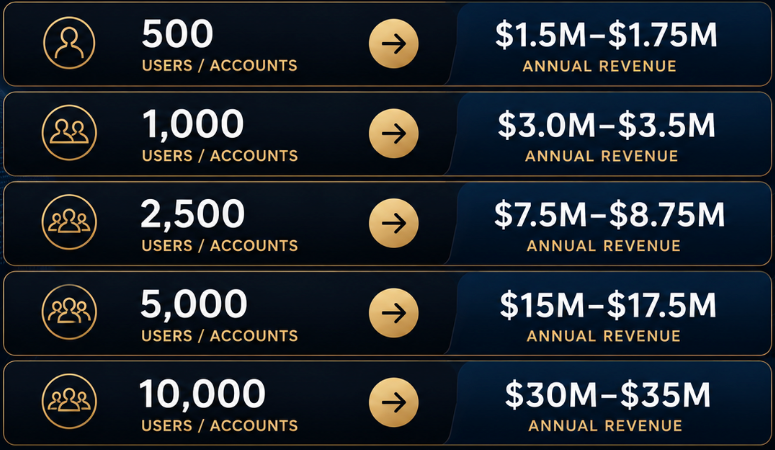
These are not company guidance.
They are simple scenario models based on possible enterprise pricing.
But they show why even modest adoption could be material.
At a market cap near roughly $10M, Sekur would not need massive revenue to change investor perception. It would only need enough commercial traction to prove that the defense communications pivot is real.
What It Could Imply for the Stock Price
The stock-price implication depends on revenue conversion and valuation multiple.
For early-stage cybersecurity and defense software companies, investors often look at revenue multiples rather than earnings, especially before profitability. Because Sekur is a microcap with execution risk, a conservative model should use a wide range of possible outcomes.
Here is a simple illustrative scenario:
Scenario 1: Early traction
If Sekur reaches $3M–$5M in annualized revenue and the market values it at 3x–5x revenue, the implied valuation would be roughly:
- $9M–$25M market cap
That would imply limited to moderate upside from a roughly $10M market cap, unless investors begin pricing in future growth.
Scenario 2: Defense adoption begins
If Sekur reaches $7.5M–$10M in annualized revenue and trades at 4x–6x revenue, the implied valuation would be roughly:
- $30M–$60M market cap
From a roughly $10M market cap, that would imply approximately 3x–6x potential upside.
Scenario 3: Strong platform validation
If Sekur reaches $15M–$20M in annualized revenue and trades at 5x–8x revenue, the implied valuation would be roughly:
- $75M–$160M market cap
From a roughly $10M market cap, that would imply approximately 7.5x–16x potential upside.
Scenario 4: Breakout government and enterprise platform
If Sekur reaches $30M+ in annualized revenue and the market begins treating it as a validated secure communications platform, even a 5x–8x revenue valuation could imply:
- $150M–$240M+ market cap
From a roughly $10M base, that would imply approximately 15x–24x potential upside.
Again, this is not a price target.
It is a revenue-to-market-cap framework.
The key point is that Sekur’s small current valuation means revenue conversion could have an outsized impact on the stock.
What Return Could Investors Get If They Buy Now?
For investors looking at SWISF around the $0.03–$0.04 range, the return profile is highly asymmetric.
If the defense pivot fails to produce revenue, the stock could remain weak or continue to dilute shareholders.
But if Sekur begins announcing paid pilots, defense deployments, or recurring government and enterprise customers, the upside could be meaningful.
Illustratively:

Those levels are not predictions.
They simply show how small-cap math works.
Because SWISF trades at a very low share price and low market cap, even modest improvements in sentiment or revenue visibility can create large percentage moves.
The opposite is also true.
If the company fails to convert momentum into revenue, downside risk remains high.
Momentum Forecast
Sekur’s news momentum is clearly improving.
The company has delivered a sequence of announcements around:
- national security advisors
- government procurement positioning
- defense distribution
- SekurOne
- encrypted voice and video
- AI-powered marketing
- tactical communications
- the upcoming STMR
That kind of clustering can create investor attention.
In the short term, SWISF could continue to see speculative momentum if Sekur follows the Beltran appointment with additional operational updates, especially around Elyon, SekurOne sales, STMR deployment, or defense-sector pilots.
The medium-term picture depends on conversion.
If Sekur announces credible paid contracts or pilot deployments, the market may begin valuing it as an early-stage defense communications platform rather than a struggling privacy microcap.
If the next updates remain mostly advisory or promotional, the momentum could fade.
So the clean forecast is:
News momentum is positive. Commercial momentum is still unproven. Stock momentum depends on proof of sales.
The Bull Case
The bull case is that Sekur is finally finding the right market.
Consumer privacy products are difficult to scale because customer acquisition is expensive and competition is intense. But defense, intelligence, government, and regulated enterprise markets have a clearer need for sovereign communications, secure architecture, and controlled infrastructure.
If Sekur can become even a niche provider in that market, the upside could be meaningful relative to its small market capitalization.
The strongest bull points are:
- SWISF trades at microcap valuation levels
- growing defense advisory board
- former CIA, military, SOCOM, State Department, and intelligence experience
- GSA procurement access
- distribution through Elyon
- SekurOne commercialization
- tactical router roadmap
- Swiss-hosted and on-premises data sovereignty angle
- rising demand for secure communications outside Big Tech infrastructure
This is why the Beltran appointment matters.
It is another signal that Sekur is trying to become operationally relevant, not just privacy-branded.
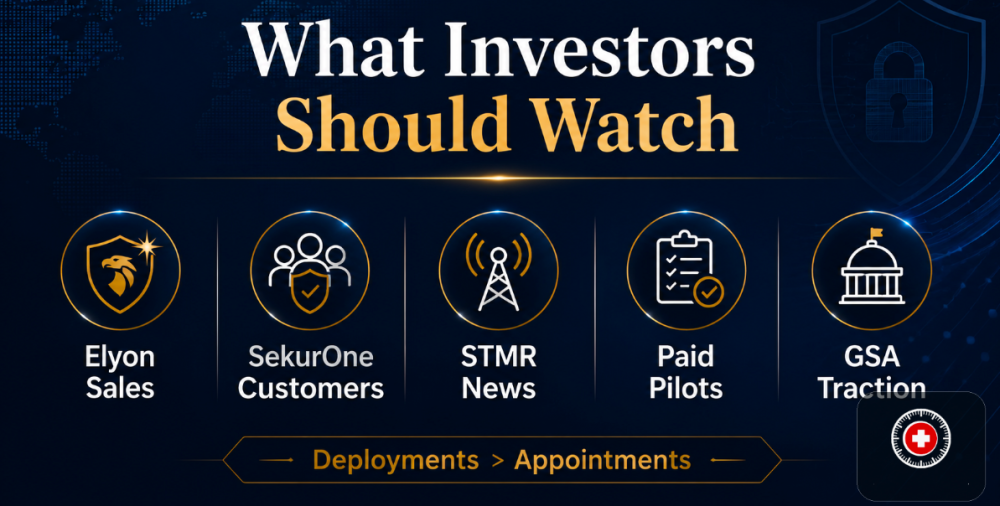
What Investors Should Watch Next
The most important signals over the next few months are:
- Elyon-related sales updates
- first SekurOne government or defense customers
- STMR development or deployment news
- paid pilots or procurement milestones
- GSA-related sales traction
- new advisory additions with direct procurement influence
- revenue growth
- cash position
- financing or dilution updates
- customer retention and recurring revenue
The key phrase to watch is not “appointment.”
It is “deployment.”
Appointments build credibility.
Deployments build revenue.
Bottom Line
Sekur’s appointment of Rafael Beltran is more meaningful than a typical advisory-board update because it fits a clear pattern.
The company is building a defense and government communications narrative around experienced people, specialized products, and distribution channels. Beltran adds tactical communications expertise at the exact moment Sekur is pushing SekurOne and its upcoming tactical mobile router toward defense and government users.
For investors watching SWISF on the OTC market, the setup is speculative but interesting.
At a market cap near roughly $10M, even $5M–$10M of annualized revenue could change the valuation conversation. If the company can move toward $15M–$30M+ in recurring revenue over time, the upside scenario becomes much larger.
The momentum is real on the news side.
But the investment case still depends on commercial proof.
For now, Sekur looks like a high-risk, high-upside microcap attempting to reposition itself as a defense-grade secure communications platform.
The next major catalyst will not be another impressive resume.
It will be the first clear evidence that defense, intelligence, government, or enterprise customers are actually paying for the platform.
Disclaimer
This article is for informational and educational purposes only and does not constitute financial advice, investment advice, or a recommendation to buy or sell any security. Microcap stocks can be highly volatile and may involve significant risk, including loss of capital. Revenue scenarios and stock-return examples are illustrative only and are not forecasts or price targets. Always conduct your own research and consult a licensed financial advisor before making investment decisions.

Marc has been involved in the Stock Market Media Industry for the last +5 years. After obtaining a college degree in engineering in France, he moved to Canada, where he created Money,eh?, a personal finance website.