Artificial intelligence can scan filings, news and thousands of stocks in seconds. But does that translate into better returns—or simply faster, more convincing mistakes? The evidence points to a clear answer: AI can improve an investor’s research process, but it has not proved that it can reliably beat the market on its own.
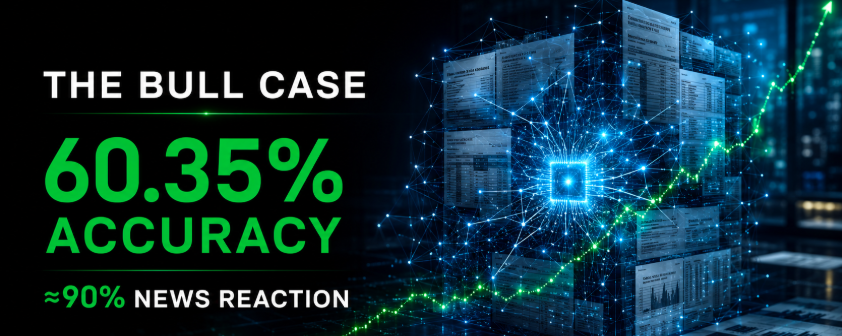
- AI can uncover useful signals. In controlled research, a carefully prompted GPT-4 model achieved 60.35% accuracy when predicting the direction of future earnings, outperforming human analysts in the study.
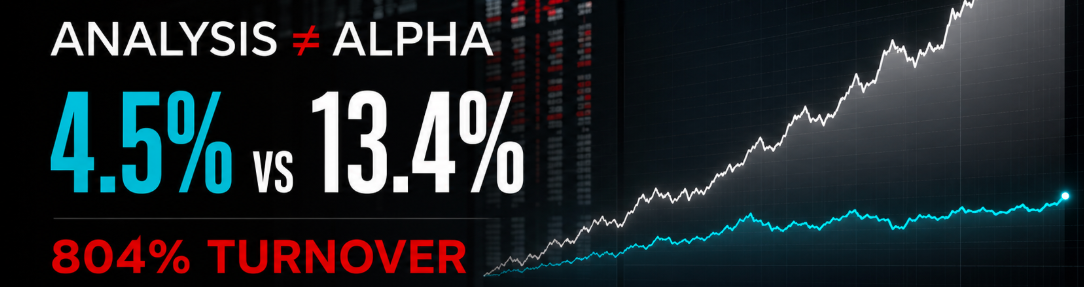
- Better analysis does not guarantee better returns. A prominent AI-powered ETF returned only 4.5% annualized over five years through June 2026, versus 13.4% for the S&P 500 Total Return Index.
- AI works best as a research copilot. It can screen companies, compare financials and challenge an investment thesis, but investors must still verify the data, assess valuation and manage risk.
Investors Are Already Using AI
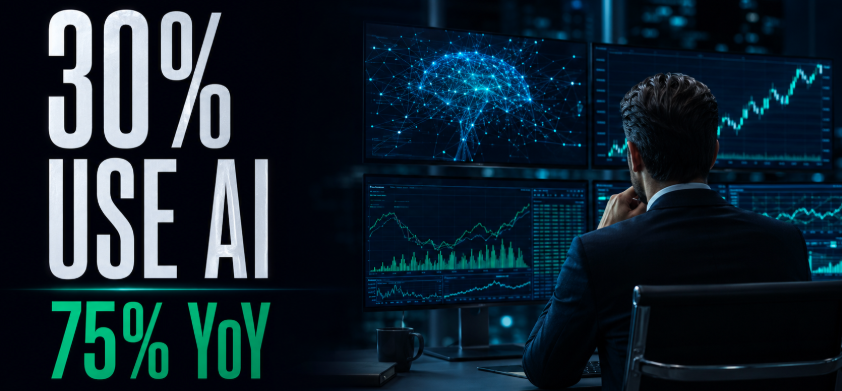
AI-assisted investing is no longer experimental. An eToro survey of 1,000 U.S. investors conducted in August 2025 found that 30% used AI to select or alter investments, representing a 75% increase from the previous year. Another 28% were open to doing so, while 48% cited time savings as one of AI’s main benefits.
Adoption, however, is running ahead of trust. In Betterment’s 2025 survey of 1,200 investors, 53% used generative AI for financial purposes at least once a month. Yet only 30% trusted it to provide financial advice, and just 26% would allow it to manage their investments.
That hesitation makes sense. Asking a chatbot for stock ideas, using machine learning to rank securities and allowing an algorithm to trade an entire portfolio are very different activities—with different levels of evidence and risk.
The Bull Case: AI Can Find Signals Humans Miss
AI’s clearest advantage is scale. A person may closely follow 20 or 30 companies. A machine can compare hundreds of financial statements, earnings calls, valuation multiples and news events without fatigue or emotional attachment.
In the study “Financial Statement Analysis with Large Language Models”, researchers gave GPT-4 anonymized financial statements and asked it to predict whether future earnings would rise or fall. A simple prompt produced 52.33% accuracy. A structured, step-by-step analysis increased accuracy to 60.35%—approximately seven percentage points above analysts making forecasts one month after the earnings release.
The model received no company names or management commentary, limiting its ability to repeat a popular Wall Street narrative. Just as importantly, the eight-percentage-point difference between the two prompts showed that results depend heavily on the analytical process. A powerful model alone does not automatically create a strong investment strategy.
AI also appears useful for interpreting news. A University of Florida study covering 4,123 U.S. stocks between October 2021 and May 2024 found that GPT-4 correctly identified the direction of the initial market reaction on roughly 90% of portfolio-days. Its sentiment scores also predicted some post-announcement price movement, particularly among smaller companies and following negative news.
This may be where AI offers investors the greatest opportunity. Small and mid-cap companies often receive limited analyst coverage. A system capable of reading every release could flag accelerating revenue, weakening cash conversion, customer concentration or subtle changes in management language before the company attracts wider attention.
The Bear Case: Analysis Is Not Alpha
Predicting improving earnings is not the same as identifying an attractive stock.
A strong company can be a poor investment when its valuation already assumes exceptional growth. Meanwhile, a struggling company can rally when its results are simply less disappointing than investors feared.
Real-world performance illustrates this gap. The Amplify AI Powered Equity ETF, or AIEQ, uses a selection model powered by IBM Watson. Through June 30, 2026, AIEQ returned 17.5% over one year and 4.5% annualized over five years. The S&P 500 Total Return Index delivered 22.3% and 13.4%, respectively.
At those five-year annualized rates, a hypothetical $10,000 investment would have grown to approximately $12,460 in AIEQ, compared with about $18,760 in the S&P 500, before taxes.
One fund cannot settle the entire AI-investing debate. However, its performance demonstrates that sophisticated automation does not automatically produce lasting excess returns.
Costs also matter. AIEQ charges a 0.75% expense ratio, while its 2025 shareholder report showed portfolio turnover of 804%. Constantly repositioning a portfolio can increase transaction expenses and tax consequences, even when the individual trading decisions appear intelligent.
Any AI advantage may also decay over time. In the University of Florida news-analysis study, an implementable close-to-close strategy produced a significantly positive Sharpe ratio in 2022 and 2023—but not between January and May 2024.
The results weakened as large-language-model adoption increased. When thousands of investors interpret the same headlines using similar tools, prices adjust more quickly and the original edge can disappear.
AI Can Be Confidently Wrong
Generative AI produces plausible language, not guaranteed facts. It can mix reporting periods, use outdated share counts, invent quotations or calculate valuation ratios using incompatible figures. Its confident tone can make those errors unusually persuasive.
FINRA’s 2026 regulatory report highlights hallucinations, bias, privacy risks and autonomous systems acting beyond their intended authority. The SEC has also taken action against investment advisers that misrepresented their use of AI.
AI may also reinforce an investor’s existing bias. Asking, “Why is this stock a great opportunity?” invites the model to construct a bullish argument.
A better approach is to ask for the strongest bear case, the expectations already reflected in the valuation and the specific evidence that would invalidate the investment thesis.
The Best Approach: Human Plus Machine
Stock picking was difficult long before generative AI arrived. According to S&P Dow Jones Indices, 79% of actively managed U.S. large-cap funds underperformed the S&P 500 in 2025.
These funds employ professional analysts and use sophisticated proprietary tools. That base rate demonstrates that faster access to information is not enough to guarantee superior returns.
For individual investors, a disciplined AI-assisted process can be divided into five steps:
- Screen: Define measurable criteria such as revenue growth, margins, free cash flow and balance-sheet strength.
- Verify: Check every material figure against regulatory filings, earnings releases and other primary sources.
- Compare: Standardize valuation, growth, debt, dilution and potential catalysts across comparable companies.
- Challenge: Demand a strong bear case and identify the events that would disprove the investment thesis.
- Control risk: Develop bear, base and bull scenarios, then size the position according to the potential downside—not the model’s confidence.

The Verdict
Yes, AI can help investors find good opportunities—but it cannot reliably tell them which investments will outperform.
The strongest evidence supports AI as an information-processing tool. It can read financial statements, interpret news, compare companies and expose weaknesses in an investment thesis. The evidence is considerably weaker when it comes to autonomous stock selection and consistently beating the market.
The winning question is therefore not: “Which stock should I buy?”
It is: “How can AI help me investigate more companies and test my assumptions more rigorously?”
Investors who treat AI as an oracle may simply make mistakes faster. Those who combine its speed with verified data, valuation discipline and independent judgment may build a genuinely better investment process.
This article is for informational purposes only and does not constitute financial advice. Past performance and research results do not guarantee future returns.

Marc has been involved in the Stock Market Media Industry for the last +5 years. After obtaining a college degree in engineering in France, he moved to Canada, where he created Money,eh?, a personal finance website.