Wall Street expects the Federal Reserve to keep rates unchanged, but traders are assigning a meaningful probability to a surprise hike. For investors, the decision may matter less than the votes—and what Kevin Warsh signals about September.
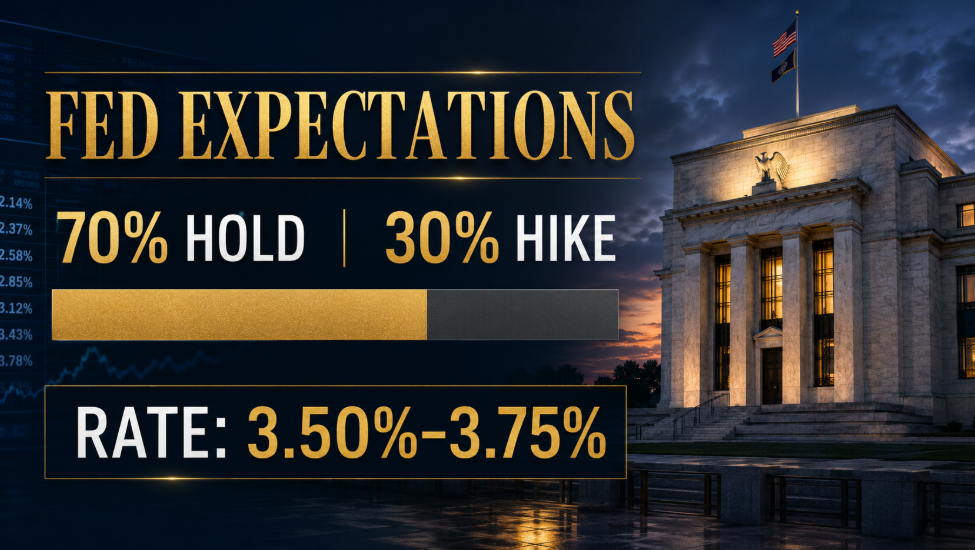
- The Fed is expected to hold rates at 3.50%–3.75%, but markets still price a roughly 30% chance of a quarter-point hike.
- Analysts are split between waiting after cooler June inflation and hiking now to contain persistent price pressures.
- A dovish hold could lift stocks, while a hawkish hold—or surprise hike—would likely pressure the crowded AI trade.
A hold is expected, but it is no longer guaranteed
The Federal Reserve will announce its decision at 2 p.m. Eastern time on Wednesday, followed by Chair Kevin Warsh’s press conference 30 minutes later.
The formal economist consensus looks decisive. In a Reuters survey conducted from July 17 to 21, all 104 forecasters expected the Fed to leave the federal funds rate unchanged at 3.50%–3.75%.
Markets are considerably less certain.
Interest-rate futures imply approximately a 70% probability of a hold and a 30% probability of a quarter-point hike. That is an unusually large gap between economists and traders—and it creates the conditions for volatility whichever way the decision breaks.
The disagreement is not about a rate cut. Almost nobody expects one. It is about whether the Fed should respond immediately to persistent inflation or wait for more evidence before its September meeting.
Why the Fed has a case for waiting
The strongest argument for a hold arrived with June’s inflation report.
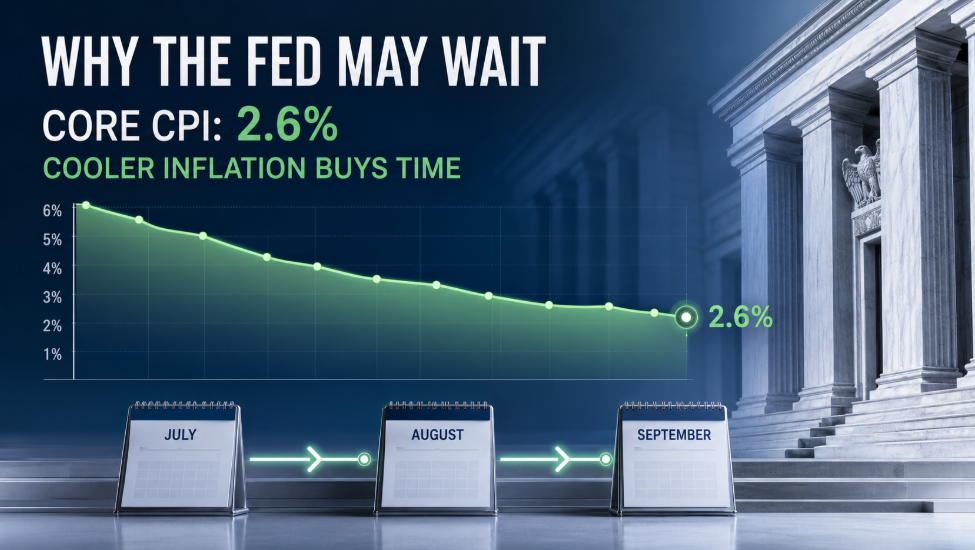
Headline consumer-price inflation slowed to 3.5% year over year from 4.2% in May. Core CPI, which excludes food and energy, fell to 2.6% from 2.9%, while recording no monthly increase. That suggests some of the earlier inflation surge may have reflected temporary energy and supply shocks rather than a permanent acceleration.
Krishna Guha of Evercore ISI argued that it would be unusual to hike immediately after that improved report when the Fed could act in September if inflation returns. The Conference Board also expects no rate change in 2026, citing moderating inflation, a gradually cooling labor market and the Fed’s preference for moving carefully.
Waiting would give policymakers additional inflation, employment and growth data. It would also reduce the risk of reacting too aggressively to oil-price volatility caused by the conflict in the Middle East—something higher interest rates cannot directly fix.
The central bank already risks tightening financial conditions without moving. Treasury yields have risen, the dollar is near a one-month high and markets have repriced the expected rate path sharply upward.
Why some analysts want a hike now
The argument for higher rates is equally straightforward: inflation remains well above the Fed’s 2% target, and one encouraging month does not establish a trend.
The labor market has stabilized, economic activity remains solid and AI-related capital spending continues to support investment and demand. The Fed’s July Monetary Policy Report noted that markets expected the effective policy rate to rise toward 4% by year-end.
Capital Economics described a hike as a question of “when, rather than if,” arguing that the AI investment boom and stronger consumer demand could keep core inflation above target. Neil Dutta of Renaissance Macro Research made the case for acting early: a small increase now could reduce the need for a larger response later.
The Fed’s own June projections reinforced that risk. The median year-end rate forecast rose to 3.8%, broadly consistent with one quarter-point hike during 2026, while the median forecast for core PCE inflation increased to 3.3%.
Dallas Fed President Lorie Logan and Cleveland Fed President Beth Hammack have both indicated support for higher rates. If the committee holds, investors will watch whether they dissent—and whether anyone joins them.
The Kevin Warsh factor
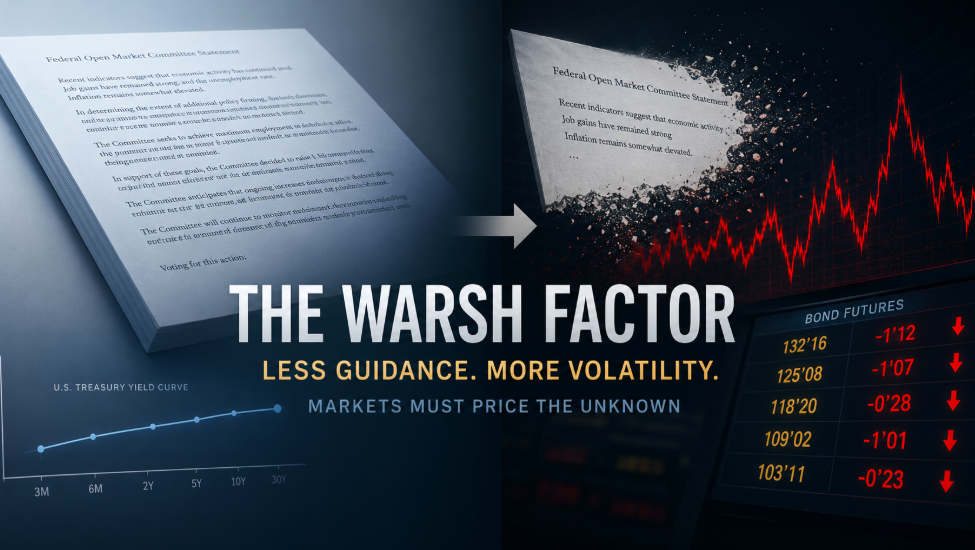
Under Jerome Powell, markets became accustomed to detailed guidance and carefully prepared expectations. Warsh has deliberately moved in the opposite direction.
He has shortened the Fed’s statement, removed its previous easing bias and declined to explain the likely path of rates. His objective is to make markets react to economic data instead of waiting for policymakers to guide every move.
That approach has restored uncertainty to meetings—but it also creates a risk that speculation begins influencing the decision itself.
Barclays economists warned that investors are filling the communication vacuum with the belief that Warsh may want a surprise hike to establish his anti-inflation credibility. With President Donald Trump publicly demanding lower rates, tightening policy would also demonstrate the Fed’s independence.
This is why today’s meeting is harder to predict than the unanimous economist consensus suggests.
Three possible outcomes for markets
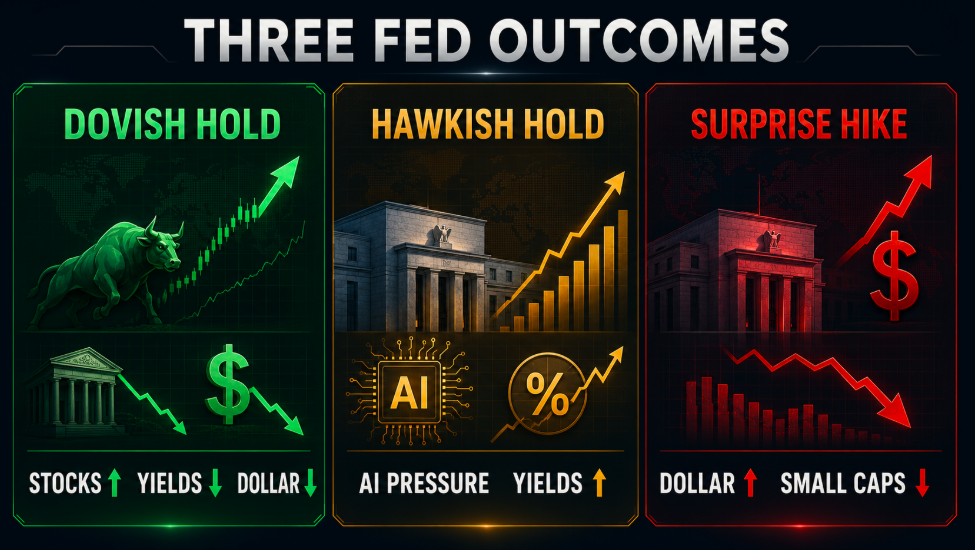
1. A relatively dovish hold
The Fed keeps rates unchanged, produces few dissenting votes and acknowledges June’s inflation improvement.
This would likely push short-term Treasury yields and the dollar lower. Rate-sensitive areas—including small caps, homebuilders, real estate and unprofitable growth stocks—could rebound. Technology may also benefit because lower yields increase the present value investors assign to future earnings.
However, the rally could be limited if Warsh refuses to discuss September.
2. A hawkish hold
The Fed leaves rates unchanged but emphasizes persistent inflation, rising oil risks and the possibility of tightening. Two or more dissents would strengthen that message.
This may be the most complicated outcome. The headline says “hold,” but markets could increase the probability of a September hike. Short-term yields and the dollar could rise while expensive growth stocks fall.
For investors, this would effectively be a delayed hike rather than a dovish pause.
3. A surprise 25-basis-point hike
A move to 3.75%–4.00% would surprise most economists, although futures markets are partially prepared.
The immediate reaction would likely be a stronger dollar, higher yields and pressure on long-duration assets. Semiconductors and AI stocks—already shaken by the Korean market rout and new Chinese competition—would face another valuation shock. Small caps, housing and heavily indebted companies would also be vulnerable.
Banks could benefit from higher lending rates, but that advantage would be offset if tighter conditions increase credit risk or weaken loan demand.
What matters after the announcement
My base case is a hold, probably with at least one hawkish dissent. June’s inflation improvement gives the Fed a credible reason to wait, and September offers a cleaner opportunity to act with more data.
But a hold should not be mistaken for the return of easy money.
The debate has moved decisively away from rate cuts. The real question is whether the next move is a hike—and whether persistent inflation, oil shocks and AI-driven demand force it sooner than investors expect.
For the stock market, the biggest risk is not necessarily today’s rate decision. It is a Fed that keeps rates higher for longer while earnings expectations and AI valuations remain close to perfection.
What do you expect from the Fed: a dovish hold, a hawkish hold or a surprise hike? And which reacts most violently—the dollar, bonds, small caps or the AI trade?

Marc has been involved in the Stock Market Media Industry for the last +5 years. After obtaining a college degree in engineering in France, he moved to Canada, where he created Money,eh?, a personal finance website.