Sekur Private Data’s participation in the 2026 DoDIIS Worldwide Conference is about much more than attending another cybersecurity event. It represents the convergence of a long-term strategy: assembling an intelligence-grade team, developing secure communications for high-trust environments and positioning Sekur inside the government and defense ecosystem. For investors, the most valuable part of the story may be the people Sekur has brought together—and what their collective experience could unlock over time.
- SekurOne gives government adoption potentially powerful recurring-revenue economics.
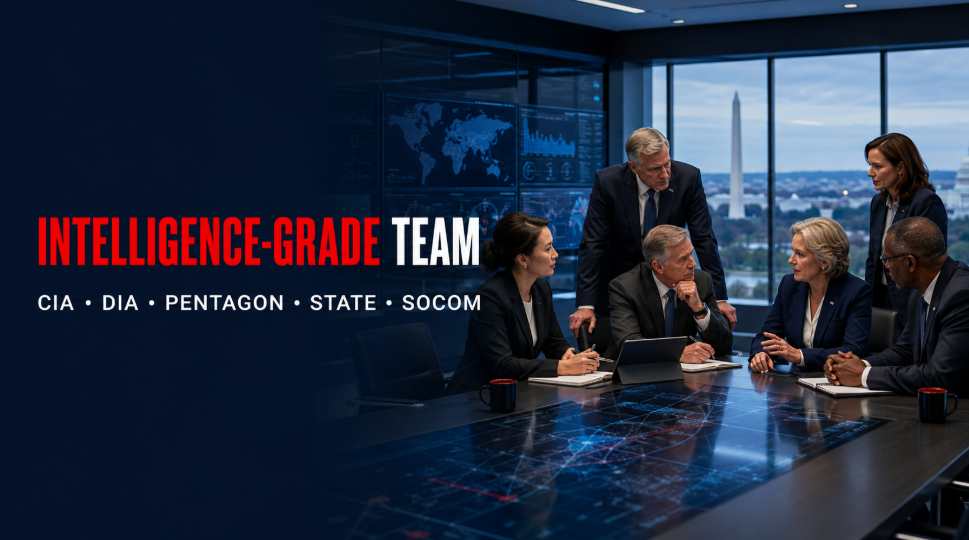
- Sekur’s team spans the CIA, DIA, Pentagon, State Department, JSOC and SOCOM.
- DoDIIS places that expertise inside a premier Intelligence Community forum.
1. DoDIIS Places Sekur Inside an Important Intelligence Forum
Sekur’s Special and Strategic Advisors are attending the 2026 DoDIIS Worldwide Conference in Tampa, Florida, from August 9 through August 12.
Hosted by the Defense Intelligence Agency, DoDIIS brings together senior government and military leaders, Intelligence Community professionals, technical specialists, industry partners, academia and Five Eyes allies.
The conference focuses on intelligence technologies, resilient communications, connected infrastructure, command systems and mission readiness. These are precisely the environments Sekur has been preparing to serve.
According to Sekur’s DoDIIS announcement, its team is introducing the company’s Controlled Unclassified Information communications capabilities and engaging with interested parties across the Intelligence Community.
In sensitive government markets, the significance of such an event cannot be reduced to whether a contract is announced immediately afterward.
These markets develop through relationships, technical understanding, mission alignment, trust and long-term engagement. DoDIIS gives Sekur’s team an opportunity to participate in those conversations inside one of the most relevant forums available.
2. The Team May Be Sekur’s Most Underappreciated Asset
Sekur has assembled a collection of advisers and executives whose experience covers virtually every environment the company is targeting: defense intelligence, clandestine technology, military communications, federal procurement, diplomacy, cybersecurity and Special Operations.
For a company of Sekur’s current size, the concentration of national-security experience is unusual.
| Team member | Relevant experience | Strategic value to Sekur |
|---|---|---|
| Lt. Gen. Raymond Palumbo | Former Director for Defense Intelligence; led the Pentagon ISR Task Force; held senior JSOC and USASOC commands | Defense strategy, military requirements and senior-level engagement |
| John T. Lewis | 34-year CIA veteran; former deputy director and CTO of CIA Research Labs; CIA Trailblazer Medal recipient | Technology direction, Intelligence Community requirements and operational security |
| Annette L. Redmond | Four decades across the Intelligence Community, Department of Defense and State Department | Intelligence policy, cybersecurity, diplomacy and government systems |
| Philip A. Oakley | Former DIA and Pentagon intelligence professional; federal-technology and sales experience | Intelligence relationships, federal sales strategy and CUI positioning |
| Kenneth D. Rogers | Former State Department deputy CIO and former DHS technology executive | Government technology, acquisition strategy and enterprise deployment |
| Nathan R. Price | Former State Department Bureau of Intelligence and Research analyst and diplomatic adviser | Secure diplomatic communications and international engagement |
| Rafael Beltran | Former SOCOM senior technical adviser to CIO/J6 with an active TS/SCI clearance | Tactical communications, secure mobility and operational deployment |
Chairman Raymond Palumbo completed a 34-year military career that included serving as Director for Defense Intelligence, leading the Pentagon’s Intelligence, Surveillance and Reconnaissance Task Force, and holding senior command positions in JSOC and USASOC. His role is to guide Sekur’s military and defense strategy and help align the company with real operational requirements. Sekur’s appointment announcement describes his experience across defense intelligence, Special Operations and secure military communications.
Chief Technology Officer John T. Lewis brings 34 years of CIA experience. He worked across technical operations, information operations and intelligence research, ultimately helping lead CIA Research Labs. His presence gives Sekur technical leadership shaped by firsthand experience protecting communications against sophisticated adversaries. Sekur appointed Lewis as both CTO and a Strategic Advisory Board member.
Annette L. Redmond adds four decades of government leadership spanning Army intelligence, the Department of Defense and the State Department’s Bureau of Intelligence and Research. She previously served as the Army’s Intelligence CIO and later as Deputy Assistant Secretary for Intelligence Policy and Coordination. Her appointment adds intelligence-policy, cybersecurity and diplomatic expertise.
Rafael Beltran brings operational experience from U.S. Special Operations Command, where he served as a senior technical adviser to the CIO/J6 and oversaw executive communications supporting leadership across 22 countries. His work helps connect Sekur’s development roadmap to the realities of tactical and deployed environments. Sekur appointed Beltran to its OpsTech Special Advisory Board in July.
This is not simply a collection of impressive biographies. Together, the team provides Sekur with operational knowledge, technical expertise, institutional understanding and high-level government-market experience.
3. Why Human Capital Matters So Much in Government Cybersecurity
Government and Intelligence Community markets are fundamentally different from ordinary consumer software.
The technology must fit specific operational environments. Communications requirements can differ between diplomats, military commanders, intelligence personnel, defense contractors and personnel operating in contested locations.
A company needs to understand not only cybersecurity, but also mission workflows, data sovereignty, CUI handling, procurement structures, deployment realities and the consequences of communications failure.
That is where Sekur’s team can create value.
General Palumbo understands defense command requirements. Lewis understands sensitive intelligence technologies. Redmond and Price understand intelligence policy and diplomatic communications. Beltran understands tactical deployment. Oakley and Rogers bring federal-market, technology and acquisition experience.
This collective knowledge can help Sekur shape its technology around the customer rather than attempting to adapt a generic commercial product after development.
It can also shorten the institutional learning curve that typically confronts smaller technology companies entering the federal market.
4. DoDIIS Is Part of a Long-Term Institutional Strategy
It would be simplistic to judge Sekur’s DoDIIS participation through a short-term sales lens.
Government and intelligence relationships are developed over time. The value of the conference may emerge through technical feedback, introductions, future evaluations, strategic relationships or a deeper understanding of specific mission requirements.
Sekur’s team can engage those conversations at a level that few early-stage cybersecurity companies could replicate.
The DoDIIS organizers describe the conference as an environment where agency leaders, military officials and industry specialists collaborate around mission challenges and emerging technologies.
Sekur is therefore not approaching the event as an outside observer. It is arriving with former leaders from the same defense, intelligence, diplomatic and Special Operations communities represented there.
That alignment is strategically significant.

5. SekurOne Adds Scalable Economics to the Story
SekurOne brings encrypted voice, video, email, messaging and VPN capabilities into one identity-protected platform.
The product is being positioned for high-value users such as defense officials, intelligence professionals, diplomatic personnel, government agencies and executives handling sensitive communications.
Sekur expects paid beta users to begin onboarding in September, with the complete commercial launch scheduled for early October. These milestones represent the next stage of a much broader government-market strategy.
The economics become particularly interesting when applied to institutional customers.
SekurOne is expected to cost approximately US$300 per user per month. At that price:
| Paying SekurOne users | Monthly recurring revenue | Annualized revenue |
| 25 | US$7,500 | US$90,000 |
| 50 | US$15,000 | US$180,000 |
| 100 | US$30,000 | US$360,000 |
| 200 | US$60,000 | US$720,000 |
These figures are illustrative and assume the full subscription price.
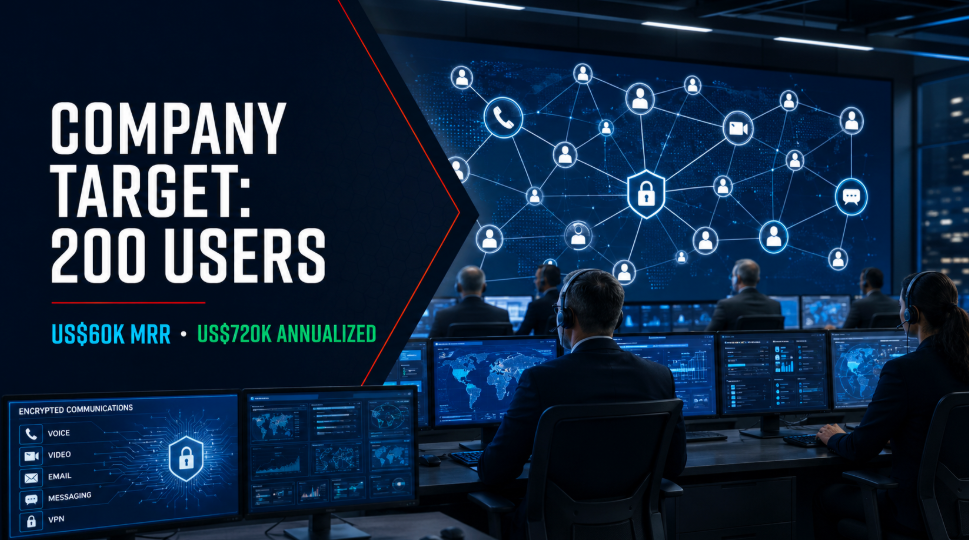
Management has stated that approximately 200 SekurOne users generating US$60,000 in monthly recurring revenue could make the company fully profitable. Sekur discussed that target in its July operating update.
The blue-sky potential comes from the structure of government and enterprise adoption. One organization can represent multiple users, and a successful initial deployment can potentially expand across teams, departments or operational units.
Sekur does not need mass-market scale for the premium model to become meaningful.
6. Multiple Strategic Pieces Are Coming Together
DoDIIS is one component of a wider infrastructure Sekur has been building.
The company’s solutions are available to government customers through the i3ICS GSA Multiple Award Schedule. Sekur has signed defense-distribution agreements, participated in SOF Week, conducted demonstrations for government and Special Operations audiences and expanded its technical and strategic team.
These developments create several potential paths into the market:
- Direct relationships initiated through Sekur’s national-security team
- Federal procurement through the GSA schedule
- Distribution through established defense-sector partners
- Technical evaluations and high-value subscription deployments
- On-premises implementations for organizations requiring data sovereignty
- International government and diplomatic opportunities
Each additional relationship can strengthen Sekur’s institutional presence and expand the number of environments in which its technology may be evaluated.
7. A Different Way to View Sekur’s Investment Potential
Sekur is not attempting to compete as another mass-market messaging application.
It is building a high-trust communications company around proprietary technology, Swiss jurisdiction, premium pricing and an exceptional concentration of government and intelligence experience.
That combination creates a different investment profile.
The technology provides the foundation. The team provides institutional knowledge and strategic access. SekurOne provides high-value recurring-revenue potential. The GSA and distribution relationships provide commercial pathways.
DoDIIS brings those pieces into the same environment.
The fact that individuals with decades of experience across the CIA, Pentagon, State Department, DIA, JSOC and SOCOM have chosen to work with Sekur is itself notable. It suggests that experienced national-security professionals see relevance in the company’s mission and technology.
For investors willing to understand the long game, that human capital may represent one of Sekur’s most valuable competitive advantages.
The Verdict: DoDIIS Matters—But September Matters More
The Bottom Line
Sekur’s presence at DoDIIS should be understood as part of a long-term expansion into government, intelligence and defense communications—not as an isolated conference appearance.
The company has assembled a team with experience at some of the highest levels of U.S. intelligence, military command, diplomacy and Special Operations. That team is now helping position Sekur inside the markets it understands best.
SekurOne adds a scalable premium-subscription model capable of producing meaningful recurring revenue without requiring hundreds of thousands of consumer users.
The opportunity lies in the combination: specialized technology, Swiss-hosted privacy, institutional expertise, procurement access and a market where secure communications carry mission-level importance.
DoDIIS is another step in that journey—and Sekur is entering it with a team built for the destination.
Disclaimer: This article is for informational purposes only and does not constitute investment advice. Sekur Private Data is a speculative micro-cap company with limited revenue, operating losses, financing requirements and potential dilution risk. Statements concerning future launches, paid beta users, government opportunities, revenue and profitability are forward-looking and may not be achieved.

Marc has been involved in the Stock Market Media Industry for the last +5 years. After obtaining a college degree in engineering in France, he moved to Canada, where he created Money,eh?, a personal finance website.