With U.S.–Iran negotiations collapsing, oil rising, and borrowing costs climbing, investors face an uncomfortable question: Is this another buying opportunity—or the beginning of a much bigger economic shock?
- Disruptions in the Strait of Hormuz are threatening global energy supplies and raising inflation risks.
- Higher bond yields could hit expensive AI and technology stocks harder than investors expect.
- Oil producers and refiners may benefit while consumers, airlines, and growth investors absorb the damage.
1. The Ceasefire Is Unraveling
The June agreement between Washington and Tehran was meant to create a path toward broader negotiations. Instead, it deteriorated over disagreements involving sanctions, maritime access, and control of the Strait of Hormuz.
On August 18, Iranian negotiators said the waterway would remain closed until the United States met several demands, including lifting its blockade of Iranian ports and removing oil sanctions.
President Donald Trump has rejected the previous arrangement, while Iranian officials have signaled a more aggressive military posture.
The market reaction followed quickly. Brent crude traded around $91 per barrel, while U.S. crude approached $85. Meanwhile, Nasdaq futures dropped more than 1% as long-term Treasury yields moved toward levels not seen in years.
These are not separate developments. They represent different stages of the same economic chain reaction.
2. Hormuz Is More Than a Geopolitical Headline
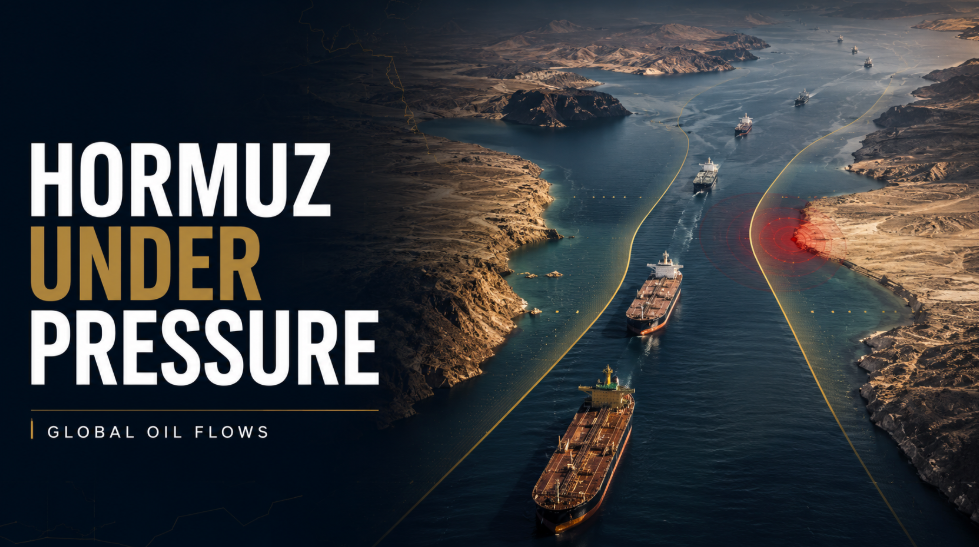
The Strait of Hormuz is one of the most important energy corridors in the world.
Before the conflict, oil and petroleum shipments through the waterway averaged 21.6 million barrels per day. During the second quarter of 2026, that figure fell to approximately 4.9 million barrels per day. That represents a decline of roughly 77%.
Alternative pipelines and shipping routes can offset some disruption, but they are more expensive and limited in capacity. The situation is also affecting production. The International Energy Agency estimates that 8.3 million barrels per day of Gulf output remained shut in during July. Global oil inventories have also fallen by approximately 410 million barrels since the conflict began.
At what point does a temporary geopolitical scare become a structural supply crisis?
3. The Real Threat Is Inflation
Higher oil prices do not stay inside the energy sector.
They spread through gasoline, aviation, agriculture, transportation, manufacturing, and consumer goods.
The latest inflation figures already reveal the problem. In July, U.S. consumer prices were up 3.4% from a year earlier. Energy prices increased 14.7%, while gasoline prices climbed 24.6% over the same period.
Inflation had recently moderated because energy prices declined in June and July. If crude stays elevated, that progress could reverse.
The Federal Reserve has already connected rising inflation to the Middle East conflict, particularly through higher energy prices and disrupted shipping.
That puts policymakers in a difficult position. Higher energy costs weaken consumers and economic growth. But those same costs can make it harder for the Fed to lower interest rates. Markets were recently pricing a 96% probability of at least one additional rate increase this year. For investors counting on cheaper borrowing and easier monetary policy, that could be a serious problem.

4. AI Stocks Could Become Unexpected Casualties
The most exposed businesses may not be oil importers or airlines.
They could be the expensive technology companies that dominate American portfolios.
Higher Treasury yields reduce the value investors place on future profits. That matters particularly for AI infrastructure companies, semiconductor businesses, data-center developers, and smaller technology firms that depend on external financing.
On August 18, Micron, Marvell, AMD, and Intel declined between approximately 3% and 6% in premarket trading as investors reacted to higher oil prices and borrowing costs.
The long-term AI opportunity may remain intact. Demand for computing power, chips, networking equipment, and data-center infrastructure does not disappear because geopolitical tensions increase.
But a promising business is not automatically a good investment at any valuation.
If financing becomes more expensive and investors demand faster profitability, smaller and more speculative AI-related companies could face disproportionate pressure. That raises an uncomfortable possibility:
What if the next major AI selloff is triggered not by disappointing technology, but by oil, inflation, and interest rates?
5. Diesel May Be the Bigger Warning
Oil attracts the headlines, but diesel could reveal the deeper economic danger.
On August 17, the U.S. diesel crack spread exceeded $102 per barrel, reaching a record.
That spread measures the difference between diesel prices and crude oil costs.
At the same time, U.S. distillate inventories were at their lowest level for that time of year since 1996.
Diesel powers trucks, agricultural equipment, industrial machinery, and parts of the global shipping system.
When diesel becomes more expensive, food production costs rise. Transportation becomes more expensive. Supply chains face additional pressure. For refiners, exceptional margins can create an opportunity. For the broader economy, they can signal a serious bottleneck.
The same crisis that benefits one group of investors could quietly increase costs for almost everyone else.
6. Who Benefits—and Who Pays?
Potential beneficiaries include oil producers such as ExxonMobil and Chevron, along with refiners such as Valero, Marathon Petroleum, and Phillips 66.
Their actual performance will still depend on production costs, refining margins, operational conditions, and company-specific risks.
Defense contractors could also attract attention, although rising geopolitical tensions do not guarantee immediate profits or stronger share prices.
On the other side are airlines, transport companies, energy-intensive manufacturers, consumer-facing businesses, and smaller firms dependent on affordable financing.
High-growth technology stocks could also struggle if persistent inflation keeps interest rates elevated.
The uncomfortable reality is that geopolitical crises can redistribute economic value. Some companies benefit from scarcity and security spending while households absorb higher fuel prices and weaker purchasing power. That does not mean the conflict exists to enrich specific industries. But it does raise a legitimate question:
If investors, refiners, and defense companies can profit while consumers shoulder the costs, whose interests are actually being protected?

7. The Bullish Argument
There is still a credible case that investors are overreacting.
The U.S. Energy Information Administration expects Brent crude to average approximately $78 per barrel in the fourth quarter, provided shipping conditions improve and disrupted production gradually returns.
A diplomatic breakthrough could rapidly reverse the current market dynamic.
Oil prices could fall. Bond yields could decline. Technology stocks could rebound. Investors who bought during the panic might ultimately be rewarded.
Strong corporate earnings and sustained AI investment could also help the broader market withstand continued geopolitical volatility.
But that optimistic scenario depends on one crucial assumption: The disruption ends before inflation, borrowing costs, and weaker consumer demand cause lasting economic damage.
- So what is Wall Street really doing—demonstrating resilience, or betting that policymakers will solve a crisis they have repeatedly failed to contain?
- Is the U.S.–Iran conflict creating a buying opportunity, or are investors underestimating the shock that could finally derail the AI-driven bull market?
Disclaimer: This article is for informational purposes only and does not constitute investment advice.

Marc has been involved in the Stock Market Media Industry for the last +5 years. After obtaining a college degree in engineering in France, he moved to Canada, where he created Money,eh?, a personal finance website.