Why SekurOne, government access and higher-value subscribers could reshape the company’s revenue outlook
Sekur Private Data (OTCQB: SWISF) is entering a new phase of its development. After building a Swiss-hosted secure communications platform spanning encrypted email, messaging, VPN, voice and video, the company is increasingly focused on the customers most likely to pay a premium for privacy: executives, government agencies, defense organizations and intelligence professionals.
The resulting opportunity is increasingly measurable. With SekurOne priced at US$300 per user per month, a relatively small number of premium customers could meaningfully expand recurring revenue. Add an established U.S. government procurement pathway, an experienced national-security advisory team and emerging international opportunities, and Sekur’s next stage of growth could look substantially different from its historical consumer-focused model.
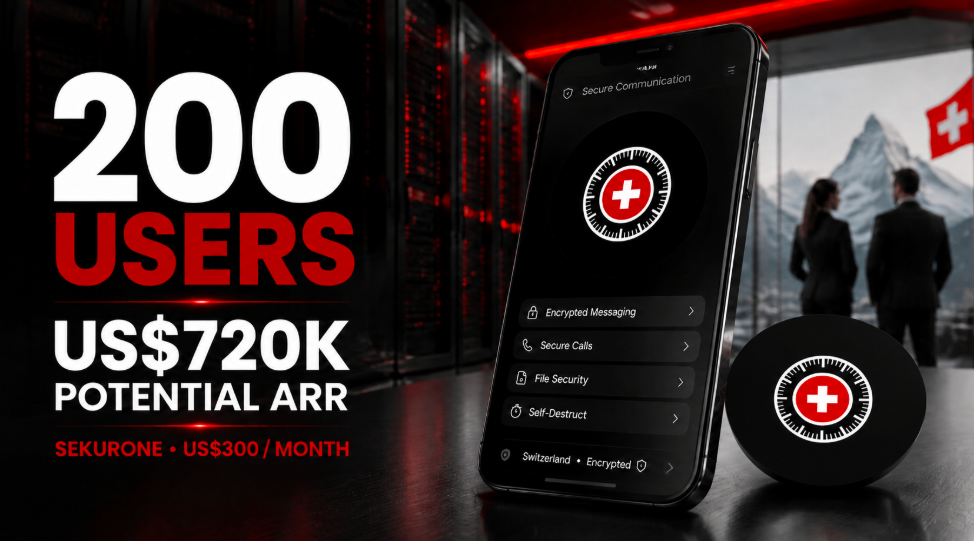
- SekurOne generates US$3,600 in annual recurring revenue per user, meaning 200 subscribers could produce US$720,000 in annualized sales.
- A potential 2027 scenario involving 250 SekurOne users and 1,000 premium email subscribers would represent approximately US$1.65 million in annual recurring revenue.
- U.S. government procurement access, the AdRevv partnership and a US$1.296 million DRC proposal provide multiple potential avenues for additional growth.
A Higher-Value Business Model Is Taking Shape
Sekur generated C$408,707 in audited revenue during 2025. Its Q1 2026 financial report showed C$94,062 in quarterly revenue, C$1.80 million in cash and C$1.63 million in working capital at the end of March.
That historical revenue base provides an important reference point for understanding the potential impact of the company’s premium transition.
In July, Sekur reported that average revenue per user had increased 25% month over month as the company introduced higher-value customers to its platform. Privacy Email is priced at US$50 per month, Operational Email at US$75 per month, and SekurOne at US$300 per month.
According to management, premium subscribers can generate approximately ten times the revenue of earlier legacy users. That means Sekur can potentially expand revenue through customer quality and product mix rather than relying exclusively on a large consumer subscriber base.
Why 200 SekurOne Subscribers Matter
SekurOne combines encrypted voice, video, messaging, email and VPN within a single secure communications environment. At US$300 per month, each subscriber represents US$3,600 of annual recurring revenue.
The resulting revenue progression is straightforward:
- 100 users: US$360,000 in annual recurring revenue.
- 200 users: US$720,000 in annual recurring revenue.
- 500 users: US$1.80 million in annual recurring revenue.
- 1,000 users: US$3.60 million in annual recurring revenue.
Management has indicated that 200 SekurOne customers generating approximately US$60,000 per month represent its target for reaching profitability. At an illustrative exchange rate of US$1 to C$1.39, that annualized figure would equal approximately C$1 million.
Profitability will ultimately depend on operating expenses, product margins and the pace of customer acquisition. However, the scale of the target illustrates how a limited number of institutional customers could create a meaningful financial inflection point.
A single government agency, defense contractor or enterprise customer could potentially represent multiple seats. Paid beta users are expected to begin onboarding in September, ahead of SekurOne’s anticipated October commercial launch.
Modeling Sekur’s Potential 2027 Revenue
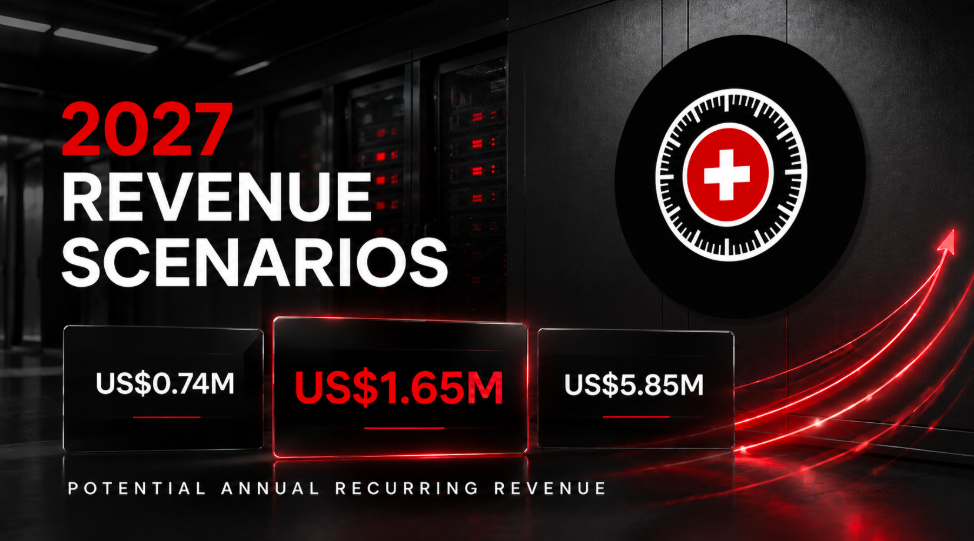
The scenarios below are independent illustrations, not company guidance. They estimate potential 2027 exit annual recurring revenue and assume that premium email customers are evenly split between Privacy Email at US$50 per month and Operational Email at US$75 per month.
They exclude potential hardware sales, customized on-premises deployments, the DRC proposal and additional government contracts. Canadian-dollar figures assume US$1 equals C$1.39.
| Scenario | SekurOne users | Premium email users | Potential ARR, USD | Potential ARR, CAD | Potential gross profit, CAD |
|---|---|---|---|---|---|
| Initial premium adoption | 100 | 500 | $735,000 | $1.02 million | $0.82 million |
| Expanding customer base | 250 | 1,000 | $1.65 million | $2.29 million | $1.83 million |
| Institutional growth | 1,000 | 3,000 | $5.85 million | $8.13 million | $6.50 million |
The middle scenario combines US$900,000 from 250 SekurOne users, US$300,000 from 500 Privacy Email users and US$450,000 from 500 Operational Email users. Together, those subscriptions would represent US$1.65 million of potential annual recurring revenue.
Management has previously indicated that Sekur’s SaaS solutions can generate approximately 80% gross margins. Applying that assumption to the middle scenario produces approximately C$1.83 million in potential annual gross profit before operating expenses.
The institutional-growth scenario would represent C$8.13 million in potential recurring revenue, highlighting the operating leverage that could develop if adoption expands across enterprise and government customers.
AdRevv Adds Another Potential Growth Channel
Sekur’s partnership with AdRevv introduces a separate customer-acquisition opportunity.
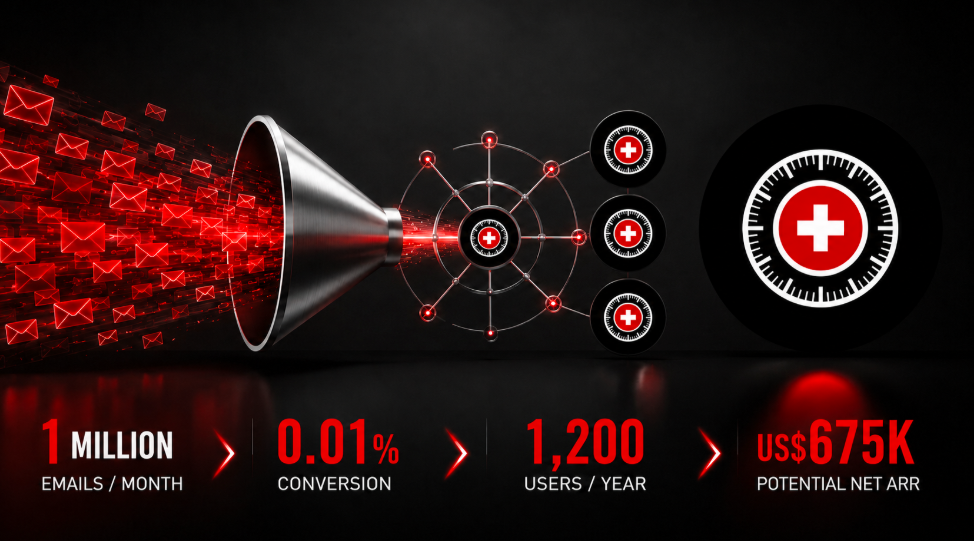
The program is expected to deploy one million retargeting emails per month for at least 12 months, drawing from a U.S. database of 271 million people. AdRevv receives 25% of revenue from most Sekur products sold through the arrangement and 40% from SekurVPN sales.
Assuming customers purchase email products at an average price of US$62.50 per month, the potential outcomes could look like this:
| Illustrative conversion rate | New customers per month | Customers after one year | Potential gross ARR | Potential ARR after revenue share |
|---|---|---|---|---|
| 0.005% | 50 | 600 | $450,000 | $337,500 |
| 0.010% | 100 | 1,200 | $900,000 | $675,000 |
| 0.025% | 250 | 3,000 | $2.25 million | $1.69 million |
These examples assume no churn or duplicated contacts and should not be interpreted as forecasts. Nevertheless, they demonstrate that even a modest conversion rate could produce meaningful recurring revenue over time.
International Opportunities Add Further Upside
Sekur has also developed opportunities outside the United States.
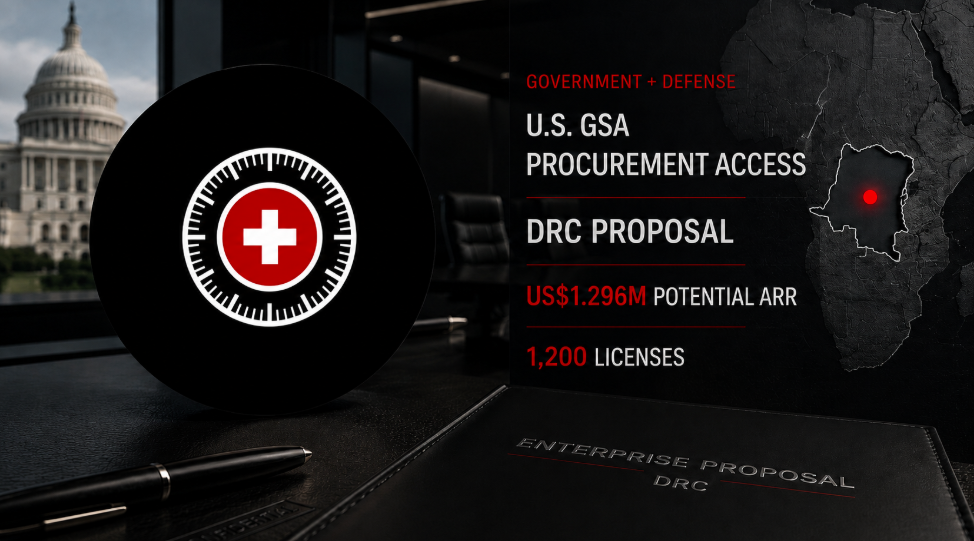
In the Democratic Republic of Congo, the company received a request for proposal involving 1,200 SMB and Corporate licenses. Management estimated the opportunity at approximately US$1.296 million in potential annual recurring revenue.
The proposal is not a signed contract and is therefore excluded from the revenue scenarios above. If successfully converted, however, it could represent a substantial additional revenue stream. At an illustrative 80% gross margin, the opportunity would correspond to more than US$1 million in potential annual gross profit.
Sekur has also discussed expanding its relationship with América Móvil’s Telcel business in Mexico, where corporate communications solutions could create additional distribution opportunities.
A Team Built for Government and Defense Markets
One of Sekur’s most significant strategic advantages is the experience of its government and national-security advisory team.
The company has recruited retired Lt. Gen. Raymond Palumbo, former CIA senior executive John T. Lewis and former U.S. State Department Deputy Assistant Secretary Annette L. Redmond. Their backgrounds span military intelligence, cybersecurity, diplomatic operations and government technology procurement.
Sekur’s products are also available to eligible government buyers through GSA Multiple Award Schedule Contract 47QTCA18D0089, providing a recognized purchasing pathway for federal, state and local agencies.
The company’s participation in DoDIIS 2026 further positioned its communications platform in front of intelligence-community stakeholders ahead of the SekurOne rollout.
Taken together, the advisory network, procurement access and product roadmap provide a strong foundation for institutional business development.
What the Revenue Scenarios Could Mean for Valuation
The Canadian Securities Exchange lists approximately 252.9 million Sekur shares outstanding. At an illustrative share price of C$0.045, the company’s equity value would be approximately C$11.4 million.
If Sekur reached the revenue scenarios outlined above while its market capitalization remained unchanged, the implied valuation relative to potential recurring revenue would be approximately:
- 11.2 times ARR under the initial premium-adoption scenario.
- 5.0 times ARR under the expanding-customer-base scenario.
- 1.4 times ARR under the institutional-growth scenario.
These comparisons illustrate why higher-value subscription growth could become important for investors. As recurring revenue increases, the same market capitalization would represent a progressively lower multiple of the company’s revenue base.
The Bottom Line
Sekur’s emerging investment story centers on premium pricing, recurring revenue and access to customers that place a high value on communications security.
At US$300 per month, 200 SekurOne subscribers would represent US$720,000 in annual recurring revenue. A broader mix of 1,250 premium subscribers could produce US$1.65 million. The DRC proposal and government opportunities offer additional potential beyond those scenarios.
With a differentiated Swiss-hosted platform, an experienced national-security team and multiple potential distribution channels, Sekur is positioning itself to pursue a higher-value cybersecurity opportunity. The coming quarters should provide a clearer picture of how quickly that strategy can translate into premium subscriptions and expanding recurring revenue.
Disclaimer: This article is for informational purposes only and does not constitute financial advice or a recommendation to buy or sell any security. Revenue scenarios are independent illustrations based on disclosed pricing and assumptions, not company guidance. Actual results may differ materially.

Marc has been involved in the Stock Market Media Industry for the last +5 years. After obtaining a college degree in engineering in France, he moved to Canada, where he created Money,eh?, a personal finance website.