Sekur Private Data Ltd. (OTCQB: SWISF; CSE: SKUR) offers an unusual microcap cybersecurity asymmetry. Its July investor presentation described a 10-person company, while its leadership page lists a four-star general, a three-star general, a 34-year CIA veteran and former State Department and Army intelligence technology officials among its advisers.
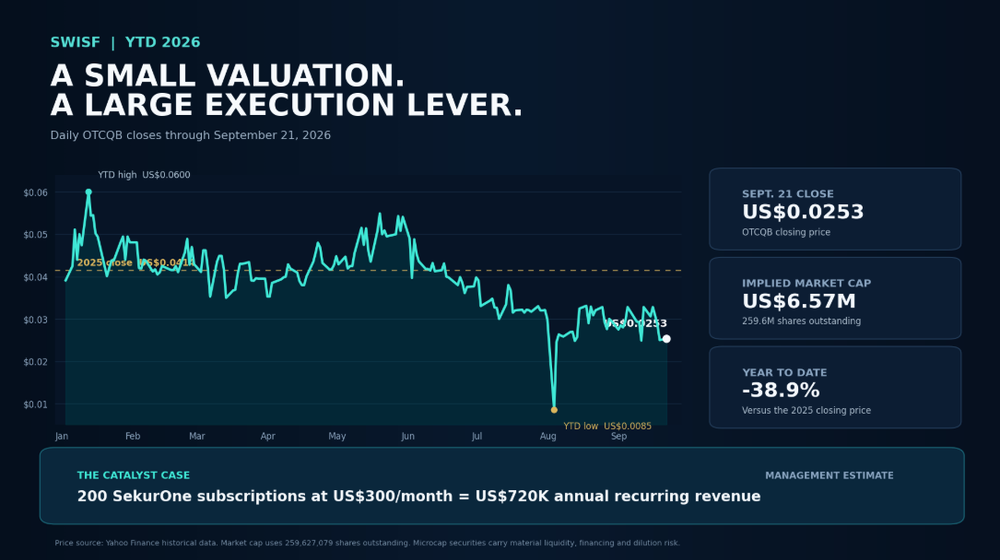
Yet SWISF closed at approximately US$0.0253 on September 21. Using 259.6 million shares outstanding, that implies a market capitalization of only about US$6.6 million.
- Most high-profile names are advisers, selected for product guidance, credibility, introductions and government procurement expertise.
- The roster appears deliberately built around every stage of a government sale: understanding operational needs, adapting the technology, navigating procurement and gaining access to decision-makers.
- Management’s 200-subscriber profitability estimate could be a first validation point; 500, 1,000 or more premium clients could support much greater stock upside.
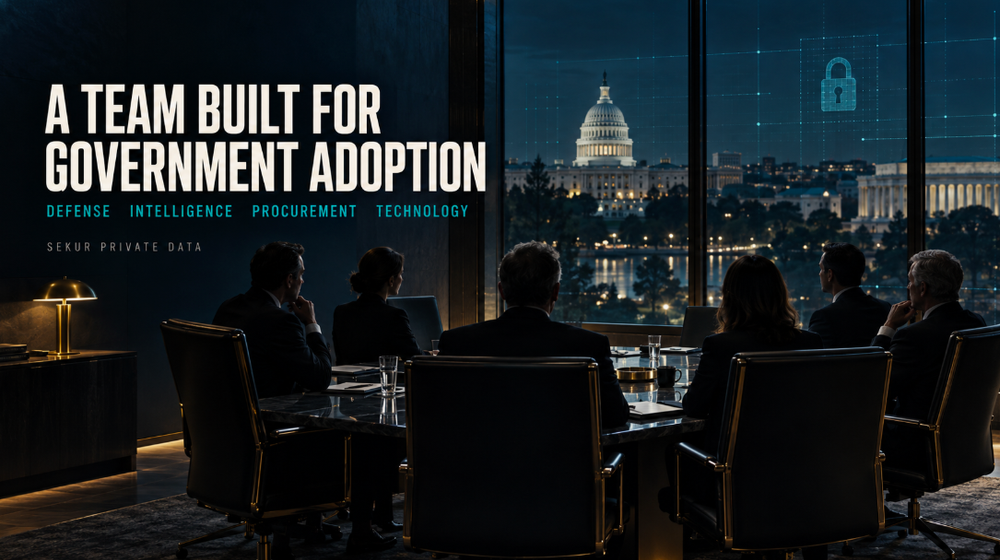
A Team Built Around Government Adoption
Sekur’s statutory board includes founder and CEO Alain Ghiai and directors Henry Sjöman, Amir Assar and Dr. Claudio Alberti. Most defense and intelligence figures serve on strategic or special advisory groups. Their targeted role is helping a small vendor understand government requirements, strengthen its product and reach difficult buyers.
Lt. Gen. Raymond Palumbo, a former Director for Defense Intelligence, chairs the Strategic Advisory Board. Retired Gen. Andrew P. Poppas, who commanded U.S. Army Forces Command, advises the CEO. John T. Lewis, a 34-year CIA veteran and former deputy director and CTO of the CIA Federal Laboratory, is more deeply embedded as Sekur’s CTO as well as an adviser.
The next layer covers procurement and implementation. Phil Oakley founded i3 Integrative Creative Solutions, the contract holder through which Sekur is available on the U.S. General Services Administration Multiple Award Schedule. Kenneth Rogers previously managed a US$1.3 billion budget and a US$3.8 billion IT portfolio at the State Department. Annette Redmond served as the Army’s Intelligence CIO and later as the State Department’s first Intelligence CIO.
Why Would They Join Such a Small Company?
No outsider can know every adviser’s private motivation, but three explanations are credible.
First, the problem fits their careers. Lewis said he saw a direct need for Sekur’s tools. Palumbo described secure communications as an operational requirement, while Redmond emphasized sovereign control over sensitive communications.
Second, a small company offers influence. At Sekur, experienced operators can help define the product, on-premises architecture, agency positioning and sales strategy from the beginning.
Third, there is economic asymmetry. A successful platform could become far more valuable than today’s microcap valuation. Sekur disclosed option grants to directors, officers and consultants as a group, although it did not identify individual awards to each adviser. Equity participation can help align experienced advisers with long-term commercialization.
What the Advisory Network Could Actually Produce
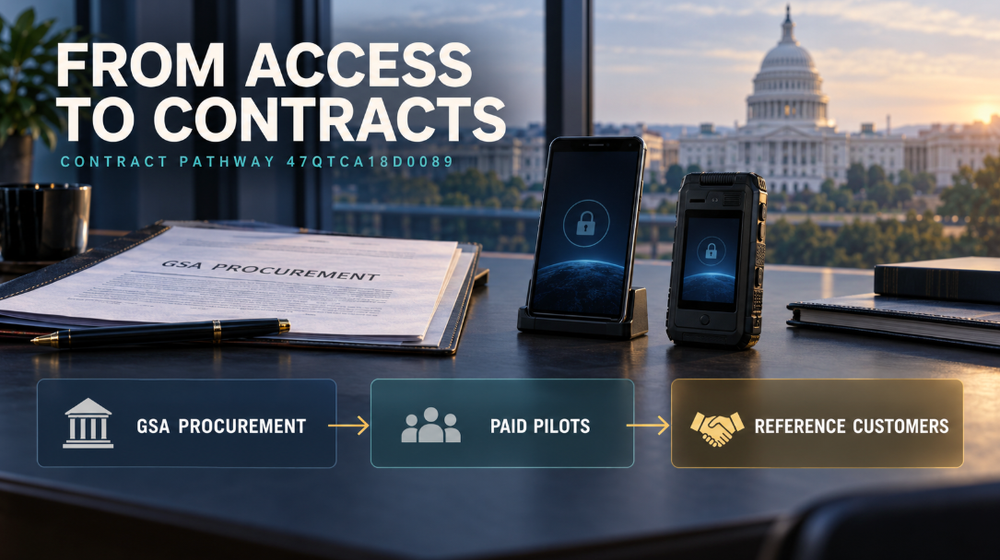
Sekur’s products are available through i3ICS under GSA MAS Contract 47QTCA18D0089, giving eligible agencies an established purchasing route. The company has also demonstrated its technology to defense and special-operations guests and presented at the DoDIIS Worldwide Conference.
If the advisers translate those activities into paid pilots, a first deployment could provide a reference customer, create operating feedback and ease later procurement conversations.
Repeated wins could also attract larger systems integrators, distribution partners or strategic interest. Sekur has announced no sale process, but validation can expand its options.
The Current Valuation Leaves Room for Execution
SWISF was down about 39% year to date and 36% over three months through September 21. That decline has reset expectations. Investors are valuing the company on reported performance today, leaving successful commercialization with room to matter.
Sekur generated C$185,828 in first-half revenue and recorded a C$2.18 million net loss. Cash used in operations was C$1.23 million, while cash stood at C$1.53 million. The filing contains a going-concern warning, and a proposed C$2 million financing could add up to 20 million shares, plus warrants.
The market is applying an execution and dilution discount because the government opportunity has not yet become material revenue.
That is the risk and the source of the asymmetry: even modest contract wins could look significant beside a US$6.6 million market capitalization.
What More Clients Could Mean for SWISF
Sekur plans to price SekurOne at US$300 per month. Management estimates that 200 subscribers, equal to US$60,000 monthly or US$720,000 annually, could bring the company to profitability.
The table applies illustrative multiples of four to eight times SekurOne recurring revenue. It uses 259.6 million shares and the US$0.0253 reference price, excluding legacy revenue, cash, debt, taxes and future dilution.
| SekurOne clients | Annual recurring revenue | Price at 4x ARR | Price at 6x ARR | Price at 8x ARR | Upside range |
|---|---|---|---|---|---|
| 200 | US$720,000 | US$0.011 | US$0.017 | US$0.022 | -56% to -12% |
| 500 | US$1.80 million | US$0.028 | US$0.042 | US$0.055 | +10% to +119% |
| 1,000 | US$3.60 million | US$0.055 | US$0.083 | US$0.111 | +119% to +338% |
| 2,000 | US$7.20 million | US$0.111 | US$0.166 | US$0.222 | +338% to +777% |
At 200 clients, profitability could become a major inflection even if SekurOne revenue alone does not justify a large stock move. A viable platform, recurring revenue and reference customers could reduce the discount investors place on the business.
The stronger rerating case begins around 500 to 1,000 clients, or equivalent enterprise and government contracts.
At 1,000 users, a six-times multiple would imply approximately US$21.6 million in equity value and US$0.083 per share before dilution. That would represent approximately 229% upside from the reference price.
These figures are sensitivities rather than price targets, but they show how quickly recurring revenue can become material from such a small base.
The Test Is Now Commercial
Sekur’s roster matters because it is unusually relevant to the market the company wants to enter. Former officials can shorten learning curves, improve credibility and create access that a US$6.6 million company could not easily buy through conventional marketing.
The advisers can accelerate execution, but the decisive metrics remain paid users, contract value, renewals, cash burn, financing terms and the first named government or defense customer.
If those numbers begin to confirm the opportunity suggested by Sekur’s network, SWISF could rerate rapidly from a very small base.
The company still has plenty to prove, but its combination of experienced people, procurement access and premium products gives it a more credible route to scale than its current valuation may suggest.
Disclaimer
This article is for informational and educational purposes only and is not investment advice, a recommendation or an offer to buy or sell securities. The author may hold or may initiate a position in SWISF or other securities discussed. SWISF is a speculative, potentially illiquid microcap with operating losses, financing requirements and material dilution risk. Company statements and forward-looking targets may not be achieved. Investors should review regulatory filings and conduct their own due diligence.

Marc has been involved in the Stock Market Media Industry for the last +5 years. After obtaining a college degree in engineering in France, he moved to Canada, where he created Money,eh?, a personal finance website.