A US$300-per-month secure-communications platform, government procurement access and a remarkably low subscriber target give this cybersecurity microcap meaningful operating leverage.
Sekur Private Data Ltd. (OTCQB: SWISF; CSE: SKUR) may be entering its most important commercial phase. At an estimated US$8.5 million market capitalization, investors are paying little for its government access, premium launch and potential path to profitability.
- Sekur is replacing low-priced consumer accounts with a US$300-per-month platform designed for governments, defense organizations and senior executives.
- Management estimates that only about 200 SekurOne subscribers could bring the company to profitability, highlighting the operating leverage of its premium model.
- Cybersecurity leaders carry market values from US$18 billion to more than US$300 billion, leaving Sekur considerable rerating room if it converts its pipeline into recurring revenue.
What Sekur Sells
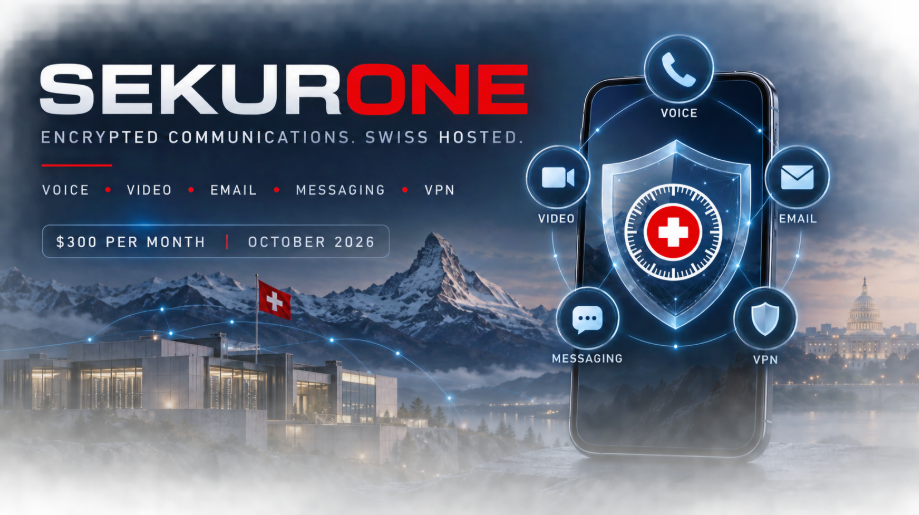
Sekur sells encrypted email, messaging and VPN products. Its new flagship, SekurOne, combines voice, video, email, messaging and VPN services on its proprietary HeliX architecture. The company says its Swiss-hosted infrastructure avoids Big Tech cloud platforms and data mining, creating a differentiated privacy proposition.
SekurOne is expected on iOS and the web in early October 2026 at US$300 per month, with Android in November and video by year-end. An i3ICS GSA Multiple Award Schedule also gives U.S. agencies an established purchasing route.
Why Secure Communications Is Strategic
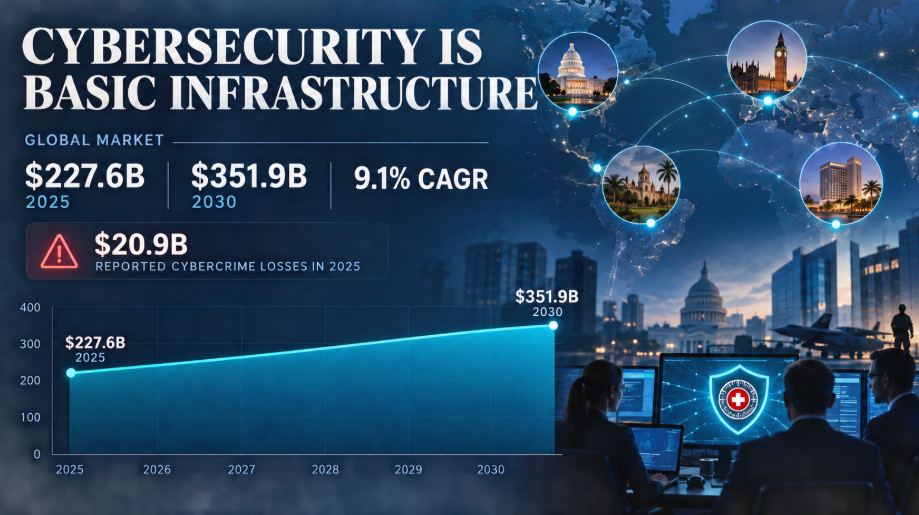
Cybersecurity is becoming basic infrastructure. MarketsandMarkets expects the market to grow from US$227.6 billion in 2025 to US$351.9 billion in 2030. The FBI recorded more than 1 million cybercrime complaints and US$20.9 billion of reported losses in 2025, including about US$3.0 billion from business email compromise.
The need is visible. Attackers accessed U.S. Treasury workstations in 2024, a U.K. military payroll breach exposed personnel information, and Costa Rica declared a national emergency after ransomware disrupted ministries. MGM Resorts estimated a roughly US$100 million profit hit from its 2023 attack.
Sekur does not need to replace broad security platforms. It can protect the sensitive communications layer used by officials and executives.
The 200-Subscriber Equation
Management estimates that 200 SekurOne users could make the company profitable within six months of launch. At US$300 per month, the arithmetic is simple:
| SekurOne subscribers | Gross monthly revenue | Gross annualized revenue | Market cap / annualized revenue |
|---|---|---|---|
| 200 | US$60,000 | US$720,000 | 11.8x |
| 500 | US$150,000 | US$1.8 million | 4.7x |
| 1,000 | US$300,000 | US$3.6 million | 2.4x |
This scenario assumes full pricing and excludes discounts, commissions and dilution.
In the first half, Sekur reported C$185,828 of revenue, C$1.53 million in cash and a C$2.18 million net loss. About C$1.28 million of the loss involved share-based compensation and shares for services. These figures precede SekurOne’s premium launch, making the coming quarters more relevant to the new model.
Sekur does not require mass-market adoption. One government deployment or several enterprise accounts could cover a meaningful portion of the target.
How Sekur Compares With Cybersecurity Leaders
Sekur’s tiny size creates its asymmetry. These are strategic benchmarks, not direct like-for-like competitors, but they show the value markets assign to recurring-revenue security platforms.
| Company | Main security exposure | Market capitalization | 52-week share performance |
|---|---|---|---|
| Sekur Private Data | Secure communications and privacy | ~US$8.5 million | ~-37% |
| Gen Digital | Consumer privacy, antivirus and VPN | US$18.4 billion | +6.6% |
| Zscaler | Zero-trust and secure access | US$31.2 billion | -32.9% |
| Cloudflare | Network and application security | US$115.6 billion | +43.6% |
| Fortinet | Enterprise and government network security | US$126.0 billion | +112.1% |
| Palo Alto Networks | Broad enterprise cybersecurity | US$307.3 billion | +86.6% |
Market data are approximate through September 16–17, 2026. Sekur’s weaker performance leaves expectations low and creates room for reassessment if contracts validate the strategy.
Sekur need not approach multibillion-dollar status. US$50 million would equal 5.9 times its current value and US$100 million would equal 11.8 times, yet remain below 1% of Gen Digital’s capitalization. These illustrations require substantial commercial execution and are not forecasts.
The sector’s history shows that Sekur is not structurally confined to microcap status. Repeated government and enterprise wins could move it through progressively higher valuation tiers.
Bottom Line
Sekur combines a strategic market, premium recurring pricing, government access and a low stated threshold for profitability. At roughly US$0.0328 per share and US$8.5 million in market value, little commercial success appears priced in. Converting its government positioning into paying customers could therefore produce a meaningful rerating.
Disclaimer
- This article is for informational and educational purposes only. It is not investment advice or a recommendation to buy or sell securities.
- The author may hold or trade shares in SWISF or other securities mentioned without notice.
- SWISF is a speculative and potentially illiquid microcap. Investors can lose their entire investment and should independently verify company claims, filings and market data.

Marc has been involved in the Stock Market Media Industry for the last +5 years. After obtaining a college degree in engineering in France, he moved to Canada, where he created Money,eh?, a personal finance website.